
Are you tired of having stacks of useless seeds and poisonous potatoes cluttering up your wooden chests? You can turn that organic junk into valuable Bone Meal instantly with the right compost bin recipes. Instead of waiting for skeletons to spawn, you can use a Composter to recycle your extra tall grass, kelp, and pumpkin pies into white dye or fertilizer for your wheat farm.
Mastering the math behind the Composter helps you grow your underground gardens faster. Different items like dried kelp blocks have a much higher chance of raising the compost level than simple tree leaves or saplings. By focusing on high-percentage items like cake or pumpkins, you will fill your inventory with Bone Meal in no time.
Key Takeaways
- Prioritize high-yield organic materials like flowering azalea bushes, cakes, and moss blocks to maximize the success rate of each compost layer.
- Automate bone meal production by connecting chests and hoppers to a composter to efficiently recycle surplus seeds and farm scraps without manual labor.
- Utilize pumpkins, melons, and moss blocks as superior composting fuels because their 65% success rate far exceeds the 30% efficiency of basic seeds and saplings.
- Turn common inventory clutter like poisonous potatoes and extra tree farm saplings into valuable fertilizer to fuel decorative projects and underground gardens.
High Efficiency Recipes Using Crops And Flowers
If you want to fill your composter as fast as possible, you should focus on high-yield crops like pumpkins and melons. These items are fantastic for early-game bone meal production because they are easy to farm in large quantities using simple redstone observers and pistons. Every time you harvest a full-grown pumpkin or melon slice, you have a sixty-five percent chance to raise the compost level. This makes them much more efficient than using seeds or saplings, which often take much longer to produce results. By setting up a small automatic farm, you can generate a constant stream of organic material to keep your bone meal supply stocked.
Flowering azalea bushes and moss blocks are excellent tools for anyone looking to optimize their resource management. Flowering azaleas are especially powerful because they have an eighty-five percent chance to fill a layer, which is one of the highest rates in the game. You can find these easily in lush cave biomes or by using bone meal on regular moss blocks to grow them instantly. Mixing these floral items into your composting routine ensures that you are not wasting time on low-value scraps. Since they stack up to sixty-four, you can rapidly click through a stack to get your bone meal in seconds.
Maximizing your efficiency means choosing the right ingredients to avoid standing at your composter all day. While basic wheat seeds only have a thirty percent chance to work, switching to carved pumpkins or full cactus blocks will speed up your progress significantly. It is a smart move to save your lower-tier seeds for chicken feed and focus your composting efforts on high-percentage greenery. This strategy allows you to turn a simple garden into a productive fertilizer factory. Once you have a steady rhythm of these high-yield items, you will never run out of bone meal for your other decorative projects.
Turning Extra Seeds Into Bone Meal Fast
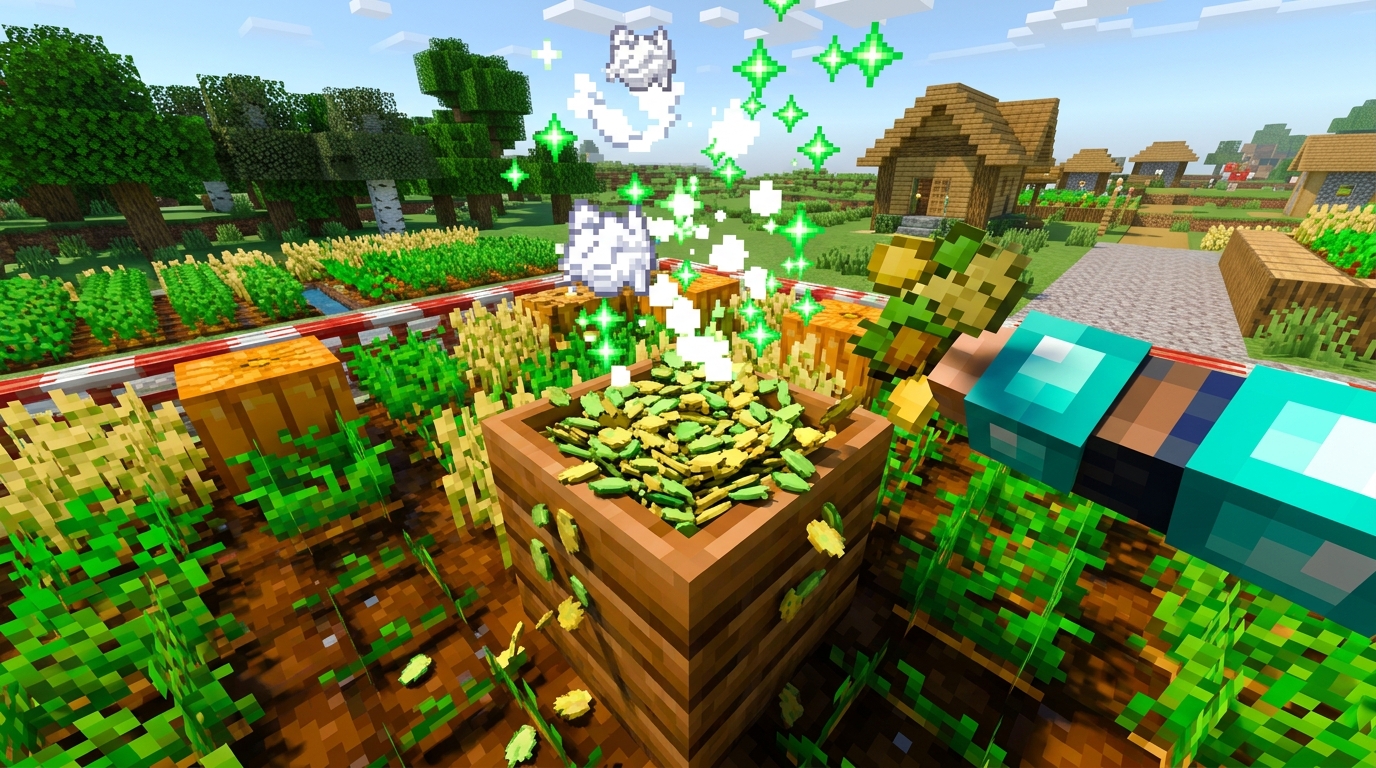
If you have been farming wheat or melons for food, you likely have chests overflowing with extra seeds that you do not need. Instead of tossing these resources into a lava pit, you can feed them into a composter to create a steady supply of bone meal. Each seed has a 30 percent chance to raise the compost level, meaning a few stacks of leftover wheat or pumpkin seeds can quickly turn into several bags of fertilizer. This is one of the most efficient ways to manage your inventory during the early game while keeping your farm production high.
To make this process even faster, you should set up a simple hopper system to automate the recycling. Place a chest on top of a hopper that leads into your composter, and put another hopper underneath the composter leading into a collection chest. This setup allows you to dump all your extra beet, melon, and dried kelp seeds into the top box and walk away while the machine works. You will return to find fresh bone meal waiting for you, which you can then use to instantly grow more crops or decorative flowers for your base.
Using seeds as your primary compost fuel is a smart move because they are so easy to get in large quantities. While items like pumpkin pies or cake have a much higher chance to fill the bin, they are often too expensive to use as fertilizer. Stick to the massive piles of seeds you get from your automatic harvesters to ensure your composter never stops running. By recycling these common drops, you turn a storage headache into a powerful resource that keeps your world thriving and green.
Using Tree Farm Scraps For Composting
Setting up a tree farm is one of the smartest ways to keep your compost bins overflowing with resources. Instead of tossing out those extra saplings that clutter your inventory, you can drop them right into a composter to help generate bone meal. Oak and birch saplings are perfect for this because they have a reliable chance of raising the compost level. You can even use the excess leaves you shear away while clearing space for new growth. This strategy ensures that every part of the tree serves a purpose in your survival world.
Moss blocks are another incredible resource for players looking to skip the wait for traditional food scraps. You can easily generate massive amounts of moss by using a little bit of bone meal on a single block, which creates a self-sustaining loop. Since moss blocks have a sixty-five percent chance of increasing the compost level, they are much more efficient than using simple seeds. You can quickly fill multiple bins with these blocks to create a high-speed bone meal factory. This method keeps your production rates high without requiring you to farm actual crops or waste valuable food.
If you find yourself with an abundance of azalea bushes or flowering azaleas from your underground explorations, do not let them sit in a chest. These decorative plants are surprisingly effective in a composter and can help you reach that final layer for a fresh bone meal drop. Even the hanging roots and moss carpets you collect can be recycled to keep the cycle moving forward. By focusing on these organic materials, you save your carrots and potatoes for your own hunger bar. This approach turns your tree farm into a complete redstone station for all your gardening needs.
Maximize Your Bone Meal Production
Mastering these compost bin recipes is the quickest way to turn your extra seeds and organic waste into a constant supply of bone meal. By focusing on high-efficiency items like pumpkins, melons, and dried kelp blocks, you can fill your composters much faster than using basic wheat seeds alone. This resource management is essential for fueling your automatic micro-farms or quickly growing huge oak trees for building materials. Keeping a chest of these specific items next to your composter setup ensures you never run out of white dye or fertilizer when you need it most.
Once you have a steady flow of bone meal, your decorative gardens and survival bases will truly come to life. You can use your recycled materials to instantly grow tall grass and flowers, making any biome feel lush and lived in with just a few clicks. If you are running an automatic sugarcane farm or automatic kelp farm, connecting chests and hoppers to your composters creates a perfect loop of infinite growth. Taking the time to learn which blocks have the highest success rate will save you hours of work and make your world much more productive.
Frequently Asked Questions
1. How do I get Bone Meal without hunting skeletons?
You can turn your extra organic items into Bone Meal by placing them inside a Composter. Once you fill the bin seven times, it will produce a piece of Bone Meal for you to collect. This is a great way to recycle seeds and poisonous potatoes into useful fertilizer.
2. Which items are the best to put in my Composter?
Flowering azalea bushes and cakes are some of the best items to use because they have an eighty-five percent chance to raise the compost level. Using these high-value items means you will fill your bin much faster than using basic seeds or grass. Moss blocks and large flowers are also excellent choices for quick results.
3. Can I use seeds and saplings to make compost?
Yes, you can use seeds and saplings, but they are less efficient and only have a thirty percent chance to fill a layer. It takes a lot more of these items to produce a single piece of Bone Meal compared to crops like pumpkins or melons. They are best used when you have a large surplus cluttering up your chests.
4. What is the easiest way to get a lot of compost material early on?
Setting up a simple pumpkin or melon farm with pistons and observers is the best way to get plenty of materials. These crops have a sixty-five percent chance to raise the compost level and grow back quickly on their own. This gives you a steady supply of organic junk to recycle whenever you need it.
5. Are there any secret items that fill the Composter quickly?
Flowering azaleas and moss blocks are powerful resources found in lush caves that fill your bin incredibly fast. Since they stack up to sixty-four in your inventory, you can carry enough to generate several stacks of Bone Meal in one sitting. These are much more effective than standard tree leaves or tall grass.
6. Why should I use pumpkins instead of wheat seeds?
Pumpkins have a sixty-five percent chance to fill a compost layer while seeds only have a thirty percent chance. You would need more than double the amount of seeds to get the same amount of Bone Meal as you would from pumpkins. Using redstone clock designs to automate your pumpkin harvest saves you time and keeps your inventory from getting overwhelmed. You can also master your Minecraft world by adjusting game rules to see how fast your crops can truly grow.