
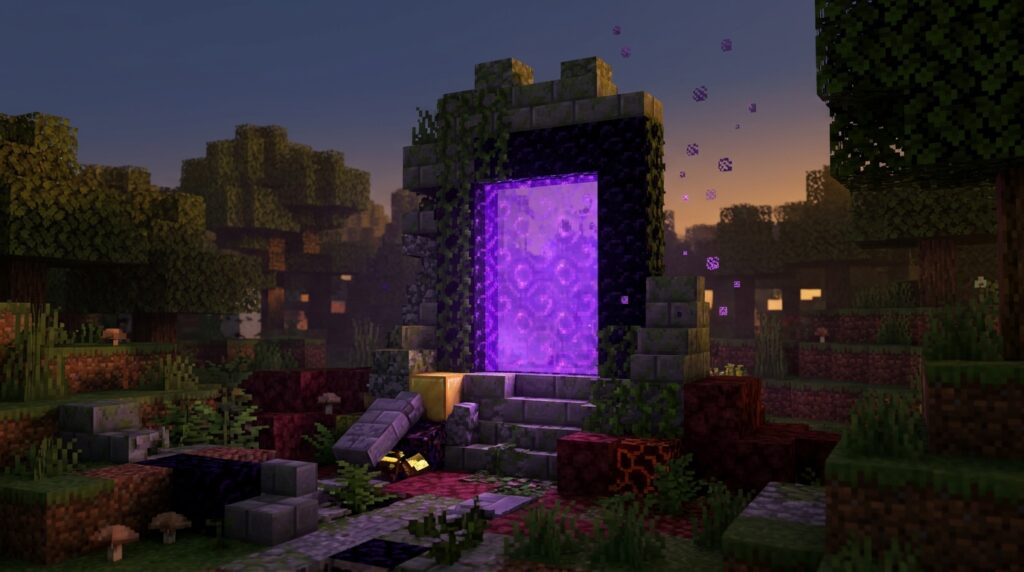
A ruined portal is a damaged Nether portal structure in Minecraft that you can find, loot, and fix with ordinary obsidian. Your guide starts with spotting one: look for an incomplete obsidian frame, netherrack, and decorative blocks. They generate in every Overworld biome except the Deep Dark and in all Nether biomes, and about 5 in every 100 are giant versions. There are 13 designs in total to discover.
Inside the chest, you might pull out a lodestone. Bedrock Edition 1.21.60 added lodestones to ruined portal loot, and a chest has a 66.7% chance to hold one. Enchanted golden apples turn up in about 1.5% of chests, so keep digging. When you repair, remember that crying obsidian can’t frame a portal, so swap it for regular obsidian. A minimum frame is 5 blocks high and 4 wide with its corners left out, which takes 10 obsidian. Light it from inside, and you’re ready to travel.
Key Takeaways
- Ruined portals generate in every Overworld biome except the Deep Dark and in all Nether biomes, so you should skip the Deep Dark and search the other biomes instead.
- Crying obsidian cannot frame a Nether portal, so you need to mine each crying obsidian block with a diamond pickaxe and replace it with regular obsidian before you light anything.
- A minimum ruined portal frame is 5 blocks high and 4 blocks wide with its corners left out, which takes 10 obsidian, so you should bring extra obsidian in case the ruin is missing pieces.
- Your repaired ruined portal needs flint and steel used on the empty air inside the opening, and every gap in the frame must be filled first or the portal won’t activate.
- Each ruined portal chest has about a 1.5% chance to hold an enchanted golden apple, so you should keep looting chests even if your first few give you ordinary items.
What Does a Ruined Portal Look Like in Minecraft?
A ruined portal is a damaged Nether portal that you can spot by its broken black obsidian frame, patches of netherrack, and scattered decorative blocks. Start by looking for the obsidian. You’ll often see only part of the ring, such as a couple of tall pillars and a top bar, with pieces missing where the damage happened.
Next, look for the netherrack. It’s a dull, orange-brown stone that stands out sharply against the green grass, gray stone, and yellow sand of the Overworld. Mixed in with it, you’ll find decorative blocks like nether bricks and gold blocks, which show that the structure was once built on purpose.
Ruined portals don’t always sit neatly on open ground. You might find one half-buried under dirt or sand, with only the top of the frame peeking out. Others sit underwater, deep underground in a cave, or fully exposed to the open sky, which makes them the easiest to see from a distance.
Here’s a quick tip: look for a gap in the obsidian ring and orange-brown netherrack poking out of the terrain. If you see a black frame with a missing section and reddish stone nearby, you’ve almost certainly found one. Walk around it slowly, because the missing pieces are often what gives the ruin away.
Where Do Ruined Portals Generate in Your World?
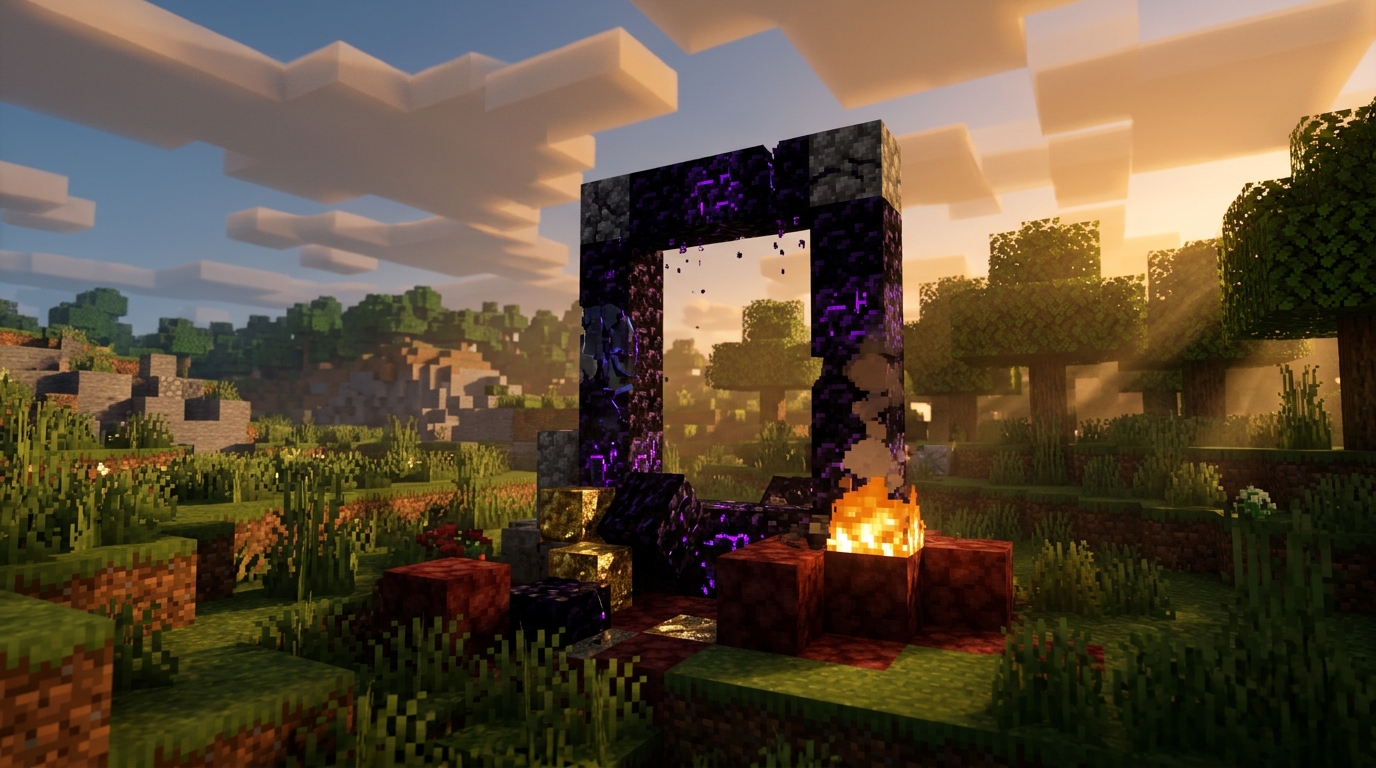
Ruined portals can generate in every Overworld biome except the Deep Dark, and they also appear in all Nether biomes. Skip the Deep Dark entirely and spend your time in places where a ruin can actually spawn. Plains, forests, deserts, and snowy tundras are all good places to start, and so are mountains and jungles.
Don’t only scan the surface. Ruined portals can sit inside caves, on ocean floors, or tucked into the side of a hill. As you walk through a cave, check the walls and floor for black obsidian. When you swim along a coast, look down at the seabed. On hillsides, watch for a black frame or a patch of orange-brown netherrack poking out of the stone.
Search in straight lines instead of wandering. Pick a direction, walk until you’ve covered a long stretch of ground, then step sideways and head back the other way. Your path will form a wide, neat strip that leaves very little land unchecked. Rivers and cliff edges make helpful guides too. Following a river lets you see both banks at once, and walking along a cliff gives you a clear view of the land below.
Keep a note of the spots you’ve already searched so you don’t waste time covering the same ground twice. A simple list works well. Write down where you started, which direction you walked, the biome you were in, and whether you found anything. For example, you might write “Plains, east from spawn to the river, nothing found” and then move on to the next stretch.
The same method works in the Nether. Try the crimson forest, the warped forest, the basalt deltas, or the nether wastes, and walk each one in straight lines while you log your progress. Those fiery landscapes can hide a ruin in plain sight, so keep your eyes on the ground and the edges of the lava lakes.
What Loot Can You Find Inside a Ruined Portal Chest?
Ruined portal chests can hold portal-repair supplies and gold-related items, but what you find depends on your edition and on random chance. Each chest pulls from the same loot table, so two ruins that look identical can give you very different hauls.
Bedrock Edition ruined portals always generate with a chest, so you can count on finding one. Java Edition works differently. Terrain can replace the chest, and often that means a pool of lava sits where the chest should be. Before you reach in, look closely at the spot for an orange glow or a flat, glowing surface. If lava is in your way, pour a water bucket onto the source to turn it into obsidian, which you can mine and use for repairs.
Gold is the theme of many ruins, since you’ll spot gold blocks decorating the structure. The chests follow that theme with gold-related items, so keep an eye out for shiny pieces when you open one.
The enchanted golden apple is the rare prize you’re hoping for. It shows up in about 1.5% of ruined portal chests, so think of each chest as a lottery ticket. You might open a dozen before one pays out, so don’t get discouraged if your first few give you ordinary items.
Lodestones are the newest find. In Bedrock Edition, they can turn up in ruined portals in both the Overworld and the Nether. A lodestone is useful for more than decoration, because a compass can lock onto it and point to the same spot every time, which makes it a handy marker for a base or a mining site.
Keep your inventory organized as you loot. Ruined portal chests can give you a stack of obsidian-related materials, gold pieces, and odd extras all at once, so clear a few slots before you start. That way, a rare find never gets left behind on the ground.
Can You Use Crying Obsidian to Repair a Ruined Portal?
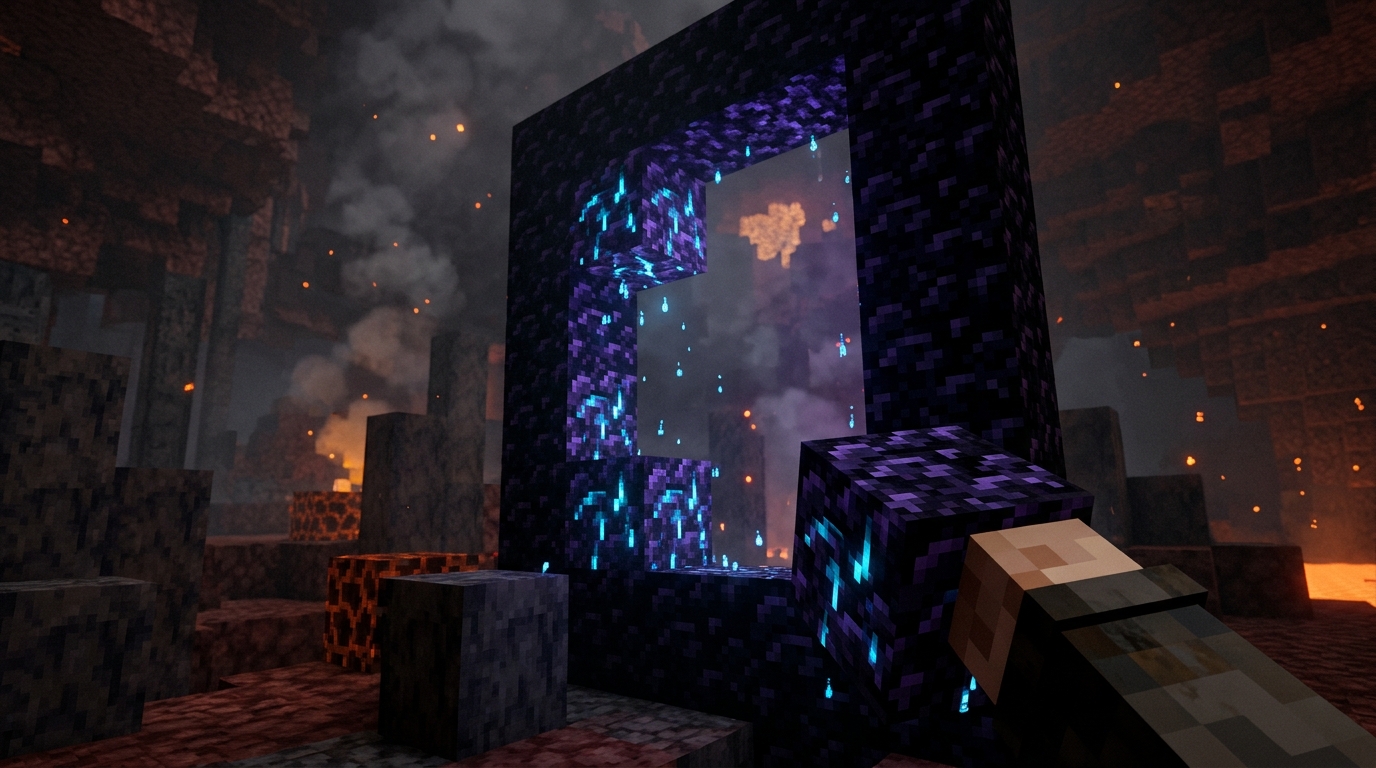
No, you can’t use crying obsidian to frame a Nether portal. You’ll often find it in a ruin, but you have to swap every piece for regular obsidian before the frame will work.
Crying obsidian shows up because the game sometimes swaps frame blocks during generation. Each obsidian block has a small chance of becoming crying obsidian, which is 15% in Java Edition and 20% in Bedrock Edition. That means one ruin might have a single purple-tinted block with a tear dripping from it, while another has several. Keep an eye out for that dark purple shine, since it stands out from ordinary black obsidian.
To fix it, mine each crying obsidian block with a diamond pickaxe, the same tool you need for regular obsidian. Then place regular obsidian in the empty spot. Don’t throw away any solid obsidian already in the frame, because you can keep using it.
Next, fill in the missing sections. Walk around the frame and count the gaps in the ring, especially along the top bar and the side pillars. Leave the corners empty, since a Nether portal frame doesn’t need them. A minimum frame takes 10 obsidian blocks, so if a ruin has only a few pieces left, you’ll need to bring more with you.
Before you light anything, check every block in the ring one more time. A leftover crying obsidian block means the frame still isn’t built correctly, so you’ll have to replace it first.
How Do You Restore a Ruined Portal Step by Step?
To restore a ruined portal, swap out the crying obsidian, fill every gap with regular obsidian, and light the frame from the inside. Work through the steps in order at the ruin you found.
- Mine each crying obsidian block in the frame with your diamond pickaxe so that every spot is empty again.
- Fill the missing sections of the frame with regular obsidian, placing blocks one at a time along the side pillars and the top bar until the ring has no gaps.
- Leave the four corners empty. A minimum-size frame is 5 blocks high by 4 blocks wide, and with its corners omitted, it uses 10 obsidian.
- Use flint and steel to light a fire inside the frame’s opening, and the portal will activate.
Tip: Before you light anything, walk around the whole frame and check every opening in the ring. One open gap means the frame isn’t complete, so the portal won’t form, and you’ll have to find the missing block and fill it first.
Flint and steel is the easiest fire source to carry. You craft it at a crafting table from an iron ingot and flint, so pack both before you leave for a ruin. Iron ingots are common enough from furnace smelting, but flint usually comes from gravel that you mine with a shovel, so keep a few pieces in your inventory.
If your frame still needs more obsidian, you can make it by pouring water on a lava source, then mine the resulting obsidian with a diamond pickaxe. Bring a spare stack in case the ruin you chose is missing more pieces than it looked like from a distance.
Why Won’t My Repaired Portal Light Up?
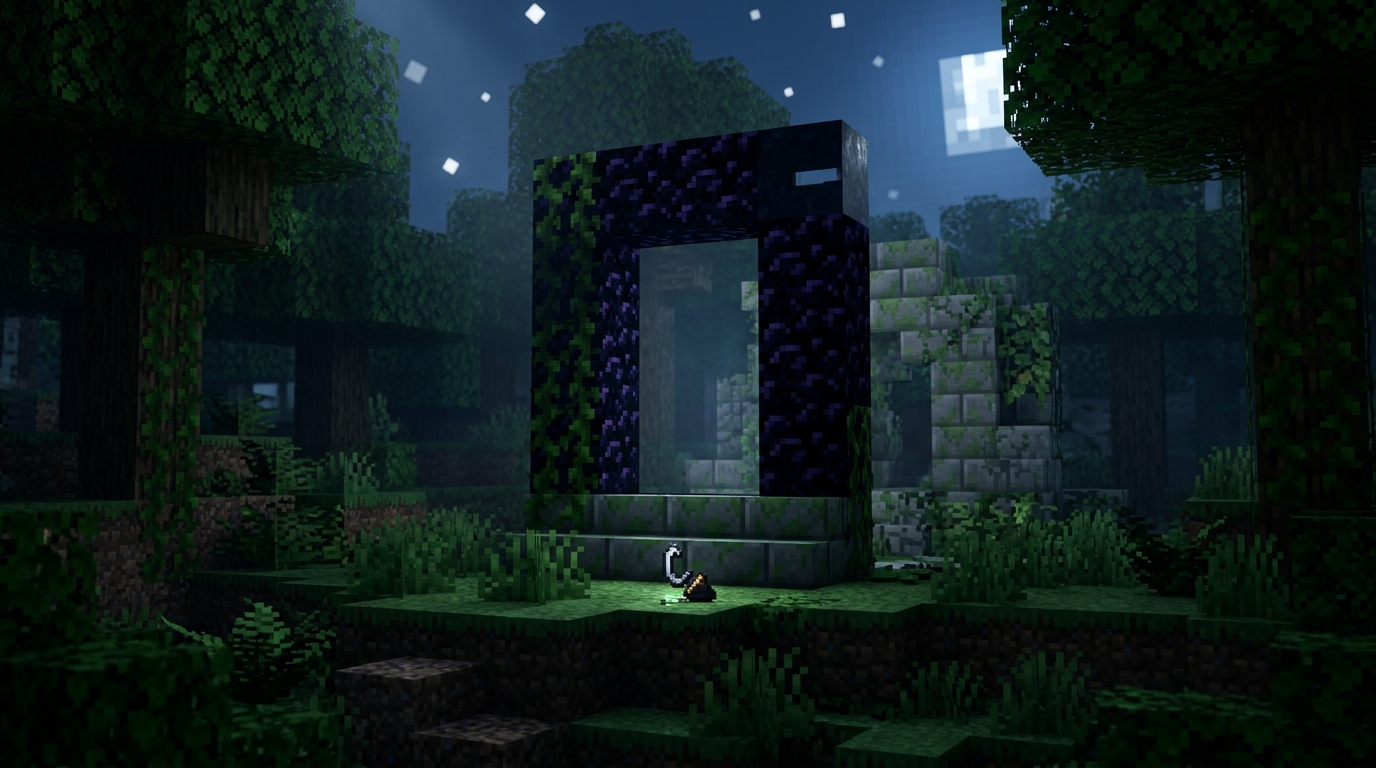
Your repaired portal usually won’t light for one of three reasons: crying obsidian is still in the ring, there’s a gap in the frame, or no fire is lit inside the opening. Check each one before you assume the ruin is broken.
Start with the blocks. A single purple crying obsidian block left anywhere in the ring will stop the portal, so walk slowly around every pillar and the top bar. Also look for any open spot you missed, since one empty block breaks the whole frame.
Next, measure the shape. The ring must be at least 5 blocks tall and 4 blocks wide, which leaves an opening 3 blocks tall and 2 blocks wide inside. If your frame is shorter or narrower, the game won’t treat it as a portal, even if every block is obsidian.
Finally, check the fire. Use flint and steel on the empty air inside the opening, not on the obsidian itself. Common mistakes include:
- Crying obsidian still sitting in any part of the ring
- A missing block along a pillar or the top bar
- A frame that’s shorter than 5 blocks or narrower than 4
- Flint and steel aimed at the frame instead of the opening
Your Next Step: Explore and Restore a Ruined Portal
Your next step is to pick one ruined portal you can reach this session and go restore it. Before you leave, craft your flint and steel, then pack a diamond pickaxe, a stack of regular obsidian, and a water bucket in case lava is in your way.
Choose a biome from the list above that suits your world, such as plains, a forest, or a river valley. Walk a long, straight line, and keep your search log open so you know which ground you’ve already covered.
When you spot a frame, walk the full ring before you touch anything. Count the gaps along the side pillars and the top bar, and check the chest spot if you’re playing Java Edition. Then mine every crying obsidian block, fill the missing pieces with regular obsidian, and leave the corners empty.
Light the opening with flint and steel. If the portal activates, you’re ready to loot the chest and see whether you pull a lodestone or one of those rare golden apples. If it stays dark, work through the common mistakes listed above one at a time before you give up on the ruin.
Once you’ve finished your first restoration, try a second ruin in a different biome. Each one gives you a new layout and a new chest, so you’ll get faster at reading the frame every time you go out.