
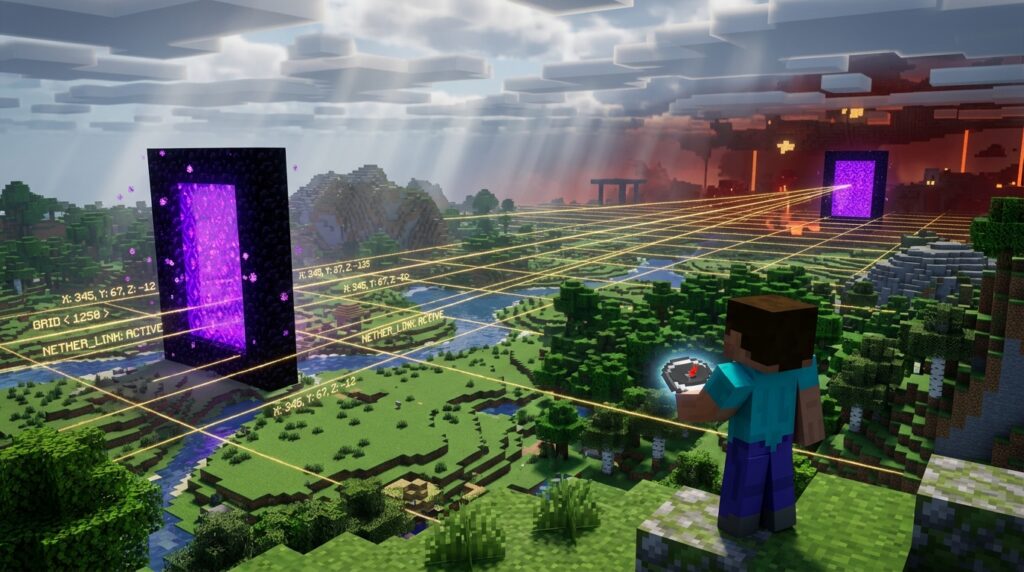
Building a massive base in the Overworld is exciting, but nothing ruins the fun like getting lost in the Nether or stepping into a portal only to exit in a random cave miles away. Because every block you walk in the Nether equals eight blocks in the Overworld, even a small mistake in your math can break your entire travel system. Using a nether portal linking calculator takes the guesswork out of the process by giving you the exact coordinates you need to keep your portals perfectly synced.
Imagine you want to connect your mountain base at X: 800, Z: 1600 to a Nether hub; you simply divide those numbers by eight to find your target spot at X: 100, Z: 200. While the game tries to find nearby portals within a search radius, matching your coordinates exactly prevents those frustrating mislinks where two portals accidentally lead to the same exit. Keeping your Y-axis height consistent also ensures your connection is as stable and fast as possible.
Key Takeaways
- The Nether operates on an 8:1 distance ratio, meaning every block traveled there covers eight blocks in the Overworld, making it the most efficient method for long-distance fast travel.
- To ensure portals link perfectly, divide Overworld X and Z coordinates by eight to find the target Nether location, or multiply Nether coordinates by eight when traveling back to the Overworld.
- Manually placing obsidian frames at exact calculated coordinates is essential to prevent ‘portal hijacking,’ where the game’s search radius accidentally links multiple portals to the same incorrect exit.
- While horizontal coordinates scale by eight, the Y-axis height remains 1:1 and should be matched as closely as possible to ensure a stable and reliable connection between dimensions.
Using The Eight To One Distance Ratio
The secret to mastering travel in Minecraft lies in understanding the unique 8 to 1 distance ratio between dimensions. For every single block you walk while inside the Nether, you have actually covered eight blocks of distance relative to the Overworld. This compression makes the Nether the ultimate shortcut for traveling thousands of blocks across your map in just a few minutes. If you want to build a portal that connects to a specific spot, you must account for this math to ensure your portals pair up perfectly. Without these precise calculations, you might find yourself popping out in a random cave or a dangerous lava lake far from your intended destination.
Calculating your coordinates is simple once you know which direction you are traveling. To move from the Overworld to the Nether, you take your current X and Z coordinates and divide them by eight. For example, if your base is at X: 800 and Z: -400, your Nether portal should be placed at X: 100 and Z: -50. When you are heading back the other way, you simply multiply your Nether coordinates by eight to find the exact landing spot in the Overworld. Remember that the Y-axis or height does not scale at all, so try to keep your vertical coordinates the same in both dimensions to prevent any linking errors.
Using a calculator to handle these numbers saves you from the frustration of ghost portals that lead to nowhere. When portals are not properly aligned using the 8 to 1 rule, the game might struggle to find the right exit and create a brand new portal in an inconvenient spot. By taking a moment to check your math, you can create a seamless transit system that lets you zip between your farm, your desert temple, and your jungle base. This simple trick turns the Nether from a scary wasteland into a highly efficient highway for your survival world.
Matching Precise Coordinates For Perfect Links
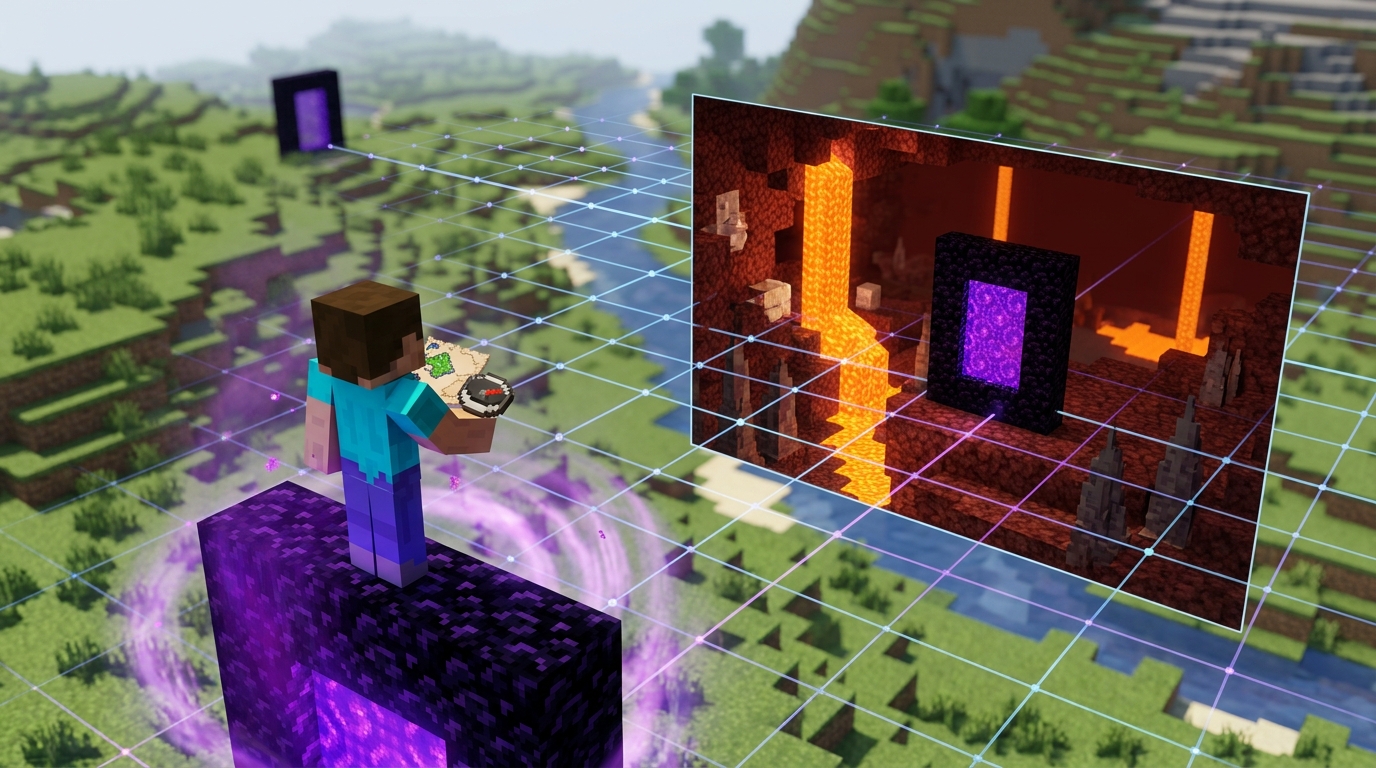
Navigating between dimensions can be tricky because the Overworld and the Nether don’t share a one to one distance ratio. For every single block you walk in the Nether, you have actually traveled eight blocks in the Overworld. This 8 to 1 ratio is the reason why your portals might end up in a random cave or a dangerous lava lake instead of your base. Using a nether portal linking calculator simplifies this math by taking your current X and Z coordinates and doing the division or multiplication for you. This ensures that when you step through the purple haze, you end up exactly where you planned to be.
Precision is the secret to building a perfect transport hub that never fails or mislinks to the wrong room. While the horizontal X and Z coordinates scale by eight, you must remember that the Y-axis height, or your height, stays exactly the same in both dimensions. If you build a portal at Y=70 in your Overworld castle, you should aim to place your Nether side portal at Y=70 as well. Matching all three coordinates perfectly prevents the game from searching for a nearby portal and accidentally picking the wrong one. This level of detail keeps your paths organized and saves you from the frustration of long walks back to your gear.
Setting up a reliable network is much easier when you have a cheat sheet of exact coordinates ready before you start mining. For example, if your Overworld base is at X=800 and Z=1600, your Nether portal needs to be placed at exactly X=100 and Z=200. You should always build your first portal, step through to let the game generate a frame, and then break and move it to the precise calculated spot. This manual adjustment guarantees a hard link between the two frames that won’t be broken by other portals nearby. Taking a few extra seconds to check your calculator prevents your portals from overlapping and keeps your world’s travel system running smoothly.
Preventing Common Portal Mislinking Disasters
You have likely experienced the frustration of stepping into your Nether portal only to emerge in a completely different spot than you expected. This happens because the game searches for the nearest active portal within a specific radius, and even a small mistake in your math can cause two portals to tangle together. By using a nether portal linking calculator, you can get the exact coordinates needed to stop this from happening. Instead of letting the game generate a portal for you, you should always manually place your obsidian blocks at the specific X, Y, and Z coordinates provided by the tool. This ensures that every step you take through the purple veil leads exactly where you intended.
The most important thing to remember is the golden 8 to 1 ratio that governs travel between dimensions. For every 8 blocks you walk in the Overworld, you only move 1 block in the Nether, which makes precise placement absolutely vital for a stable connection. If your Overworld portal is at X: 800 and Z: 1600, your Nether portal must be built at exactly X: 100 and Z: 200 to avoid any mislinking disasters. While the game often tries to help by placing a portal nearby, it frequently chooses a spot that is just far enough away to break the link. Manually syncing these numbers is the only way to guarantee a reliable two-way path for your base.
Do not forget that the Y-axis, or your vertical height, plays a sneaky role in how your portals connect to one another. While the horizontal coordinates are divided or multiplied by eight, your height remains exactly the same in both dimensions. If you build a portal at the top of a mountain at Y: 120 but your Nether side is down at Y: 30, the game might struggle to find the right connection. Matching your height as closely as possible helps the game’s search algorithm find the correct destination instantly. Taking a few extra minutes to bridge over a lava lake or dig through netherrack to reach the right height will save you hours of travel time in the long run. This precision is also the foundation for advanced builds, such as learning how to build high efficiency portal based gold farms that rely on perfect alignment.
Build Your Perfect Fast-Travel Network
Mastering the 8 to 1 block ratio is the secret to building a professional fast-travel network that never fails. By using a nether portal linking calculator, you take the guesswork out of your build and ensure every block counts. You no longer have to worry about ending up in a random cave or a dangerous lava pool when you step through the purple haze. Instead, you can confidently place your portals at the exact coordinates needed for a perfect connection. This precision allows you to bridge thousands of blocks in the Overworld by walking just a short distance in the Nether.
Setting up your network is simple once you understand that only the X and Z coordinates need to be divided or multiplied. If your Overworld base is at X: 800 and Z: -400, your Nether portal must be placed at exactly X: 100 and Z: -50. While the Y-axis height does not scale, keeping your portals at the same vertical level helps the game find the link much faster. This prevents the frustrating mislinking glitch where two Overworld portals accidentally lead to the same spot in the Nether. You can now build massive hubs that connect your farm, your village, and your friend’s base with total accuracy.
Once your coordinates are synced, your Minecraft world becomes much smaller and easier to manage. You can travel between distant biomes in seconds, making resource gathering and exploration far more efficient. Using a calculator ensures that your hard work won’t be ruined by the game’s default search radius. Your fast-travel system will remain stable and reliable even as you add more portals to your growing empire. Grab your obsidian and flint and steel to keep your Minecraft farms running today. You can even master the nether roof glitch to build safe ice boat highways above the bedrock ceiling.
Frequently Asked Questions
1. How exactly does the 8 to 1 ratio work in Minecraft?
For every block you travel in the Nether, you cover eight blocks in the Overworld. This means if you walk 100 blocks in the Nether, you have actually moved 800 blocks relative to your main world map. It is the best way to travel long distances quickly without spending hours running.
2. How do I calculate where to put my Nether portal?
To find the right spot, take your Overworld X and Z coordinates and divide them by eight. For example, if your base is at X: 1600 and Z: -400, you need to build your Nether-side portal at X: 200 and Z: -50. This simple math ensures your portals link up perfectly every time.
3. Why do my portals keep linking to the wrong location?
Portals often mislink because the game searches for any existing portal within a specific radius rather than creating a new one. If your coordinates are even slightly off, your portal might snap to a nearby exit in a random cave. Using a calculator to get exact coordinates prevents this overlap and keeps your paths clear.
4. Does the Y-axis height matter for portal linking?
While the game primarily looks at X and Z coordinates, keeping your Y-axis height consistent helps create a more stable connection. If you have two portals close together in the Overworld, matching the height in the Nether ensures you always come out of the correct one. This is especially helpful when building multi-level bases.
5. What happens if I don’t use a calculator for my portals?
Without precise math, you might find yourself exiting into a dangerous lava lake or a dark cavern miles away from your destination. You also risk portal hijacking where multiple Overworld portals all lead to the same single Nether portal. A calculator removes this risk by giving you the perfect coordinates for a dedicated 1 to 1 link.
6. Can I use these calculations to travel back from the Nether to the Overworld?
Yes, you just do the math in reverse by multiplying your Nether coordinates by eight. If you find a cool fortress at X: 50 and Z: 50 in the Nether, you can multiply those by eight to find the exact Overworld spot at X: 400 and Z: 400. This helps you create shortcuts back to specific landmarks in your main world. To reach these locations even faster, you can master the break bedrock glitch to create easy access points through the ceiling.