
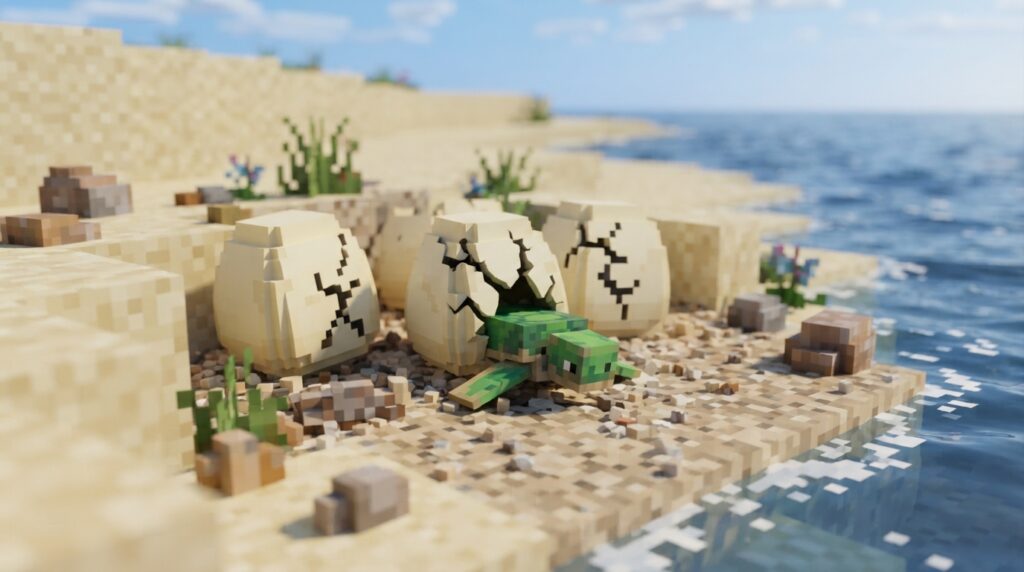
Turtle eggs take about four to five in-game days to hatch, though you may need to wait through several nights. Each egg passes through three visible cracking stages, and it progresses faster at night. You can place eggs on sand or red sand, but expect a gradual hatch rather than an instant one. Zombies and drowned also seek out and stomp turtle eggs. The Minecraft Wiki’s turtle egg information explains these conditions and the mobs that threaten eggs.
While the eggs crack, zombies, drowned, and other undead mobs may seek them out and stomp them. An enclosed nest with nearby lighting can help protect the eggs, but no setup guarantees their safety. Check the area, especially at night, and watch for new cracks without disturbing the nest. The Minecraft Wiki’s turtle-farming tutorial also recommends using barriers and lighting to shelter eggs from undead mobs. After hatching, baby turtles take about one more in-game day to grow into adults.
Key Takeaways
- Turtle eggs usually hatch in about four to five in-game days, but plan for several nights because eggs crack faster at night.
- Turtle eggs must pass through three visible cracking stages before a hatchling appears, so check each egg’s cracks instead of expecting a fixed timer.
- Place turtle eggs on sand or red sand, and use barriers and nearby lighting to help protect the nest from zombies, drowned, and other undead mobs that stomp eggs.
- About 90% of turtle eggs hatch within seven nights, so keep slow eggs protected and check their crack stages; baby turtles take about one more in-game day to grow into adults.
How Long Do Turtle Eggs Take to Hatch?
The usual hatch window is about four to five in-game days, and several nights may pass before an egg hatches. This estimate refers to days in Minecraft, not real-world days, and it is not a fixed timer. Eggs may take more or less time depending on when they make progress. The Minecraft Wiki’s turtle egg entry gives the usual hatch-time range.
Watch for cracks to track an egg’s progress. An egg hatches after it cracks three times, so each new crack marks progress, not a completed hatch. If an egg has cracked once or twice, it still needs to reach the third stage before a hatchling appears. The Minecraft Wiki describes the three cracking stages.
Turtle eggs crack faster at night than during the day. Daytime progress is possible, but the Minecraft Wiki reports only a 1-in-500 chance of a crack on a daytime random tick. This helps explain why a four-to-five-day wait may include several nights rather than a set number of full day cycles. The Minecraft Wiki’s timing details explain the difference.
About 90% of eggs hatch within seven nights. This can help you judge whether an egg that has not hatched after four or five in-game days is still within the typical range, but it does not guarantee that every egg will hatch by the seventh night. An intact egg may simply need more time. Check whether its cracks have advanced before deciding that progress has stopped. The Minecraft Wiki gives the seven-night figure.
What Do The Cracks Tell You?
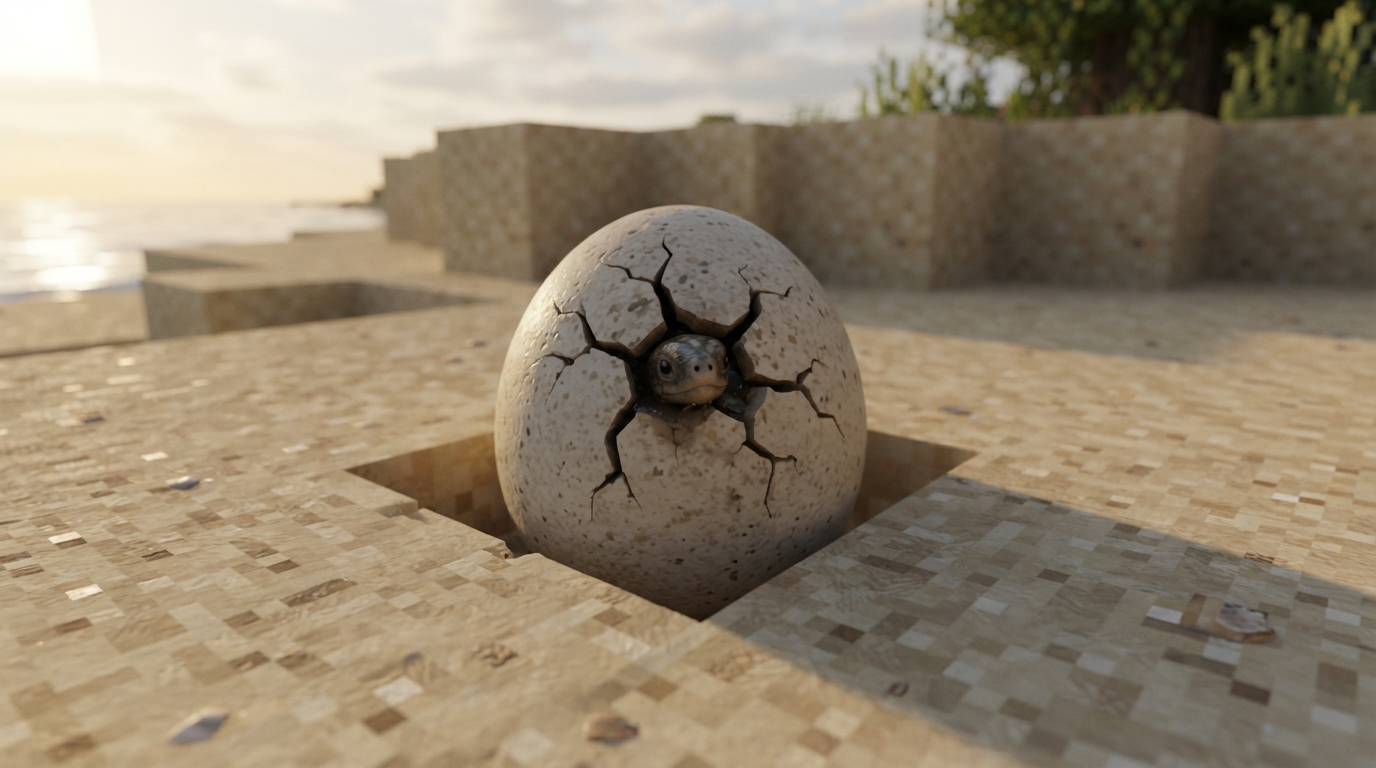
The cracks show which of the egg’s three progress stages it has reached. The egg hatches after the third crack. The Minecraft Wiki confirms that the third crack comes before the hatchling appears. In the first stage, the egg begins to crack. In the second stage, the cracks become more pronounced. The third stage has the strongest visible cracks. These changes are the clearest signs of progress. If you wait a while without seeing a new crack, the egg may simply be staying at the same visible stage. For example, an egg in its second stage is still progressing, even if it looks unchanged the next time you check. Reaching the final cracking stage does not mean a baby turtle has already appeared. Watch for the hatchling itself.
What Helps Turtle Eggs Hatch Faster?
Turtle eggs hatch on sand or red sand, and they make progress faster at night. Even so, they usually take several nights to hatch. Make sure each egg rests on one of these suitable surfaces rather than expecting a quick change from moving it. The Minecraft Wiki lists sand and red sand as suitable surfaces, notes faster nighttime progress, and reports a 1-in-500 chance of a crack on a daytime random tick. Night is the best time to watch for progress, but an egg is not guaranteed to crack or hatch before morning. A quiet night does not mean the egg has stopped progressing. This daytime random-tick figure provides context, not a prediction of when an individual egg will hatch. The usual estimate remains about four to five in-game days, and many eggs need several nights during that time. For example, an egg on sand may show no new crack during the day, then make progress on a later night. Plan for a gradual wait rather than expecting a fresh egg to hatch in one night.
Which Mobs Stomp Turtle Eggs?
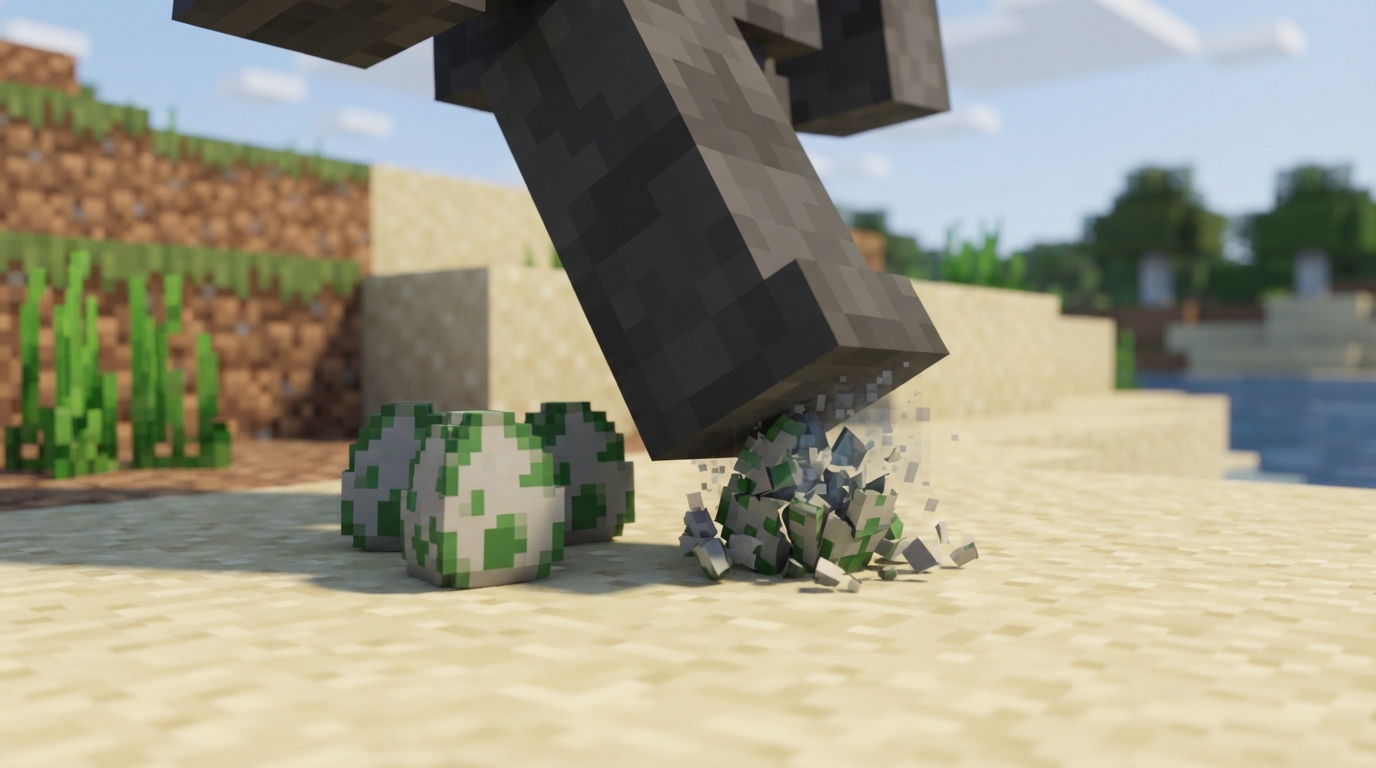
Zombies, zombie villagers, husks, drowned, and zombified piglins actively seek out and stomp turtle eggs. They can target an egg, approach it, and stomp it. The Minecraft Wiki lists the mobs that stomp turtle eggs.
The Minecraft Wiki describes a specific air-space condition for this targeting: two air blocks must be above the turtle egg. If a mob is near a nest, check the space directly above the egg as well as the area around the mob. This condition describes when zombies and their variants are attracted to eggs. It does not mean an egg is safe from every other danger. The Minecraft Wiki explains the two-air-block targeting condition.
Microsoft’s Bedrock documentation describes a behavior that lets a mob stomp turtle eggs. Its drowned example uses a 10-block search range. This is an example from Minecraft Bedrock Edition documentation, not a guarantee that every mob in every edition searches the same distance. If you play Minecraft Java Edition, don’t treat the Bedrock example as a universal rule for how far away a drowned can detect an egg. Microsoft Learn documents the Bedrock turtle-egg-stomping behavior.
An exposed egg near hostile mobs may be stomped and destroyed before it hatches. For example, a drowned that reaches a nest can threaten an egg while it is still cracking. Nearby egg-seeking mobs are an active threat, not just a possible source of accidental damage.
Build A Safer Turtle Egg Nest
Choose a sandy spot for the nest, then build a barrier around it while the eggs progress. Nearby lighting can also help reduce risk from undead mobs, but neither measure makes the nest completely safe.
- Set the eggs on sand or red sand. Make sure each egg block rests directly on one of these suitable surfaces.
- Surround the nest with barriers to keep zombies, drowned, and other egg-stomping undead from reaching the eggs. The Minecraft Wiki’s turtle-farming tutorial recommends barriers and lighting to shelter eggs. A barrier helps only while it keeps mobs out.
- Light the enclosed area as an added precaution. Place light sources around the nest so it is not left dark. Lighting can help reduce nearby danger, but it does not replace a barrier or remove threats that have already reached the enclosure.
- Avoid leaving two air blocks above the eggs where zombies and their variants can reach them, since they are attracted to turtle eggs under that condition. Keep the enclosure secure while accounting for this targeting condition.
- Check the nest and its surroundings for threats. Look for zombies or drowned near the barrier, and make sure there are no gaps that let them reach an egg. Lighting and walls help protect the nest, but they do not guarantee that no mob will get close.
Troubleshoot Slow Turtle Egg Hatching
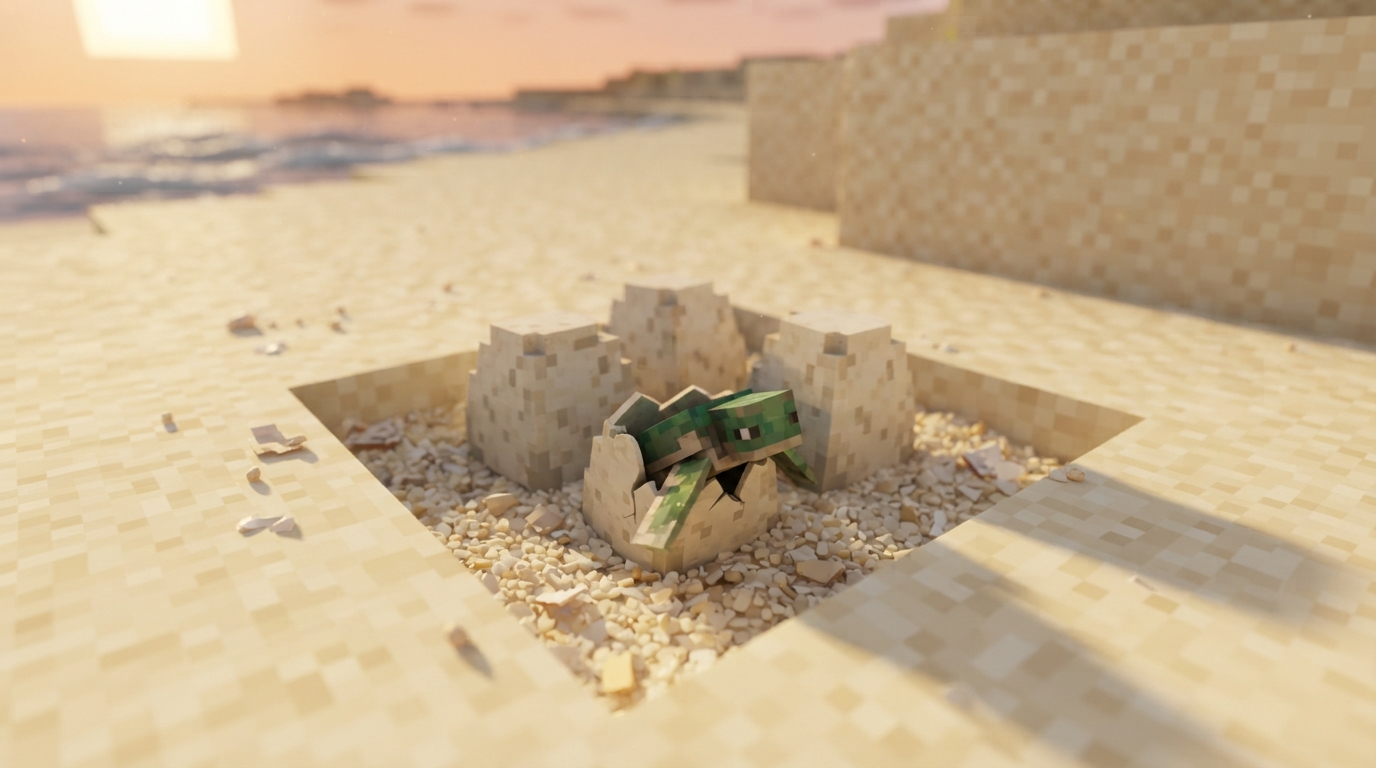
A turtle egg that seems stalled may need more nights. About 90% of turtle eggs hatch within seven nights, so a slower hatch may still fall within the reported range. The Minecraft Wiki provides this timing estimate. Count nights in the game, and don’t assume an egg is stuck just because it has not hatched after a few.
Look closely at each egg for changes in its cracks, which can be easy to miss during a quick check. An egg that has not reached its third cracking stage has not finished progressing toward a hatch. Check the block beneath it, too: it needs to be sand or red sand. If the egg is on another surface, move it onto a suitable block instead of waiting for it to hatch there.
If eggs disappear or the nest looks disturbed, check the enclosure for mobs that can stomp them. Look for zombies, zombie villagers, husks, drowned, and zombified piglins near the nest or inside its barriers. A gap can let a mob reach the eggs while they are still cracking. The Minecraft Wiki lists these egg-stomping mobs. Close any gaps you find and remove nearby threats before they reach the eggs again.
A baby turtle means the egg has hatched, but the turtle is not yet an adult. Hatchlings take about one more in-game day to grow up. This growth time starts after hatching, so it is separate from the egg’s hatch time.
Keep Watch Through The Next Nights
Before the next night, check each egg without moving it. Note whether it has no visible cracks, is in the first or second cracking stage, or has reached the final stage. Confirm that each egg is still on sand or red sand. The Minecraft Wiki’s turtle egg entry says an egg hatches after its third crack, so tracking each egg separately makes its progress easier to spot.
When night falls, check the enclosure for gaps and look nearby for zombies, zombie villagers, husks, drowned, or zombified piglins. After the night, check the eggs again to see whether their cracks have changed. Turtle eggs progress faster at night, but one quiet night does not mean an egg is stuck. The Minecraft Wiki explains the nighttime progress difference.
If your eggs have already had four or five in-game days, keep the nest protected and check it through seven nights. About 90% of turtle eggs hatch within that span, so treat the seventh night as a checkpoint, not a deadline. The Minecraft Wiki gives that seven-night estimate. If an egg remains, check its block and the enclosure for problems, then keep watching its crack stage.