
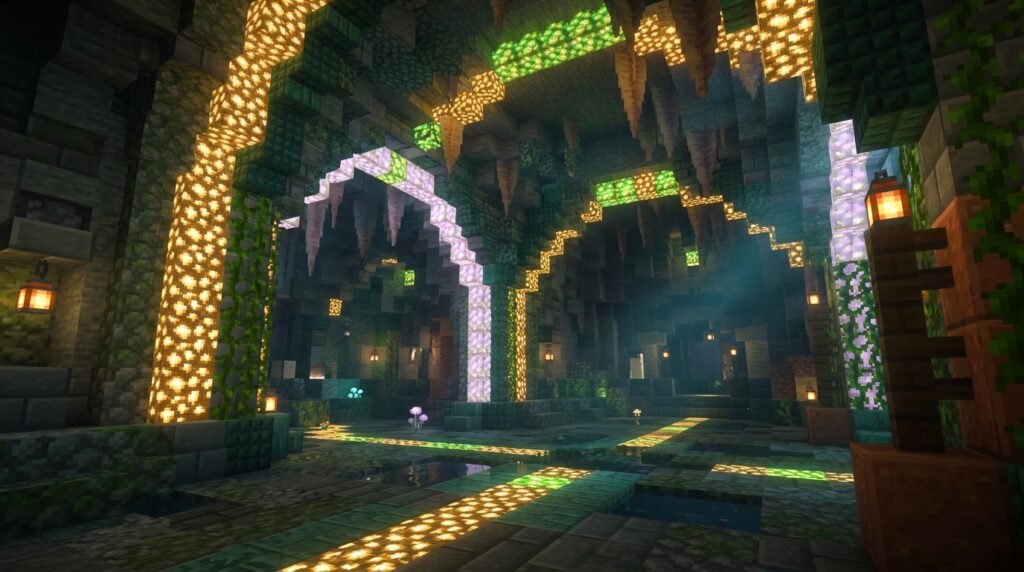
Minecraft froglights can transform a dark base, underwater tunnel, or Nether build with a bright, clean glow. These decorative blocks give off light level 15, the highest possible in Minecraft, and come in ochre, verdant, and pearlescent variants. You cannot craft them, but you can collect them when a frog eats a small magma cube.
Each froglight provides strong lighting and adds color to your build without taking up much space. You can place them on different faces, making them useful for glowing floors, walls, ceilings, and creative lamps. With the right frogs and a magma cube farm, you can collect a steady supply for large projects.
Key Takeaways
- Froglights provide Minecraft’s maximum block light level of 15 in three decorative colors: ochre, verdant, and pearlescent. They work well for bright, unobtrusive lighting in bases, tunnels, gardens, interiors, and Nether builds.
- Froglights cannot be crafted; a frog must eat a small magma cube to produce one. The frog’s variant determines the color: temperate frogs produce ochre, cold frogs produce verdant, and warm frogs produce pearlescent froglights.
- Use different frog variants and a protected Nether magma cube farm to create a renewable supply of all three froglight colors for large Survival projects.
- Froglights can be placed on floors, walls, ceilings, and inside structures, enabling hidden lighting, thin accent strips, pathways, lamps, and colorful patterns without taking up much space.
Minecraft Froglight Introduction
Minecraft froglights are bright decorative blocks added in The Wild Update, Minecraft 1.19. Each froglight gives off light level 15, the highest possible block-light level, so you can brighten large areas without covering your build in torches. The three colors are ochre, verdant, and pearlescent. Their soft, clean look works well in modern houses, fantasy interiors, glowing pathways, and Nether bases.
To collect froglights in Survival, guide a frog toward a small magma cube and let it eat the cube. The frog’s type determines the froglight color, so you can raise different frog types to create a renewable supply. Place froglights on floors, walls, ceilings, or other surfaces to make bold lamps, hidden lights, glowing bridges, and ceiling patterns. Their simple shape and strong light output give you many ways to add color and useful lighting to large builds.
Froglight Colors And Frog Variants
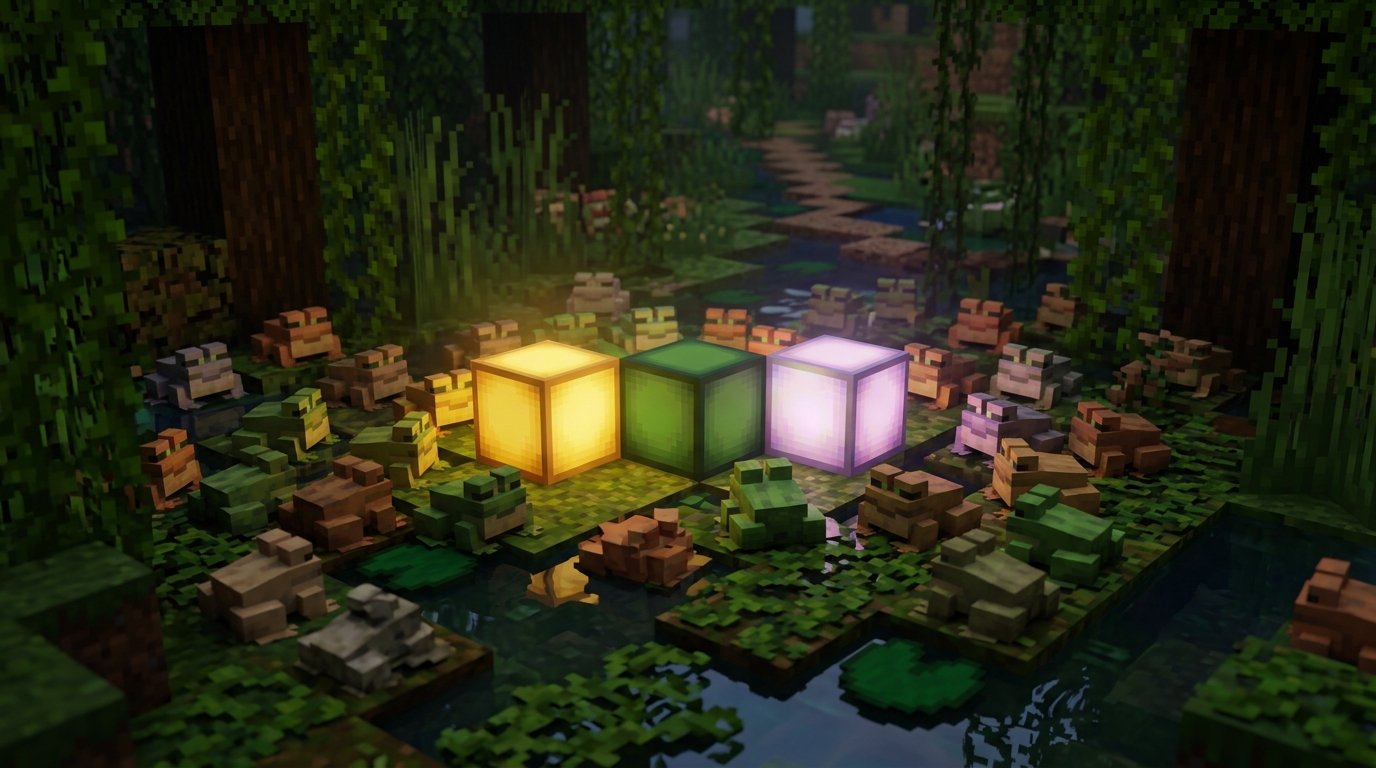
Your frog’s variant determines which froglight color it produces when it eats a small magma cube. Temperate frogs create ochre froglights, which have a warm yellow-orange tone that works well in lantern-style builds and cozy interiors. Cold frogs produce verdant froglights, giving you a soft green light for forests, gardens, caves, and fantasy builds. Warm frogs make pearlescent froglights, which provide a pale purple tone for magical rooms, modern designs, and colorful pathways.
To collect each type, move tadpoles to the right climate so they grow into the frog variant you need. Then bring the frogs near small magma cubes. When a frog eats one, the matching froglight appears as an item for you to collect. All three froglights emit light level 15, making them useful for bright entrances, hidden ceiling lights, underwater areas, and large lighting projects. Mix ochre, verdant, and pearlescent froglights to create clear color themes in your build.
Getting Froglights From Magma Cubes
Start by finding magma cubes in the Nether, especially in Basalt Deltas or near a Nether fortress. Defeat the large and medium cubes so they split into smaller ones, then leave at least one small magma cube alive. Bring a frog to the Nether through a portal, or transport it in a boat and guide it with a lead after you arrive. Keep the frog close to the small magma cube, because it must be within reach to eat the cube and create a froglight.
The frog’s type decides which froglight you receive, so choose your frog carefully. Temperate frogs produce ochre froglights, warm frogs produce pearlescent froglights, and cold frogs produce verdant froglights. Leads make it easier to pull a frog across the Nether, while boats can carry one over long distances and protect it from some terrain hazards. Build walls or fences around the area before releasing the frog, since frogs and magma cubes can wander away during the collection process.
For renewable froglights, create a protected magma cube farm in a Nether location where cubes can spawn. Use platforms, trapdoors, or other guides to move them toward a collection area. You can keep frogs in a safe chamber beside the spawning platform and let them eat small cubes as larger cubes split apart. Separate the frogs from lava and large magma cubes with blocks or fences, while leaving a clear path for small cubes. Add several frogs if you want a steady supply of ochre, verdant, or pearlescent froglights for modern builds, fantasy interiors, and large lighting projects.
Froglight Properties And Placement
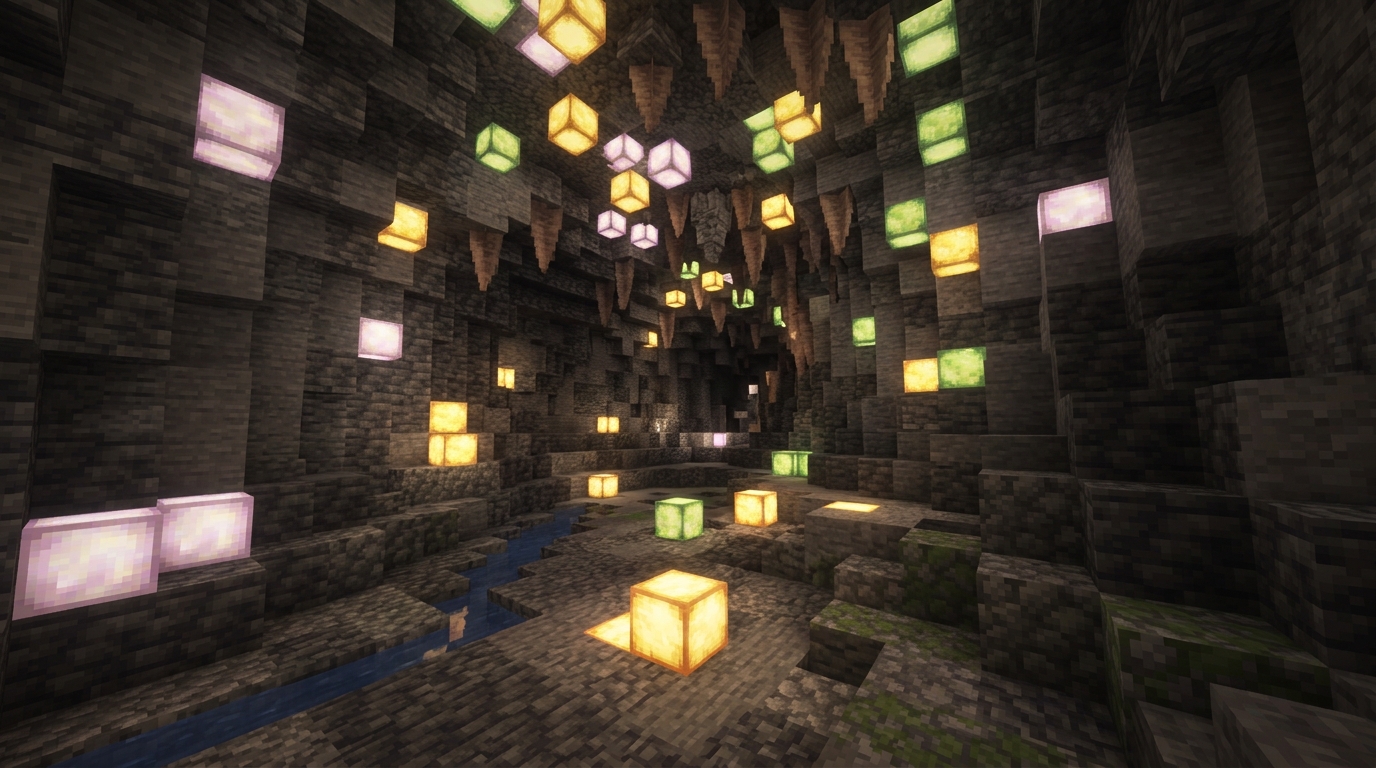
Froglights are bright decorative blocks that produce light level 15, the highest possible block-light level in Minecraft. You can stack up to 64 ochre, verdant, or pearlescent froglights in one inventory slot. They have no crafting recipe, so you must collect them when a frog eats a small magma cube. Despite their strong light output, froglights are easy to break by hand, making them simple to move when you update a build.
You can place a froglight along the X, Y, or Z axis, which lets you position its face in several directions. Hide one in a ceiling to brighten a room without adding a visible lamp, or place one under a floor for soft lighting that keeps paths and interiors clear. Froglights also work inside walls, beneath staircases, and within arches, shelves, or fantasy lantern designs. Their clean look and three color options make them useful for modern builds, themed interiors, and hidden lighting.
Minecraft Froglight Build Ideas
Use ochre froglights for warm modern interiors, such as a quartz kitchen with copper trim and ochre lights beneath the cabinets. Pearlescent froglights suit clean white walls, glass roofs, and polished quartz floors, while verdant froglights add a cool accent to a dark deepslate office or rooftop pool. In a fantasy castle, hide ochre lights under wooden beams for torch-like warmth, place pearlescent lights in throne-room pillars, and use verdant lights to create a magical library or potion room. Their light level of 15 keeps these spaces bright without bulky lamps.
Build an underwater base with pearlescent froglights behind prismarine walls to create a soft, moonlit glow, or mix verdant lights into kelp gardens and sea lantern patterns. In a Nether hub, ochre froglights pair well with blackstone, basalt, and crimson wood, while verdant lights can mark safer routes through a warped-wood tunnel. For outdoor gardens, tuck verdant froglights beneath moss, leaves, and small ponds. Use ochre lights beside wooden paths and village farms to make the area feel welcoming. Pearlescent lights also work well in a village well, bakery, or market stall when framed with spruce or birch.
Make large pathways easier to follow by repeating a color pattern every few blocks, such as ochre at village entrances, verdant at garden branches, and pearlescent along a grand castle road. For a modern highway, place pearlescent froglights under quartz slabs or inside copper lamp frames, while deepslate borders make the bright blocks stand out. You cannot craft froglights, so in Survival, you need a frog to eat a small magma cube. A frog and magma cube farm can supply all three colors. Because froglights can be placed on different faces and emit maximum light, you can build thin wall strips, ceiling panels, and floor markers without blocking your design.
Minecraft Froglight Conclusion
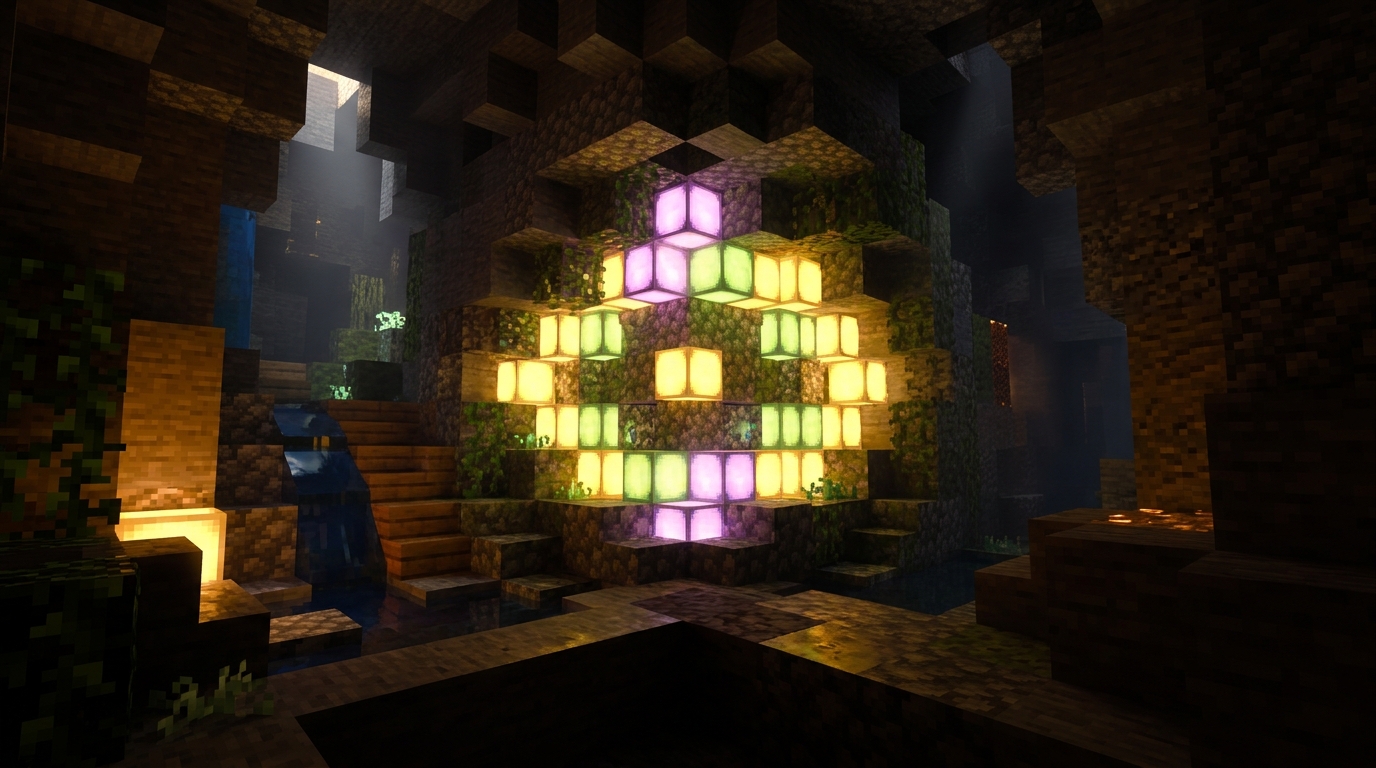
Your frog’s variant determines the froglight color it produces when it eats a small magma cube. Temperate frogs create ochre froglights, cold frogs create verdant froglights, and warm frogs create pearlescent froglights. You cannot craft these blocks, so collecting each color means bringing the right frog to a safe magma cube farm or gathering area. Once the frog eats the small magma cube, it produces one froglight for your building projects.
With a light level of 15, froglights give you the strongest block light in Minecraft while adding clean decoration. Use ochre froglights for warm wood interiors, verdant froglights for leafy gardens or swamp builds, and pearlescent froglights for bright modern rooms, castles, or fantasy structures. Their simple shape works well in ceilings, floors, walls, and large lighting systems. Choose a color that matches the mood you want and the materials already in your build, then use froglights to make the space brighter and more polished.
Brighten Builds With Colorful Froglights
Minecraft froglights provide bright, colorful lighting for modern builds, fantasy interiors, and large projects. Ochre froglights offer a warm yellow tone, verdant froglights add a soft green shade, and pearlescent froglights provide a pale purple look. Every variant produces light level 15, so you can brighten a room, tunnel, garden, or city without sacrificing style. You can also place froglights in different directions, making them useful for wall details, ceiling fixtures, floor patterns, and hidden lighting.
You cannot craft froglights, but you can collect them by having a frog eat a small magma cube. The frog’s type determines which color you receive, so raising different frogs helps you build a reliable supply of all three variants. With a magma cube farm and the right frog types, you can create a renewable source for large lighting projects. Once you know how to gather each color, froglights become a practical choice for decoration and powerful Survival lighting.