
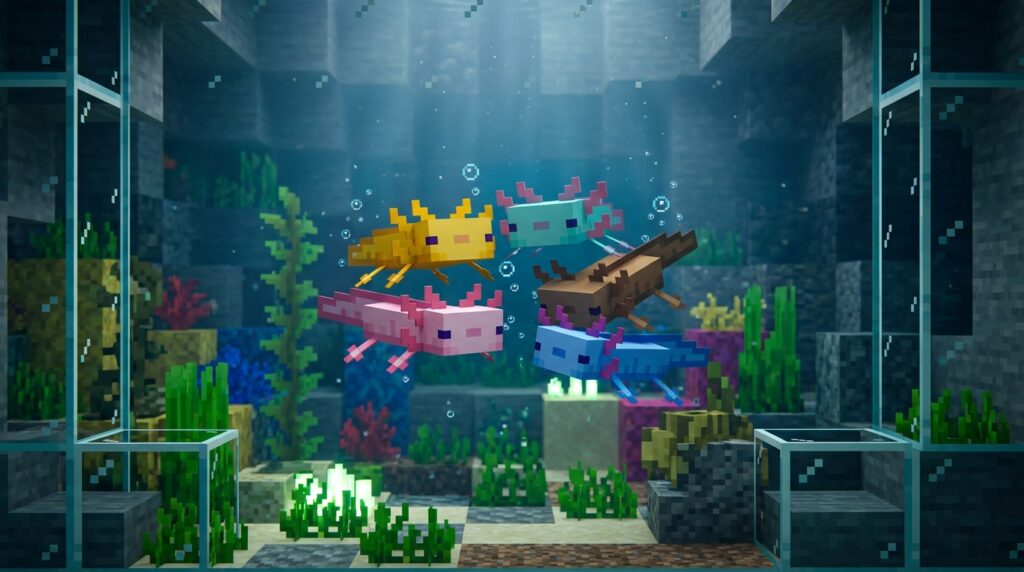
Minecraft axolotls come in five colors: leucistic (pink), wild (brown), gold, cyan, and blue. The names can be tricky at first, so use pink and brown as visual clues for leucistic and wild. The axolotl color guide can help you compare the variants.
The four non-blue colors have equal chances of spawning naturally, but blue is a breeding mutation. Each baby axolotl has a 1-in-1,200 chance of being blue, so finding one can take patience. The breeding guide explains what to expect when you raise axolotls.
Key Takeaways
- Leucistic, wild, gold, and cyan axolotls spawn naturally at equal chances underwater in lush caves where clay is fewer than five blocks below the spawning space.
- Blue axolotls do not spawn naturally, and each baby has a 1-in-1,200 chance of being blue when you breed two axolotls.
- To try for a blue axolotl, feed two adult axolotls a bucket of tropical fish each, then remember that breeding cooldowns are five minutes in Java Edition and one minute in Bedrock Edition.
What Colors Can Axolotls Be?
Minecraft has five axolotl colors: leucistic (pink), wild (brown), gold, cyan, and blue. The Minecraft Wiki axolotl entry uses these names for the five variants.
| Variant | Familiar color |
|---|---|
| Leucistic | Pink |
| Wild | Brown |
| Gold | Gold or yellow |
| Cyan | Blue-green |
| Blue | Blue |
Use the color labels as quick visual clues: pink points to leucistic, while brown points to wild. Gold and cyan are separate variants, so look for the warmer gold shade or the cooler blue-green shade. Blue is easy to match to its color, but you obtain it differently from the other variants.
Leucistic, wild, gold, and cyan can spawn naturally. Blue is a breeding mutation, not a color you’ll find among natural spawns.
Which Axolotl Colors Are Rarest?
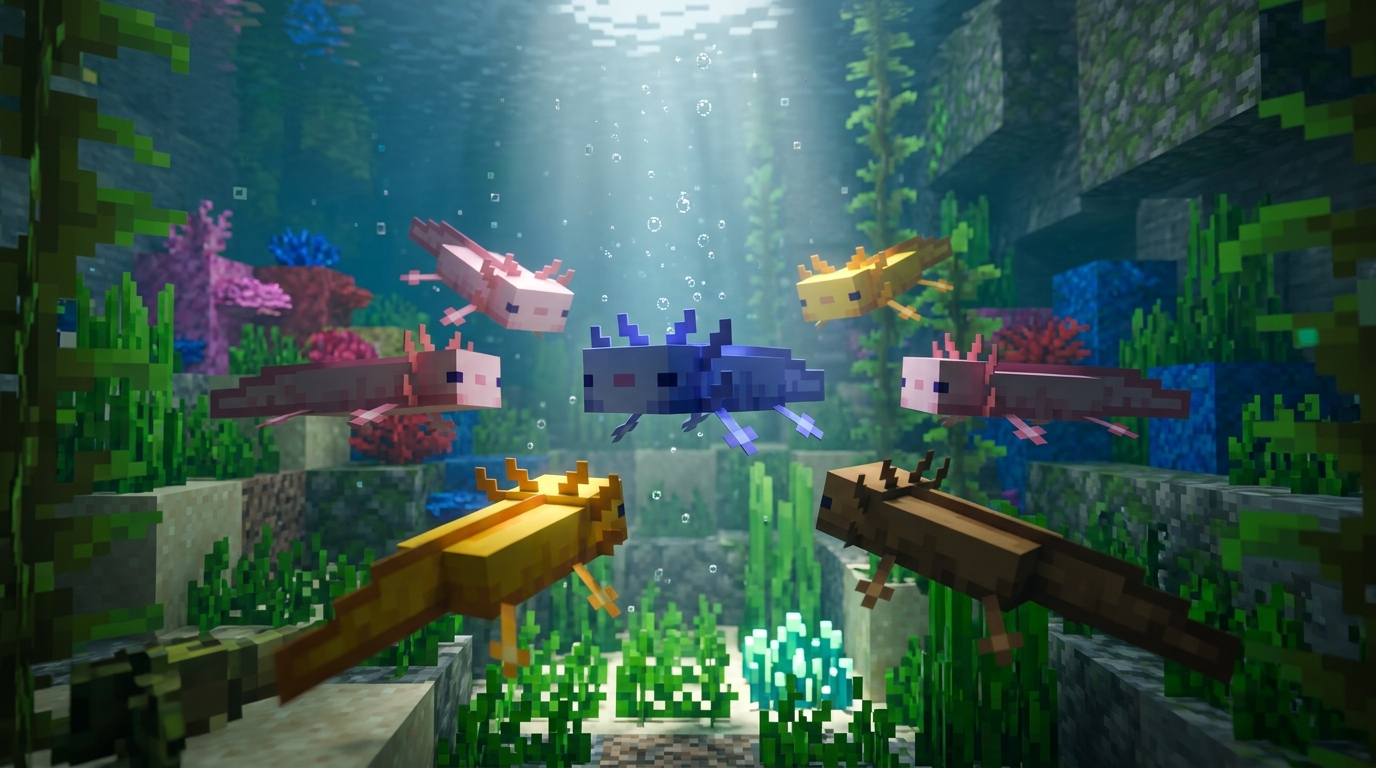
Blue is the rarest axolotl color to obtain because it doesn’t appear in natural spawns. Leucistic, wild, gold, and cyan have equal chances of spawning naturally. This comparison applies only to axolotls found in the world: blue’s rarity comes from breeding, not from a lower natural-spawn rate.
Each baby axolotl has a 1-in-1,200 chance of being blue when two axolotls breed. If the baby isn’t blue, it inherits one parent’s color, so two non-blue parents can produce a baby in either parent’s color. The Minecraft Wiki breeding guide gives the 1-in-1,200 figure for the blue breeding mutation, not for natural spawns. This is the chance for each baby, not a promise that you’ll get a blue axolotl after exactly 1,200 attempts.
Where Do Axolotls Spawn?
Axolotls spawn underwater in lush caves. The spawning space must have clay fewer than five blocks below it, according to the Minecraft Wiki axolotl entry.
To find naturally spawning non-blue variants, start your search in lush caves. Check underwater spaces and look for clay fewer than five blocks below each possible spawning space. The clay condition matters, so don’t judge a cave by its greenery alone.
This location rule narrows down where to search, but it doesn’t tell you which color will spawn in a particular cave. Keep checking eligible underwater spaces as you explore. Each axolotl you find is a chance to add a naturally spawning color to your collection. A lush cave won’t give you a blue axolotl through natural spawning.
How Do You Breed Blue Axolotls?
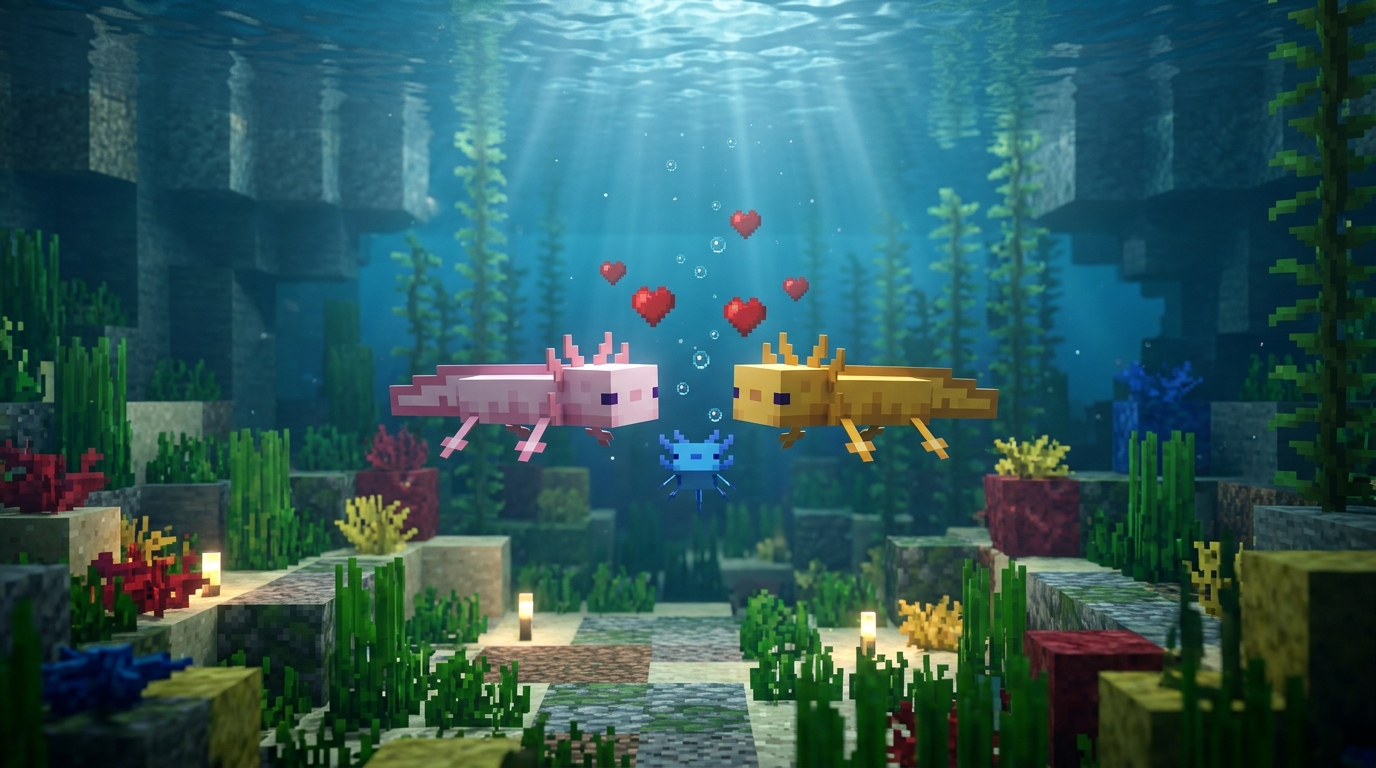
To try for a blue axolotl, breed two adult axolotls using buckets of tropical fish.
- Bring two adult axolotls together in a safe space.
- Feed each axolotl a bucket of tropical fish.
- Wait for the baby axolotl to appear.
Each baby has a 1-in-1,200 chance of being blue. If it isn’t blue, it takes one parent’s color, so breeding two non-blue axolotls usually gives you a baby in one of their colors. The odds apply to each baby and don’t guarantee a blue axolotl after a set number of tries. Axolotls have a breeding cooldown of five minutes in Java Edition and one minute in Bedrock Edition. Babies mature in 20 minutes unless fed, according to the Minecraft Wiki breeding guide. In Java Edition, the July 2021 update made blue axolotls obtainable only through breeding. Keep the cooldown in mind when planning another attempt. Each new baby is still a separate chance at the rare blue color.
Build Your Axolotl Color Collection
Use the five-color guide as a checklist: leucistic (pink), wild (brown), gold, cyan, and blue. Mark each variant when you identify its color, and keep natural finds separate from babies you raise.
Search underwater areas in lush caves for naturally spawning leucistic, wild, gold, and cyan axolotls. The Axolotl entry describes their spawning location. Put blue on the breeding side of your checklist, not the natural-spawn list.
Breed axolotls with buckets of tropical fish when you want to try for blue. Each baby has a 1-in-1,200 chance of the blue mutation, so breeding isn’t guaranteed, as the breeding guide explains. Finding or breeding a blue axolotl may take patience.
Build Your Axolotl Color Collection
Build a five-bay water display and label each bay with an axolotl variant’s name. Leave an empty space for every color you haven’t collected yet, so your display shows exactly what’s missing.
Keep a short log beside the display. For each axolotl, note its color and whether you found it in a cave or bred it. If you bred it, write down the parents’ colors too. That record can help you tell a new find from another axolotl you already have.
Before your next session, choose one empty bay as your goal. If you’re missing a naturally spawning variant, revisit a lush cave and note where you search. If you’re missing blue, keep track of each baby you raise without treating any single attempt as a guarantee. When an axolotl’s color is hard to identify, compare it with the visual guide before filling its bay.