
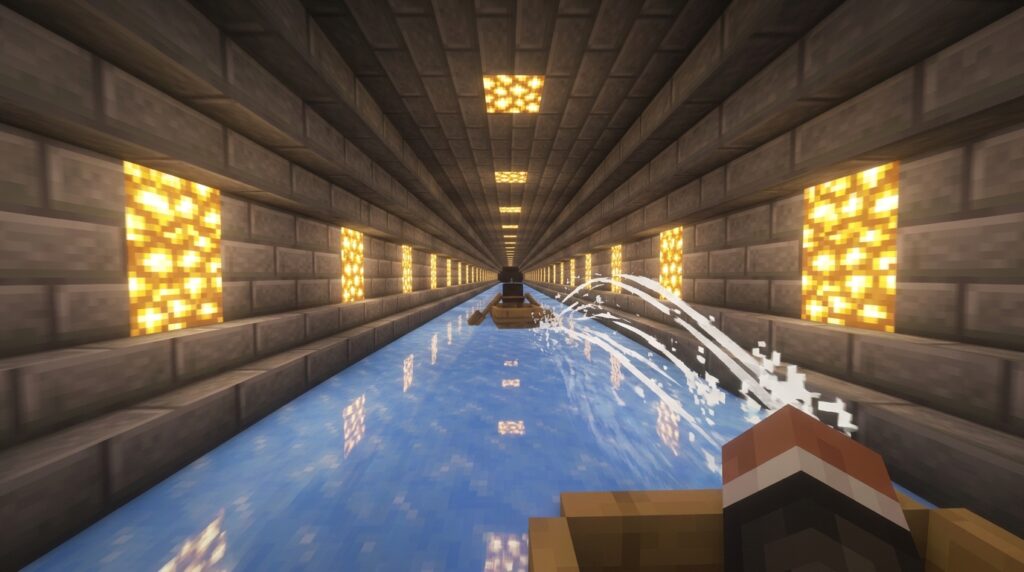
Tired of spending hours trekking between your Minecraft bases or sprinting through endless tunnels? This boat ice highway tutorial shows you how to harness the game’s physics to reach speeds of over 570 blocks per second. By placing a boat on slippery ice blocks inside the Nether, you can travel thousands of blocks in the blink of an eye. Since every block you move in the Nether counts for eight in the Overworld, you will never have to worry about long-distance travel again.
Choosing the right materials is the secret to a smooth and fast ride. Blue ice offers the highest top speed for those with plenty of resources, while packed ice provides a reliable, melt-proof alternative that fits a smaller budget. You only need a path at least two blocks wide to keep your boat from bumping into walls. Once you align your boat on these frozen tracks, you can cross your entire world map in just a few minutes.
Key Takeaways
- Constructing a boat highway in the Nether allows you to reach speeds of over 570 blocks per second relative to the Overworld by leveraging the eight-to-one travel ratio.
- Blue ice provides the highest top speed for premium transit, while packed ice offers a reliable, melt-proof, and budget-friendly alternative for survival players.
- Design your highway with a minimum width of two blocks and use buttons or slabs to prevent mob spawns and reduce friction against walls.
- Maximize resource efficiency by placing ice blocks every other space or in a staggered layout, as the boat’s hitbox is large enough to bridge gaps without losing momentum.
Choosing Between Packed Ice And Blue Ice
When you are planning your highway, the biggest decision you will face is whether to use Packed Ice or Blue Ice. Packed Ice is the go-to choice for most survival players because it is affordable and reliable. You only need nine blocks of regular ice to craft one block of Packed Ice, and it will never melt in the Nether. At a speed of 40 blocks per second, you can cross thousands of blocks in just a couple of minutes. This makes it the perfect middle ground for someone who wants a fast transit system without spending days mining in a frozen ocean.
Blue Ice is the premium option for players who want the absolute fastest travel possible. While it is much more expensive to craft, requiring 81 regular ice blocks for a single piece, the speed boost is incredible. You can reach speeds of nearly 73 blocks per second, which feels like teleporting when you build your path in the Nether. This translates to over 580 blocks per second in the Overworld, allowing you to reach distant biomes or friends’ bases in the blink of an eye. If you have a Silk Touch pickaxe and a massive ice farm, this is the ultimate upgrade for your world.
Choosing between these two materials usually comes down to your current budget and the length of your trip. For shorter tunnels under a thousand blocks, the extra speed of Blue Ice might not be worth the massive amount of extra crafting. Packed Ice is much easier to gather in bulk if you are just starting your first major infrastructure project. However, for a main hub that connects your entire world, investing in Blue Ice ensures you have the most efficient transportation system available. Regardless of which one you pick, both options will leave minecarts in the dust.
Engineering Your Nether Roof Ice Track
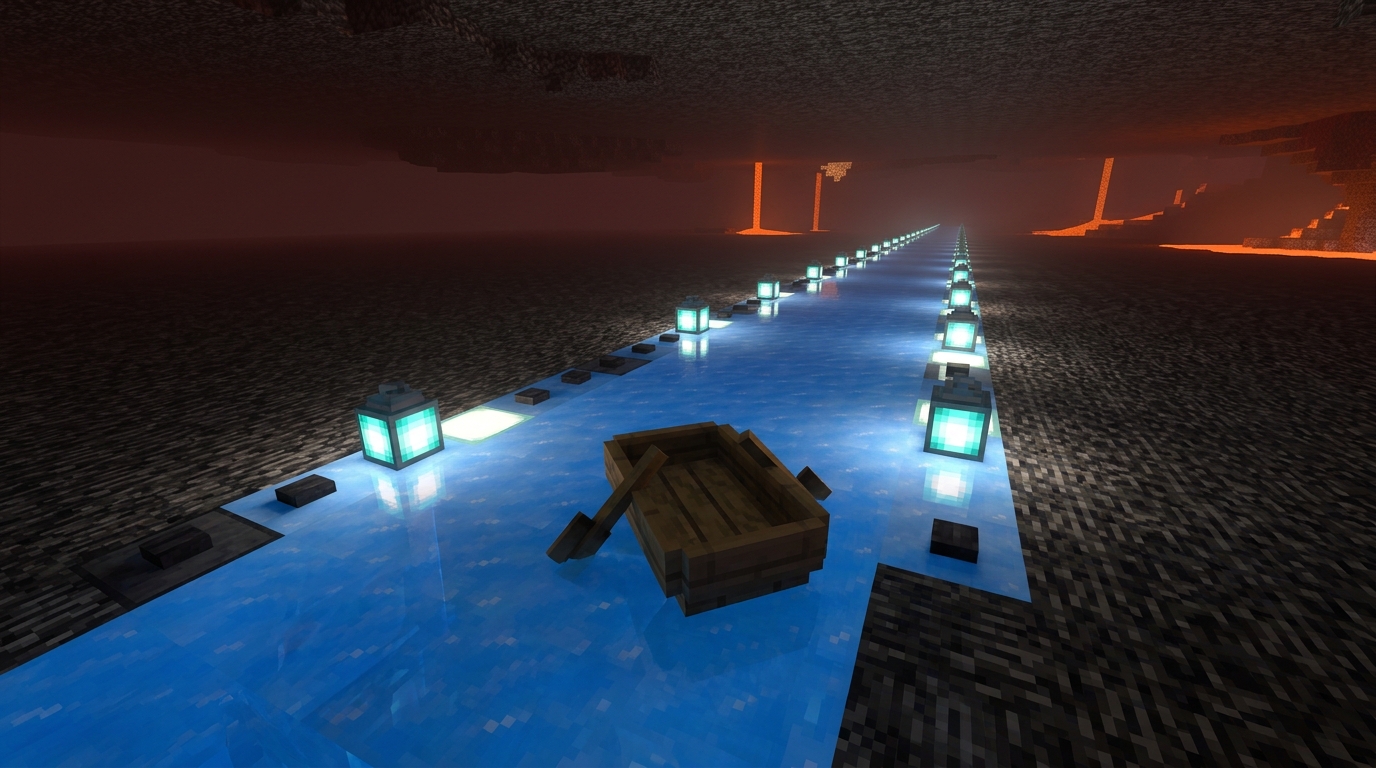
To get started, you need to reach the flat, bedrock ceiling of the Nether to clear a straight path for your highway. Since the Nether has an eight to one travel ratio, every block you place here saves you massive amounts of time in the Overworld. Use a pickaxe to hollow out a tunnel that is at least two blocks wide and three blocks high to prevent your head from hitting the ceiling. If you are building on top of the bedrock roof, simply clear away any stray mushrooms or fire that might block your boat. Aim for a perfectly straight line between your portals to ensure you can reach those top speeds without crashing into walls.
Once your path is clear, it is time to lay down your ice blocks in a consistent row. Blue ice is the best choice for maximum speed, allowing you to hit over 570 blocks per second relative to the Overworld, but packed ice is a great budget friendly alternative that won’t melt. You can place the ice blocks in a solid line or save materials by placing them every other block, as the boat’s hitbox is large enough to glide over small gaps. To keep your boat from drifting off course, place buttons or pressure plates on the ice or build a small wall using glass panes or stone walls. This keeps you centered so you can hold down the forward key and fly across the dimension in seconds.
Finalize your engineering by adding safety features and easy access points along the track. Lighting is important to prevent mobs like Piglins from spawning on your highway, but remember to use soul torches or lanterns so you do not accidentally melt any regular ice if you used it. Placing a boat at each end of the track ensures you always have a vehicle ready for a quick getaway. You can even add signs or banners to mark specific coordinates for different bases or farms in your world. With the track finished, you have a high speed transportation system that makes minecarts feel like they are standing still.
Preventing Boat Friction With Proper Lane Widths
Maintaining your high-speed momentum requires a path that respects the physical size of your boat. Since a boat measures 1.35 blocks wide, a narrow one-block tunnel will cause you to snag on the walls and lose all your speed instantly. You should aim for a lane width of at least two blocks to give yourself a comfortable buffer for steering. This extra space ensures that even a slight wobble won’t result in a collision that resets your travel time. When you are moving at over 70 blocks per second, having that breathing room is the difference between a smooth ride and a frustrating trek.
If you are looking to maximize efficiency and save on expensive materials like Blue Ice, you can use a staggered layout. You do not actually need a solid floor of ice to maintain top speeds as long as your boat is always touching at least one ice block. By placing ice blocks in a row with a one-block gap between them and using glass panes or buttons as side rails, you can keep your boat centered. This setup prevents friction by keeping the boat away from solid blocks while guiding it perfectly down the middle. Just make sure your side borders are made of non-solid blocks like walls or fences to minimize the chance of getting stuck.
For the ultimate long-distance highway in the Nether, consistency in your lane measurements is your best friend. You should always build your tunnels three blocks high and at least two blocks wide to avoid any cramped feeling or accidental resets. If you encounter a turn, remember to master your dimensions by widening the path even further to accommodate the boat’s turning radius. Using a consistent width allows you to hold down the forward key without constantly micro-managing your direction. This simple planning makes your travel system far more reliable than any minecart track could ever hope to be.
Resource Saving Layouts Using Buttons And Slabs
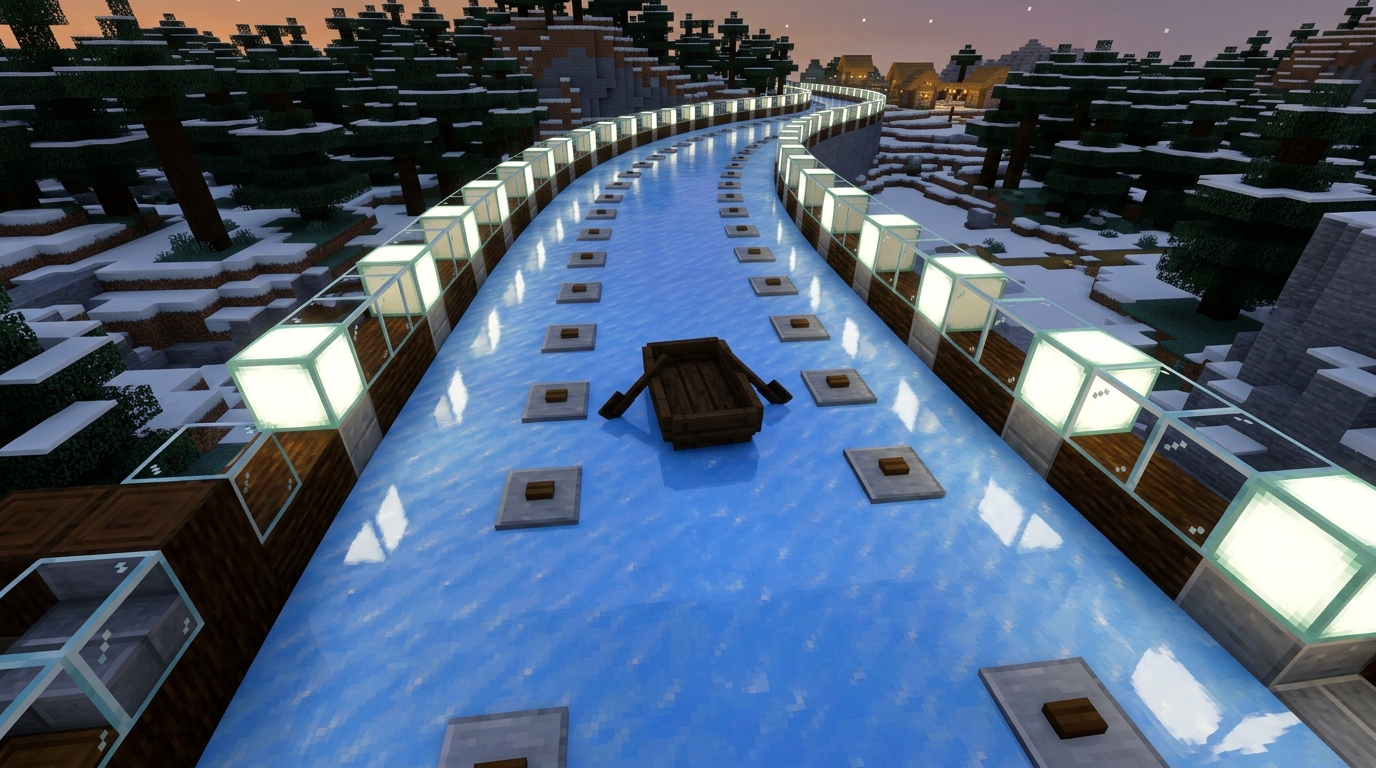
Building a massive transit system in the Nether can quickly drain your supply of Blue Ice, but you do not actually need a solid floor of ice to maintain top speeds. Since a boat is 1.35 blocks wide, it can bridge the gap between two blocks without losing any momentum. By placing your ice in a checkerboard pattern or leaving a one-block gap between rows, you can cut your material costs exactly in half. You can fill these empty spaces with cheap bottom slabs or buttons to ensure the path remains spawn-proof and safe from mobs. This trick allows you to stretch a single stack of ice across twice the distance while still reaching speeds of over 70 blocks per second.
To make this layout work smoothly, you should focus on placing buttons or pressure plates on top of every non-ice block in your path. These small additions prevent mob spawns and keep pesky Piglins from spawning in the middle of your highway and blocking your boat. If you prefer a more solid look, placing glass or slabs at the same level as the ice creates a flush surface that looks great and functions perfectly. This method is helpful for survival players who want the efficiency of a high-speed rail without spending dozens of hours mining ice in a frozen ocean. You simply need to master nether portal coordinate math to keep your boat centered on the seam between the ice and the filler blocks to stay at maximum velocity.
Mastering Your High-Speed Ice Highway
Now that you have laid down your ice and placed your buttons to prevent mobs from spawning, you are ready to experience the fastest travel method in the game. Simply place your boat on the blue or packed ice and start rowing to feel the incredible boost in speed. While a standard minecart only moves at 8 blocks per second, your new highway will allow you to zoom across the terrain at over 70 blocks per second. This upgrade saves you hours of real-world time when moving between your base and distant biomes or farms. It is the best way to work smarter in your survival world.
Building this system in the Nether is the smartest move for any player with a large-scale map. Because every block you travel in the Nether counts as eight blocks in the Overworld, your blue ice highway effectively moves you at over 570 blocks per second. You can cross thousands of blocks of ocean or desert in just a few moments of travel. To reach the top of the world safely, you can master the nether roof glitch to build your infrastructure without any obstacles. Just remember to keep a few spare boats in a chest at each terminal in case one breaks during your journey. Your days of slow walking and tedious minecart rides are finally over, especially if you learn how to build your own automatic basalt generator to farm infinite blocks for your infrastructure.
Frequently Asked Questions
1. Which type of ice should I use for my highway?
Packed Ice is the best choice if you want to save resources since it is easy to craft and never melts in the Nether. If you want the absolute highest speed, use Blue Ice to reach over 70 blocks per second.
2. How wide does my ice path need to be?
You should build your path at least two blocks wide so your boat has enough room to move. This width prevents you from constantly bumping into walls and losing your momentum while you travel.
3. Will the ice melt if I build my highway in the Nether?
No, both Packed Ice and Blue Ice are completely safe to use in the Nether. Unlike regular ice, these blocks will never melt from the heat or nearby light sources like torches and glowstone.
4. How do I get enough ice blocks for a long tunnel?
The easiest way is to find a frozen ocean or ice spikes biome and use a pickaxe with the Silk Touch enchantment. You can then craft nine regular ice blocks into one Packed Ice block, or 81 regular ice blocks into one Blue Ice block.
5. How fast can I actually travel using this method?
By combining Blue Ice with the Nether’s travel multiplier, you can cover more than 570 blocks per second relative to the Overworld. This allows you to cross your entire world map in just a few minutes of driving.
6. Do I need to place ice on every single block of the path?
You can actually save resources by placing ice blocks every other space since the boat is long enough to bridge the gaps. However, a solid floor of ice is much easier to drive on and provides a smoother experience for your trips.