
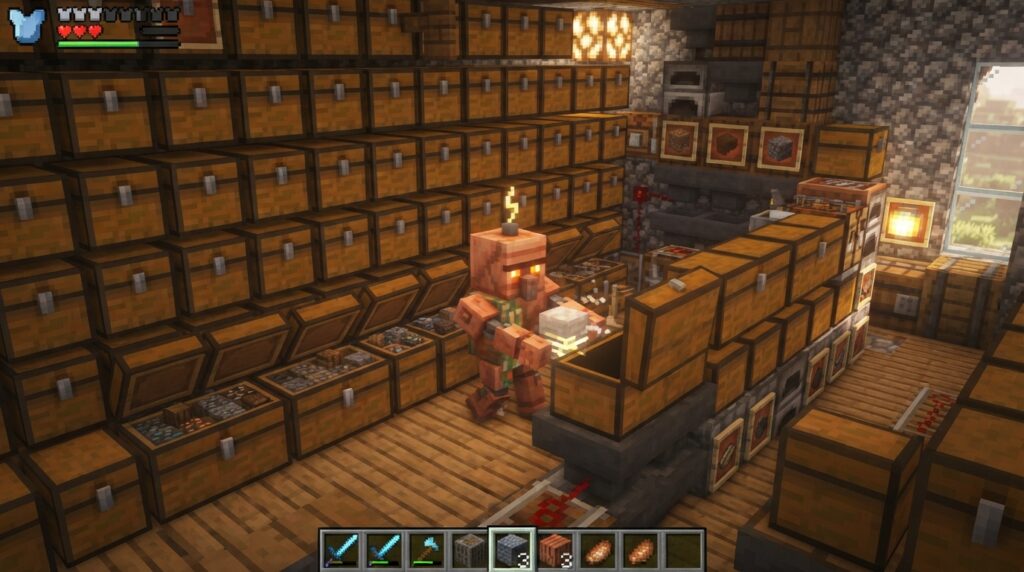
Copper golem sorting helps you tidy your Minecraft storage without building a complex machine. Create a golem by placing a carved pumpkin or jack o’lantern on a copper block, then place items such as cobblestone, wood, or seeds in its copper chest. The golem carries those items to nearby regular or trapped chests that are empty or already contain the same item type.
You can use this setup to organize farm drops, mining loot, or workshop supplies with a few chests and some open space. Keep destination chests close and give each one a clear purpose, since copper golems move items slowly and offer less control than advanced systems. A well-planned layout keeps your base tidy and saves you from sorting every stack by hand.
Key Takeaways
- Create a copper golem by placing a carved pumpkin or jack o’lantern on a copper block, then use its copper chest as the central input point for item sorting.
- Place labeled regular or trapped chests nearby and seed them with representative items; the golem moves items into empty chests or chests that already contain the same item type.
- Keep input loads organized and destinations close, with enough open space for the golem to move freely and enough capacity to prevent items from backing up.
- Copper golem sorting is low-maintenance but slow and less precise than hopper-and-redstone systems, making it best for small bases and low-volume storage rather than busy farms.
Copper Golem Sorting Introduction
Copper golem sorting gives you a simple way to move items from a copper chest into nearby regular or trapped chests. Create a copper golem by placing a carved pumpkin or jack o’lantern on a copper block, then give it a copper chest as its starting point. The golem checks nearby chests and places an item in a chest that is empty or already contains that item type. This lets you build basic storage without wiring a large redstone machine.
To organize your base, place destination chests around the copper chest and add a sample item to each one, such as cobblestone, logs, or food. The golem can then move matching items into those chests while you explore, mine, or build. Copper golem sorting is slower and less precise than hopper-based systems, but it requires much less setup and maintenance. For survival players, it offers an easy way to organize common resources without filling the base with complicated redstone.
Build A Copper Golem Sorter
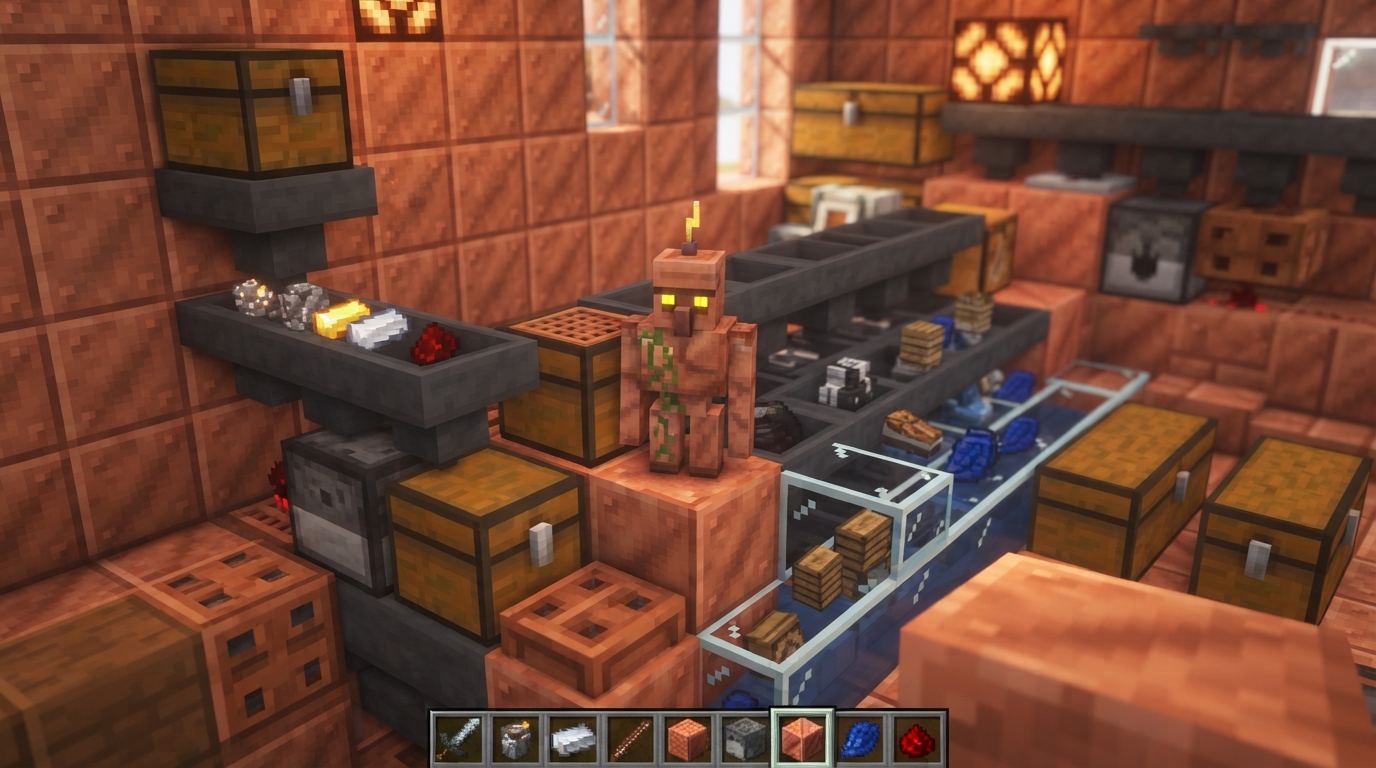
Create your copper golem by placing a carved pumpkin or jack o’lantern on top of a copper block. The pumpkin acts as the golem’s head, so place the copper block first on solid ground. You can craft copper chests by combining a regular chest with copper ingots, giving you a dedicated input container for your sorting setup. Place the copper chest where you can easily drop off items from mining, farming, or exploring.
Choose a compact area where the golem can reach the input copper chest and several nearby storage chests. Leave enough room for it to walk between containers, and keep the storage chests within its working range. Label or group the destination chests by item type, such as cobblestone, ores, wood, and food, so you can load the system quickly. A small room with the copper chest in the center and regular or trapped chests around the walls works well.
Copper golem sorting is simple because the golem moves items into a nearby chest that is empty or already contains the same item type. For example, if a storage chest contains cobblestone, the golem can add more cobblestone from the copper chest without mixing in unrelated items. This low-maintenance option works well for compact storage, although it is slower and less precise than advanced redstone systems. Keep the area safe and well lit so the golem can move freely and you can use the sorter easily.
Load Copper Chests For Sorting
Copper golem sorting starts when your golem searches for a copper chest to use as its supply chest. It checks the chest and picks up to 16 items from the first stack it finds, so a stack with fewer than 16 items moves in full. After picking up the items, the golem looks through nearby regular or trapped chests for a suitable destination. This makes a copper chest a simple loading point for your storage system.
The golem places items only in an empty chest or in a chest that already contains the same item type. For example, it can add cobblestone to a chest holding cobblestone, but it will not mix cobblestone into a chest filled with dirt. If no suitable destination is available, the golem waits about seven seconds before trying again. You can create separate destination chests for blocks, food, tools, and other supplies to make your sorting setup easier to manage.
Arrange Nearby Chests By Item
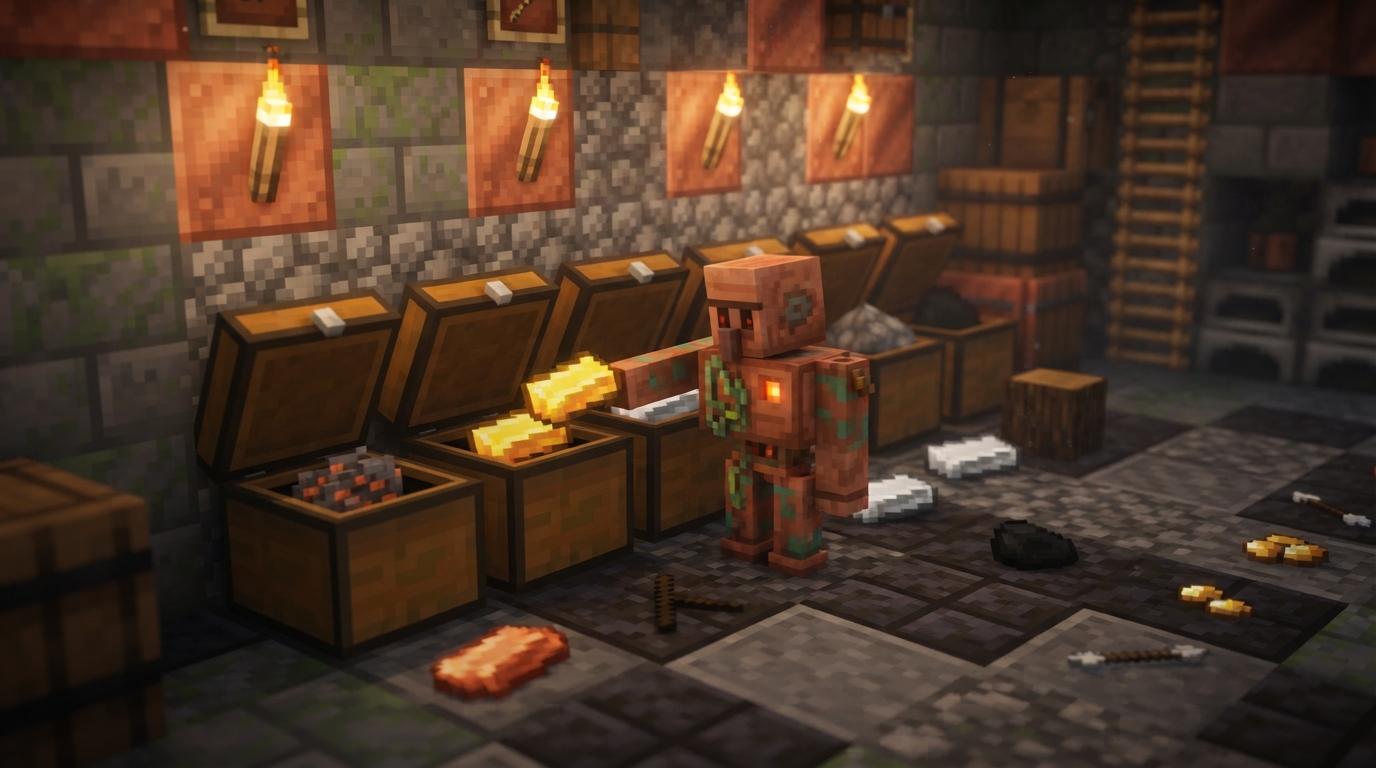
Place regular or trapped chests around your copper golem to create a simple storage area for common building materials. For example, dedicate one chest to cobblestone, another to dirt, and a third to wooden blocks. The golem takes items from its copper chest and places them in a nearby chest that is empty or already contains the same item type. Leave enough space around each chest so you can open it easily and see which materials belong there.
For reliable copper golem sorting, keep each input load separate instead of mixing cobblestone, dirt, and wood in the same copper chest. Use one copper chest for cobblestone deliveries, then let the golem move those items to the cobblestone chest before loading another material. Clear labels, signs, or item frames can help you remember each chest’s purpose, while trapped chests work like regular chests in this setup. This arrangement is compact and convenient, though it sorts more slowly and with less precision than a powered redstone storage system.
Copper Golem Sorting Limits
Copper golem sorting is slower and less precise than a hopper or redstone sorting system, so it works best for small, casual storage rooms. A golem takes items from a copper chest and carries them to nearby regular or trapped chests that are empty or already contain the same item type. Because it moves items one trip at a time, a busy farm can fill the copper chest faster than the golem can empty it. You may notice delays when sorting large amounts of cobblestone, crops, or other common drops.
Your storage layout also needs backup space for problems the golem cannot solve. If every matching chest is full, the item stays in the copper chest. Items with no suitable destination remain there as well. Extra items can also end up in a general-purpose chest when several nearby destinations are available, since the golem has limited control over which chest it chooses. Keep chests clearly separated, leave room in each destination, and use one copper chest for a small group of related items to reduce mix-ups.
For high-volume farms, use hopper systems and redstone filters when you need exact destinations and a steady item flow. These systems can send iron to one chest, wheat to another, and unwanted drops to disposal or overflow storage without relying on the golem’s path or chest choices. Copper golems are still useful for simple survival storage, starter bases, and low-output farms where some delay is acceptable. Choose a hopper-based design when your farm runs constantly or when a full chest could prevent important items from being stored.
Copper Golem Sorting Conclusion
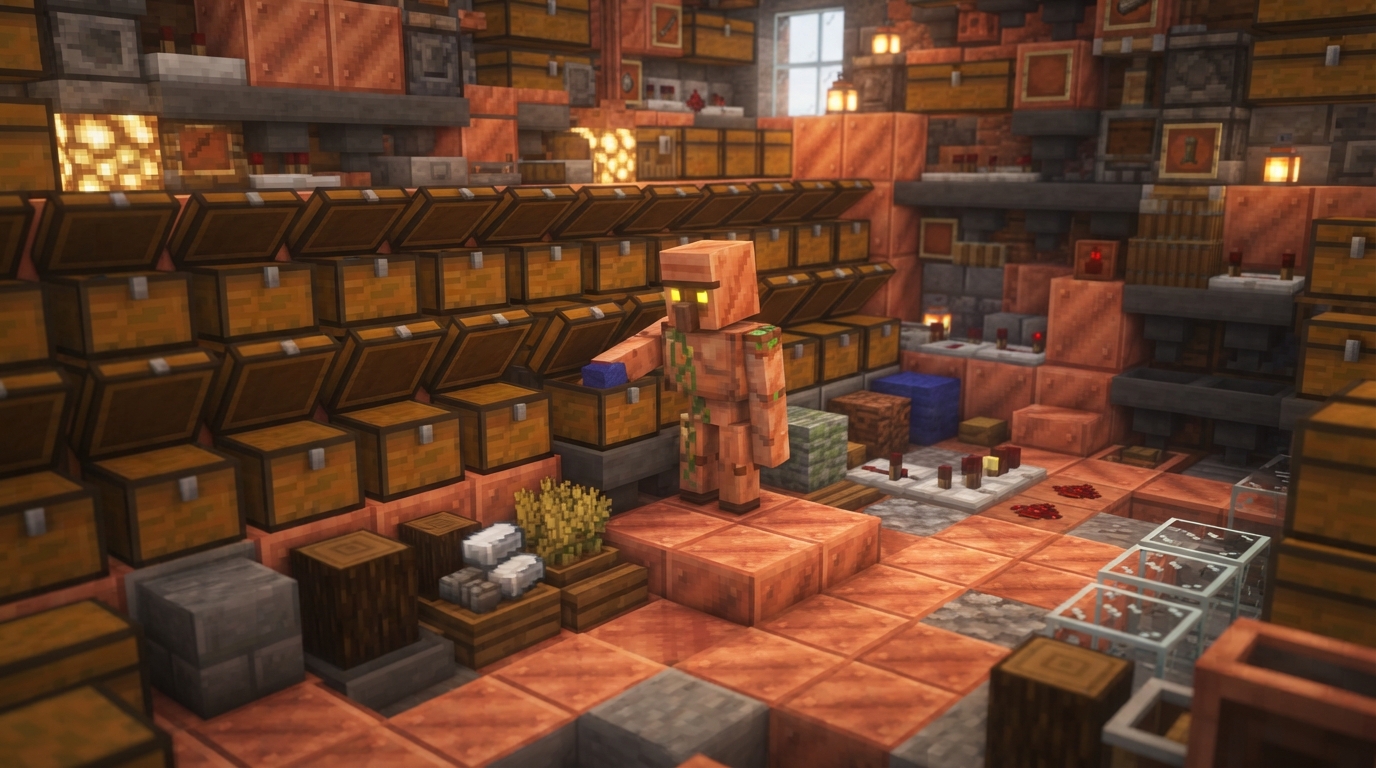
Copper golem sorting gives you a simple way to organize everyday Minecraft items without building a complex redstone machine. The golem takes items from a copper chest and moves them into nearby regular or trapped chests. It can place an item in a chest that is empty or already contains the same item type, so you can label nearby chests for blocks, food, tools, or mob drops. For example, a golem can move cobblestone into one chest, seeds into another, and rotten flesh into a third when you return items to your storage area.
This setup works well for small survival bases because the copper chest provides a central drop-off point and nearby storage chests keep common items organized. Golems are slower and less precise than hopper and redstone systems, but they are easy to create and require little maintenance. Use copper golem sorting when you want a friendly, low-effort storage system for regular gameplay. When your item flow becomes too large for the golem to handle, upgrade to redstone or hopper sorting for faster and more precise organization.
Sort Your Storage With Copper Golems
Copper golem sorting gives you a simple way to organize storage without building a large redstone system. Create a golem by placing a carved pumpkin or jack o’lantern on a copper block, then use its copper chest as the input chest. The golem takes items from that chest and carries them to nearby regular or trapped chests. It can place an item in an empty chest or one that already contains the same item type, so label each destination with a starter item such as cobblestone, dirt, or iron ingots.
For the best results, keep your copper chest and storage chests close together, and avoid mixing unrelated items in the same area. You can use several destination chests to build a compact sorting corner for materials from mining, farming, or exploring. Copper golems require little maintenance, but they move items more slowly and with less control than complex hopper systems. Choose copper golem sorting when you want an easy, practical storage setup that saves space and reduces manual chest organization.