
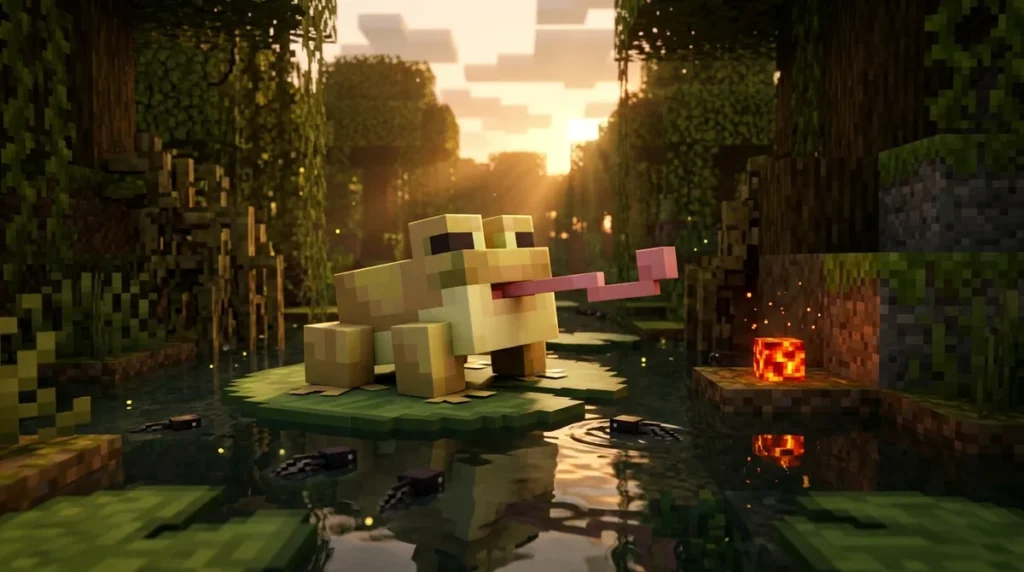
Minecraft frog breeding works by feeding two adult frogs slimeballs. Once fed, one of them seeks out a nearby water or waterlogged block with air above it and lays frogspawn there. Wild frogs spawn in groups of 2 to 5 in swamps and mangrove swamps, so those biomes are the best place to start. Frogspawn hatches after a random delay of 3 to 10 minutes into 2 to 5 tadpoles, and you can scoop those up with a water bucket.
Those tadpoles grow into cold, temperate, or warm frogs. The biome where they mature decides which type they become, not the variant of their parents. Here’s how to set up your first breeding spot and keep a steady supply of frogs coming.
Key Takeaways
- Feed two adult frogs slimeballs, and one of them will lay frogspawn on a water or waterlogged block that has air above it.
- Frogspawn hatches after a random delay of 3 to 10 minutes into 2 to 5 tadpoles, so check the pool a few minutes after the frogspawn appears.
- The biome where a tadpole matures decides its frog type, so raise tadpoles in deserts, savannas, or jungles for warm frogs, in plains or birch forests for temperate frogs, and in snowy plains or taiga for cold frogs.
- Wild frogs spawn in groups of 2 to 5 in swamps and mangrove swamps, so you should start your search for frogs in those biomes.
- You earn the With Our Powers Combined achievement by collecting Pearlescent, Ochre, and Verdant Froglights, which requires raising cold, temperate, and warm frogs in three different biomes.
Where Do Frogs Live in Minecraft?
Wild frogs spawn naturally in swamps and mangrove swamps, usually in groups of 2 to 5. Since they gather in these wet biomes, that’s where you should start your search. Frogs are part of The Wild Update, which Minecraft Wiki describes as the 2022 update that added frogs and tadpoles to the game.
Look for frogs near water rather than out in the open. Walk slowly along the muddy banks of ponds and slow streams, and check the spaces between mangrove roots in mangrove swamps. Frogs tend to stay close to the water, so a quick loop around a single pond can show you whether a group is nearby. Carry a water bucket with you, since you’ll want it later for moving tadpoles.
Every wild frog belongs to one of three types: cold, temperate, or warm. Each type has its own look, and the color you see depends on the biome the frog is in. That means a frog’s appearance tells you where it grew up, not just where you found it.
A frog’s type comes from the biome where its tadpole matures. A frog born from a pair of temperate parents can still become a cold or warm frog if its tadpole grows up in a different biome. So if you want a specific frog type, the place you raise the tadpoles matters more than the parents you started with.
How Do You Breed Two Frogs with Slimeballs?
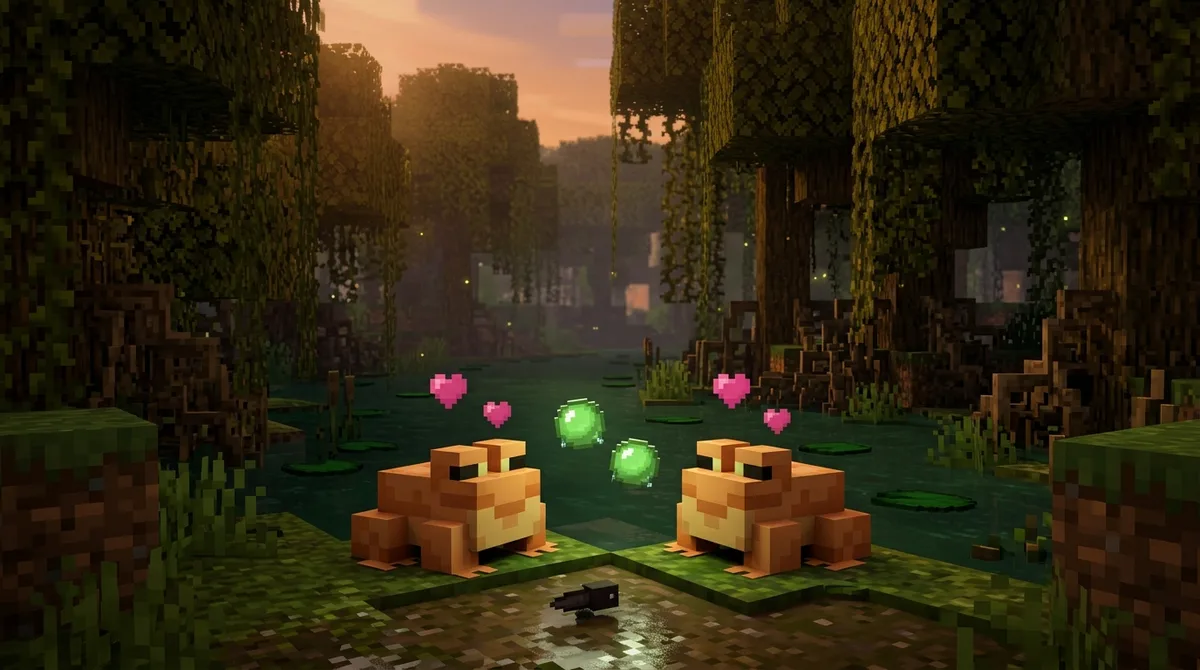
To breed two frogs, feed slimeballs to two adult frogs. One of them will then seek out a nearby water or waterlogged block with air above it and lay frogspawn. You need slimeballs before you start, and you’ll need more later to speed up tadpole growth.
Slimeballs come from slimes, the bouncy green cube mobs you can find in swamps. When you defeat a slime, it can drop slimeballs. Large slimes split into smaller ones when they’re hit, so keep attacking the smaller slimes that appear until you have enough slimeballs in your inventory.
Build your breeding pen beside a pond or a block of water, with the water inside the pen’s edge. Leave the water open to the sky, because the frog needs air above the water block to lay its frogspawn. Enclose the rest of the pen with solid blocks so the frogs can’t hop out while you work.
Once your pen is ready, follow these steps:
- Hold a slimeball and right-click the first adult frog to feed it.
- Hold another slimeball and right-click the second adult frog to feed it.
- Watch for hearts above both frogs, which tells you they’re ready to breed.
- Look for one frog swimming or hopping toward a water or waterlogged block with air above it.
- Check that block after a short wait, because the frogspawn appears on the water where that frog chose to lay it.
Keep the frogspawn in its pool and leave it alone while it develops. Make sure the pool stays full, since a drained block is no longer a water block for the frogspawn to sit on.
How Long Does Frogspawn Take to Hatch?
Frogspawn hatches after a random delay of 3 to 10 minutes, and each hatch produces 2 to 5 tadpoles. Because the delay changes every time, you can’t know the exact moment it will happen, so check the pool a few minutes after the frogspawn appears.
Stand at the edge of the pool where you can see the frogspawn clearly. Keep an eye on the water around it, since the tadpoles will appear in the same pool once they hatch. If you wander off to gather more slimeballs or build somewhere else, you could miss the hatch and not realize how many tadpoles you have.
To protect frogspawn, start with the pool itself. Surround the water with solid blocks so you don’t accidentally break the eggs while you walk past. Keep the water topped up, because frogspawn needs a water block beneath it to stay in place. Don’t drain the pool to make room for another build.
Tadpoles need water to survive, so they can never leave it. Once they hatch, keep them in the pool or move them straight into a water bucket. A tadpole on dry ground won’t last, so don’t build a path that forces them out of the water. Give the pool enough space for the tadpoles to swim around while they grow.
Moving Tadpoles to Change Your Frog Type
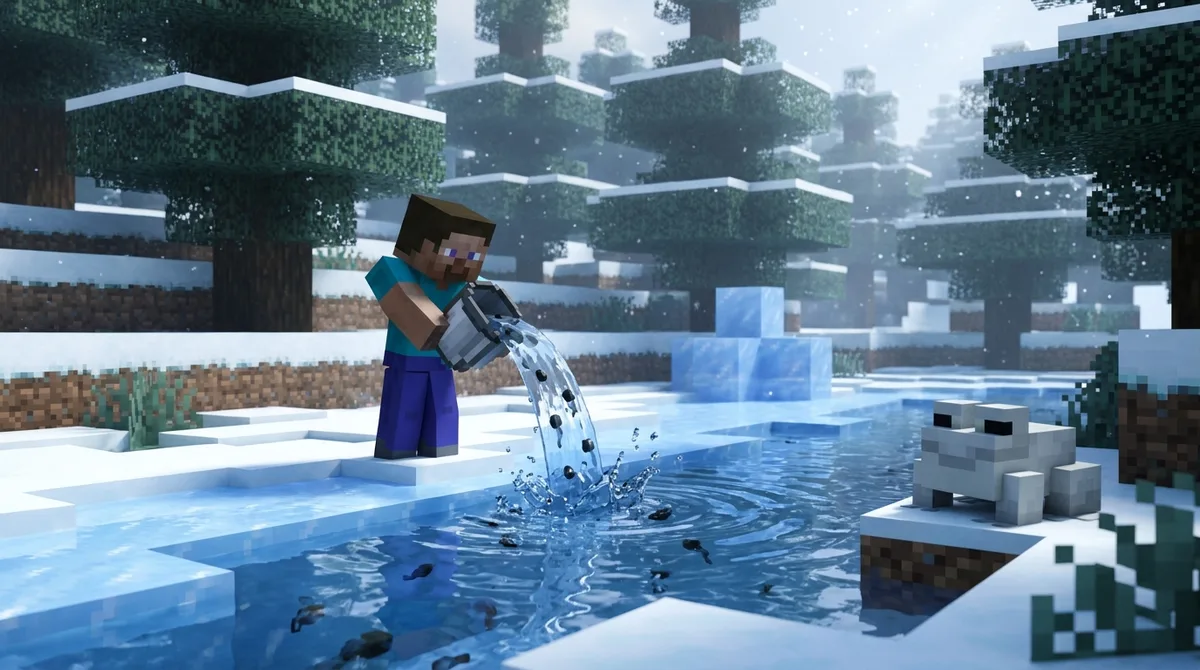
Moving tadpoles is the simplest way to choose your frog type. Right-click a tadpole with a water bucket to scoop it up, and it will ride along inside the bucket. Carry it to the place where you want it to grow, then place the water down so the tadpole swims free.
The biome where the tadpole matures sets its frog type, so decide on the biome before you move anything. Cold frogs grow up in frozen and snowy places such as snowy plains and taiga. Temperate frogs come from grassy and forested biomes like plains and birch forest. Warm frogs grow up in hot biomes such as deserts, savannas, and jungles.
Say you have a swamp pool full of tadpoles and you want warm frogs. Scoop several tadpoles into your water bucket, walk to a desert, and place the water in a shallow pond you’ve dug there. The tadpoles will grow into warm frogs, even though their parents came from a temperate swamp. A pool made of several water blocks in a sandy patch gives them room to swim and keeps the water source stable.
Keep a few tips in mind as you move them:
– Fill your bucket only with tadpoles you plan to move together, so you can keep track of each group. – Dig a pond in the new biome before you scoop anything up, so you don’t have to hunt for a spot while the tadpoles wait in the bucket. – Check that the new water block sits on solid ground, so the tadpoles stay wet and don’t end up on dry sand or dirt.
If you want a mix of frog types, split your tadpoles into separate ponds, one per biome. Each pond then gives you a frog type you can count on.
What Do Minecraft Frogs Eat and How Do They Get Froglights?
Frogs eat small slimes and small magma cubes, and when a frog eats a small magma cube, it drops a froglight. The kind of froglight depends on the frog that ate it, so the frog type you raised earlier decides what you collect. Cold frogs drop Pearlescent Froglights, temperate frogs drop Ochre Froglights, and warm frogs drop Verdant Froglights.
Froglight farming works by bringing your frogs to a spot where small magma cubes spawn and letting them hunt. Small slimes work as food too, but magma cubes are the ones that give you the light blocks. Keep each frog type in its own pen so you know which froglight you’ll get from each one.
Start by building a pen with a clear view of the magma cube spawn area. Solid walls keep your frogs from hopping away, and a short fence or wall gives magma cubes a route to the frogs. Check the pen often, since frogs will only eat what comes within reach.
Each froglight works as a light source, and each has a different color, so you can use them to decorate. Keeping one pen per frog type makes it easy to see which color you’re producing. You can then plan your builds around the blocks you have on hand.
The achievement called With Our Powers Combined rewards you for collecting all three froglight types. Because each frog type drops a different froglight, you need at least one cold, one temperate, and one warm frog in your collection. That means you must raise tadpoles in three different biomes, using the same method you learned earlier, before you can finish the achievement.
Plan your pens so that each frog type has its own spot and its own supply of magma cubes. Once you have a froglight from every type, you’ve finished the achievement and can focus on whatever build you want next.
How Can You Speed Up Tadpole Growth?
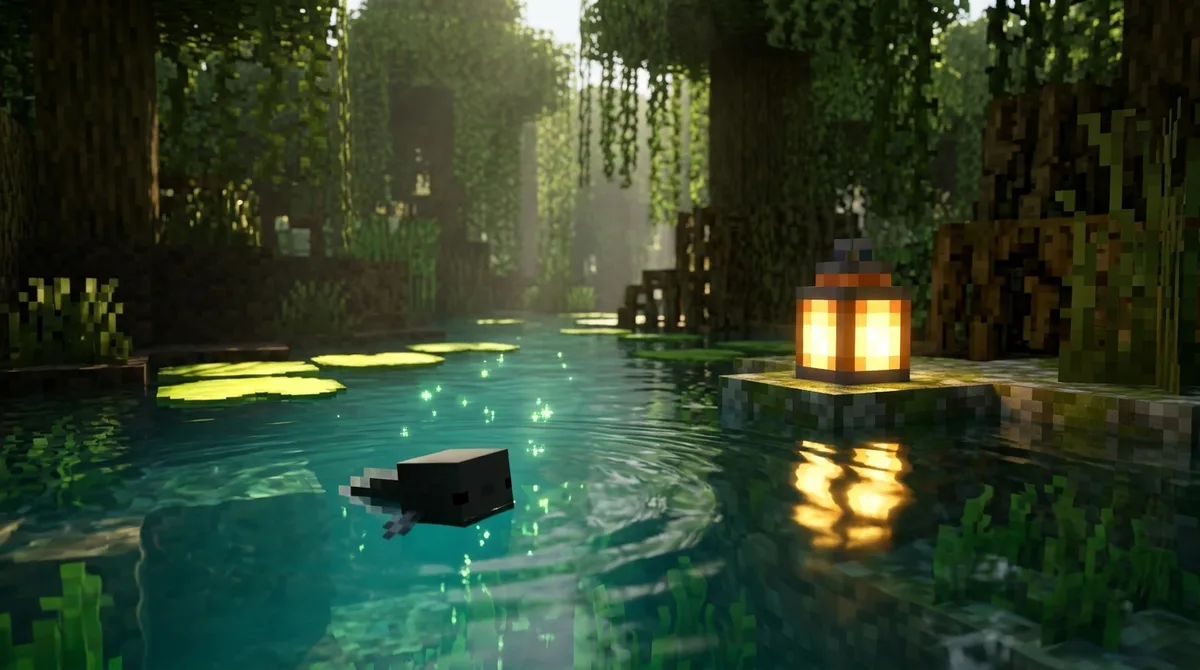
Slimeballs speed up tadpole growth, so keep a stack of them in your inventory once your frogspawn hatches. Use them while the tadpoles are still small, since that’s when the extra help matters most. Then keep your adult frogs in the same breeding pen so you can produce the next batch without starting over.
To keep a steady supply, expand your frog farm with a second water area. Dig a new pond right beside the first, and keep your breeding pen between the two so both ponds stay within reach of your adult frogs. Make the second pond wide enough for a fresh batch of tadpoles, so the first pond doesn’t get crowded.
Once your frogs are fully grown, spend a few minutes watching them. Pay attention to:
– How high each frog hops when it jumps – The calls and sounds they make near the water – The animations they play when they settle or leap
Java and Bedrock Edition can differ in some details, so before you build a large farm, check the Minecraft Wiki for version-specific information that matches the edition you play.
Building Your First Frog Breeding Setup
Your first move is to head to the nearest swamp and find a pond with a frog group nearby. Bring enough slimeballs to feed two pairs of frogs, plus a water bucket and enough solid blocks to wall in a small pen.
Start with one breeding pair. Feed both frogs, then watch the water beside your pen for frogspawn. Once it appears, give the pool time to hatch, since the delay can run anywhere from 3 to 10 minutes.
When the tadpoles show up, decide on your frog type before you scoop anything. A pond of several water blocks on sand in a desert will raise warm frogs, while a pond in a plains biome will raise temperate ones. Pick one biome, move your tadpoles there with the bucket, and keep that pond separate from your swamp pool so you always know which frog type you’re growing.
Once that first pond works, repeat the process in a second biome. Keep each frog type in its own pen and its own water, and you’ll have a steady supply of frogs without guessing which tadpole will become which type.