
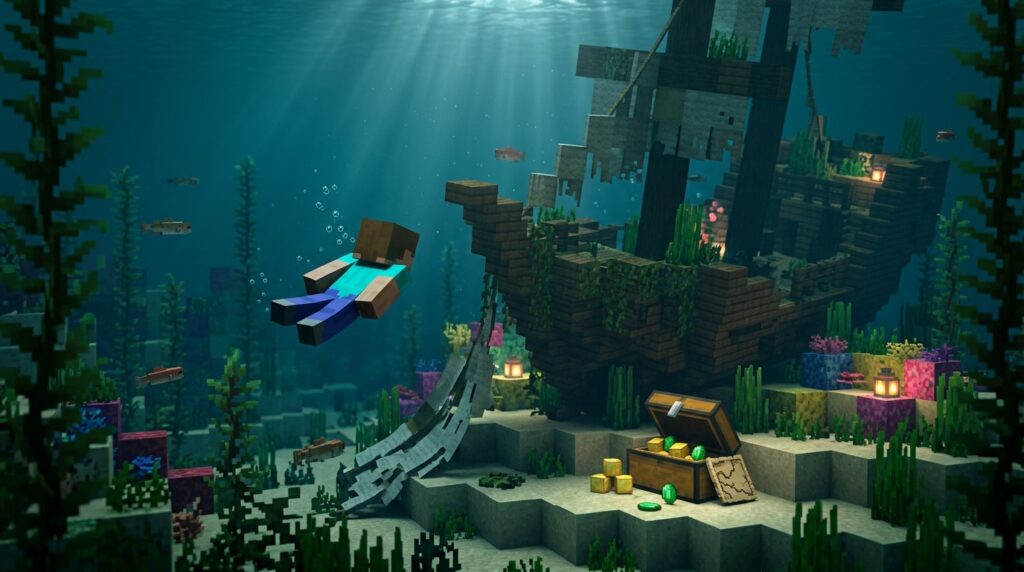
Minecraft shipwreck loot can come from up to three chests, and which ones you find depends on how much of the wreck is still intact. Shipwrecks arrived with the 2018 Update Aquatic, and each one can hold a supply chest, a map chest, and a treasure chest, each tucked into a different section of the ship. The supply chest sits near the bow, the treasure chest near the upper stern, and the map chest down in the lower hull. If you play Java Edition and the wreck has at least two chests, you can count on a map chest, and that chest always contains one buried-treasure map.
The treasure chest is where things get exciting. In Java Edition, it has a 14.1% chance to hold a diamond, so one dive can turn up something valuable, though you should never count on it. The supply and treasure chests also hand out different resources, which is why checking every chest on a wreck pays off. Underwater hunting does come with risks, though. Drowned can attack you, and bubble columns can throw you around, so keep an eye on your air bar the whole time. The rest of this guide walks you through each chest type, what to grab first, and how to dive safely so you can come back for more.
Key Takeaways
- In Java Edition, any shipwreck with at least two chests includes a map chest, and that map chest always holds one buried-treasure map.
- When you find a wreck, swim straight to the lower hull and open the map chest first, then surface to refill your air bar before you search the rest of the ship.
- Check every chest you can reach on a wreck, since your supply chest near the bow and your treasure chest in the upper stern give you different resources.
- In Java Edition, a shipwreck treasure chest has a 14.1% chance to contain a diamond, so you should treat that diamond as a bonus rather than something to plan your dive around.
- Keep an eye on your air bar the whole time you’re inside a wreck, because drowned and bubble columns can catch you off guard.
How Many Chests Can a Shipwreck Hold?
A shipwreck can hold up to three chests: a supply chest, a map chest, and a treasure chest. Which ones you find depends on which parts of the wreck are still intact, so two wrecks from the same ship design can offer very different loot.
The supply chest belongs to the bow, the pointed front of the ship. It’s usually the first chest you’ll reach when you swim up to a wreck from the front. If the bow is broken off, the supply chest may not be there at all.
The treasure chest sits in the upper stern, the back section of the ship above the hull. If that part of the wreck has collapsed, you won’t find this chest, even if the rest of the ship looks fine. Keep in mind that the treasure chest and the supply chest give you different resources, so a missing chest means missing items you can’t get anywhere else on that wreck.
The map chest is tucked into the lower part of the ship, down in the hull. In Java Edition, any wreck that spawns at least two chests will include a map chest, and that chest is guaranteed to hold one buried-treasure map. That makes the lower hull worth a careful search, even if the upper parts of the wreck look picked over.
If you play Bedrock Edition, the treasure chest works a little differently. Mojang’s official Bedrock sample loot table for this chest uses three pools of items. The first pool makes 3 to 6 rolls, the second makes 2 to 5 rolls, and the third makes one roll. Each roll pulls an item from its pool, so a single treasure chest can hand you a good handful of things at once.
Before you spend time on any wreck, take a look at its shape from the surface or the first few blocks you can see. A wreck with an intact bow and a damaged stern tells you the supply chest is probably there and the treasure chest may be gone. Knowing which sections are still standing helps you plan your dive, so you don’t waste air searching areas that have nothing left to give.
What Can You Find in the Supply Chest?
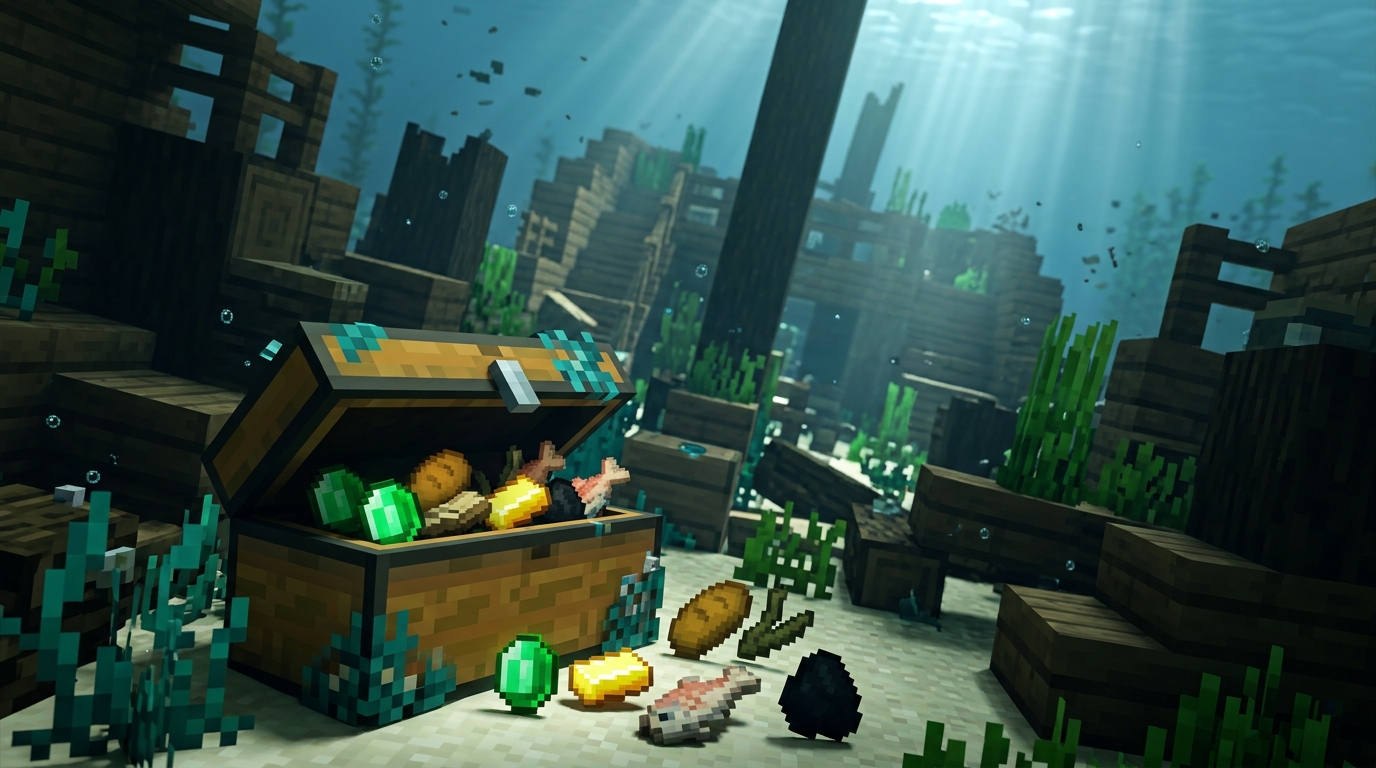
The supply chest at the bow holds everyday supplies, mostly food and fuel. That makes it different from the map chest and the treasure chest, so you can’t skip it and expect to get the same items from the other two. It’s usually the first chest you reach when you swim up to a wreck from the front, which means it’s often the first thing you can check.
Open it right away, even if the rest of the ship looks like a mess. A bow that’s still standing protects the chest, but a torn-up front may have buried it or scattered it. Grab what you can while you’re close, and take note of anything you want to come back for.
When the wreck is mostly broken, you’ll need to decide what matters most. In Java Edition, a wreck with at least two chests always includes a map chest, and that chest is guaranteed to hold one buried-treasure map. A Minecraft Wiki underwater tutorial suggests collecting the map from the lower stern, heading back to the surface for air, and saving the rest of the wreck for a later dive. Use that same plan here: grab the bow chest first, then head for the map chest if you can reach it.
Here’s the tip that saves the most time: check each chest before you dig deeper into the wreck. Open the bow chest, see what it holds, and then decide whether the hull or the upper stern is worth your air. Knowing what the ship has lets you skip empty sections and focus on the chests that matter.
Keep an eye on your air bar the whole time you’re inside. Drowned can attack you in the dark corners of a wreck, and bubble columns can push you around when you least expect it. If your air drops low, swim back up before you open another chest. A dead diver gets nothing, but a careful one can return for the loot another day.
Why Is the Map Chest the Most Valuable Find?
The map chest is the most valuable find on a shipwreck because it’s the one chest that reliably gives you a buried-treasure map. In Java Edition, that chest always holds one map, so it can lead you to a whole new hunt. What to do with the map after you have it belongs to the buried-treasure topic, so you can read that next.
The rule is simple. In Java Edition, every shipwreck that spawns with at least two chests includes a map chest. If you swim up to a wreck and spot two chests, you can plan on a map being somewhere in the hull. Since the map chest sits in the lower part of the ship, don’t stop searching just because the bow and the upper stern look picked over. The hull is where that map is most likely waiting.
Not every wreck gets one, though. Some wrecks generate without a map chest at all, so if you search the lower hull and come up empty, the wreck isn’t broken. The ship simply didn’t roll one. Note what the wreck gave you, then move on to the next one rather than burning air on a search that was never going to pay off.
Here’s a practical way to dive for it. Swim straight to the lower hull first instead of working through the chests in order. Open the map chest, take the map, and then head for the surface before you do anything else. Drowned can lurk in the dark corners of a wreck, and bubble columns can shove you off course, so don’t stay down until your air bar is nearly empty.
If your air is low when you reach the hull, skip the upper chests for now. A map in your inventory is worth more than a few extra items you might grab on the same dive. You can always come back on a fresh dive to check the rest of the wreck, and the map will still be there when you return to the surface safely.
Can You Get Diamonds From a Shipwreck Treasure Chest?
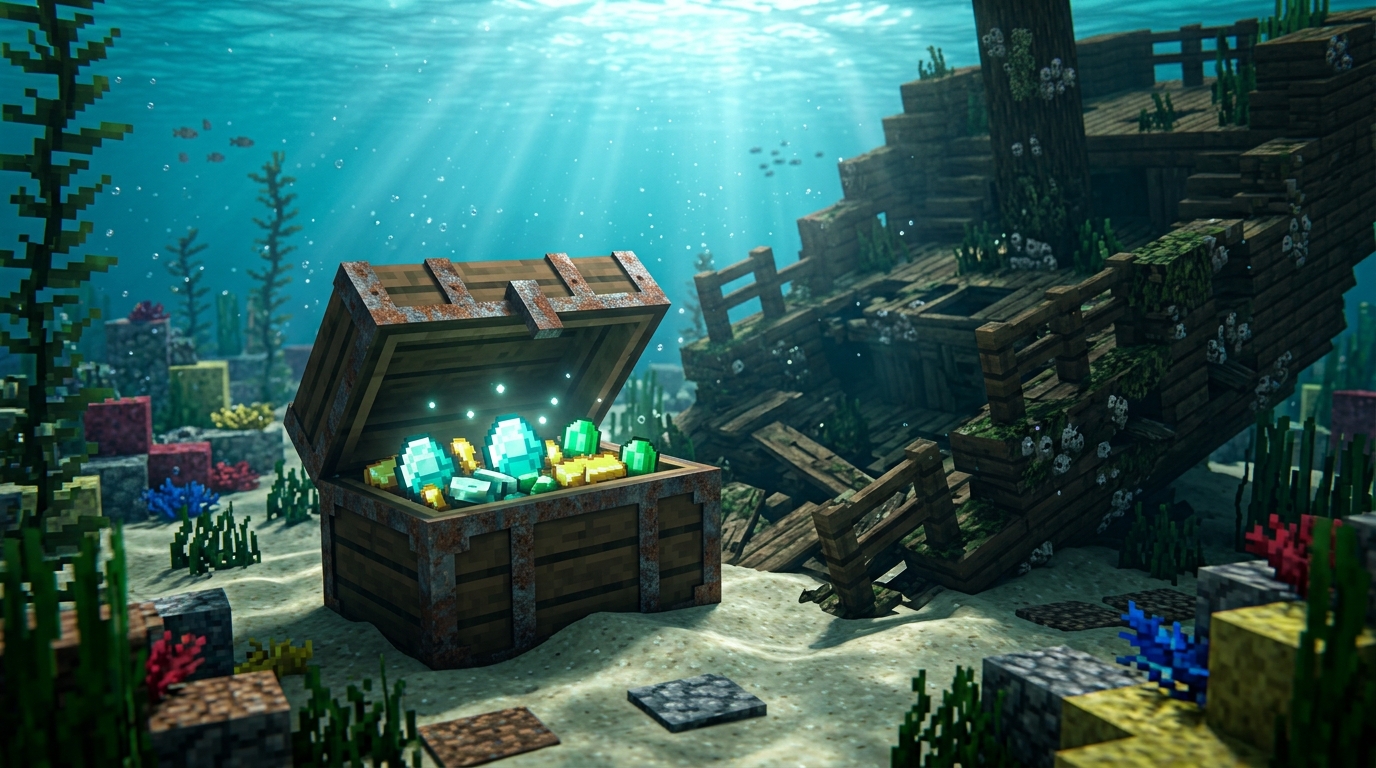
Yes, the treasure chest in the upper stern can hold a diamond, but in Java Edition the odds are low. The shipwreck treasure chest has a 14.1% chance to contain one diamond, so most wrecks won’t give you one. Treat a diamond as a nice bonus, not something to plan your dive around.
Why is the chance so low? Each chest works like a set of random draws. Minecraft doesn’t pick its contents from one fixed list. It makes a series of random picks, and each pick has a small chance of landing on something valuable. That’s why two treasure chests from the same kind of wreck can look completely different.
The Bedrock version explains this clearly. Its treasure chest uses three pools, and you can think of a pool as a bag of possible items. A roll is one reach into that bag to pull out an item. The first bag gets between 3 and 6 reaches, the second gets between 2 and 5, and the third gets exactly one. The number of reaches changes from chest to chest, so one treasure chest might give you a handful of items while another gives you only a few.
This is also why the same wreck can feel generous one day and stingy the next. The number of reaches and the item each reach lands on are both random. Add in the fact that a damaged upper stern may not have a treasure chest at all, and you can see why every wreck is a bit of a surprise.
When you open a treasure chest, check every slot before you close it. A single chest can hold several different items, and a diamond is easy to overlook among food, tools, and other materials. Keep a few inventory slots free before you dive so you aren’t forced to leave anything behind.
If you do pull a diamond from a wreck, it’s a useful find. Diamonds are the material for diamond pickaxes, swords, and armor, which are much tougher than their iron or stone versions. Save them for upgrades you’ll really use, since you may not see another one for a while.
How Do Java and Bedrock Shipwreck Loot Differ?
Java and Bedrock shipwrecks have the same three chest types, so you search a wreck the same way in both. The loot inside those chests is where the editions differ, so check the details for the version you play.
| Feature | Java Edition | Bedrock Edition |
|---|---|---|
| Chest types | Supply, map, and treasure chest | Supply, map, and treasure chest |
| Map chest | Every wreck with at least two chests includes one, and it always holds one buried-treasure map | Check your version’s loot table for what the map chest contains |
| Treasure chest | A diamond has a 14.1% chance to appear | Three loot pools: 3 to 6 rolls, 2 to 5 rolls, and one roll |
The table shows the key differences, but it doesn’t tell the whole story. In Java Edition, the map chest is the one you can count on. If a wreck has at least two chests, you know a buried-treasure map is waiting in the hull, so you can plan your dive around it.
Bedrock players get a different kind of guarantee. The treasure chest is built from three pools, and each roll pulls one item from its pool. A chest with 6 rolls in the first pool and 5 in the second can give you a lot more to sort through than one with the minimum counts, so the numbers can vary a lot from chest to chest.
Don’t assume that what you find in one edition will match the other. Items, counts, and chances can change between versions, so it’s smart to look up the loot table for your own version before you dive. Official Mojang files and the Minecraft Wiki are good places to start, and they’ll tell you exactly what each chest can hold.
Once you know the rules for your version, the rest of the hunt gets easier. You’ll know which chests are worth the time, and you won’t waste air chasing items the game never planned to give you.
Where Does the Coast Armor Trim Come From?
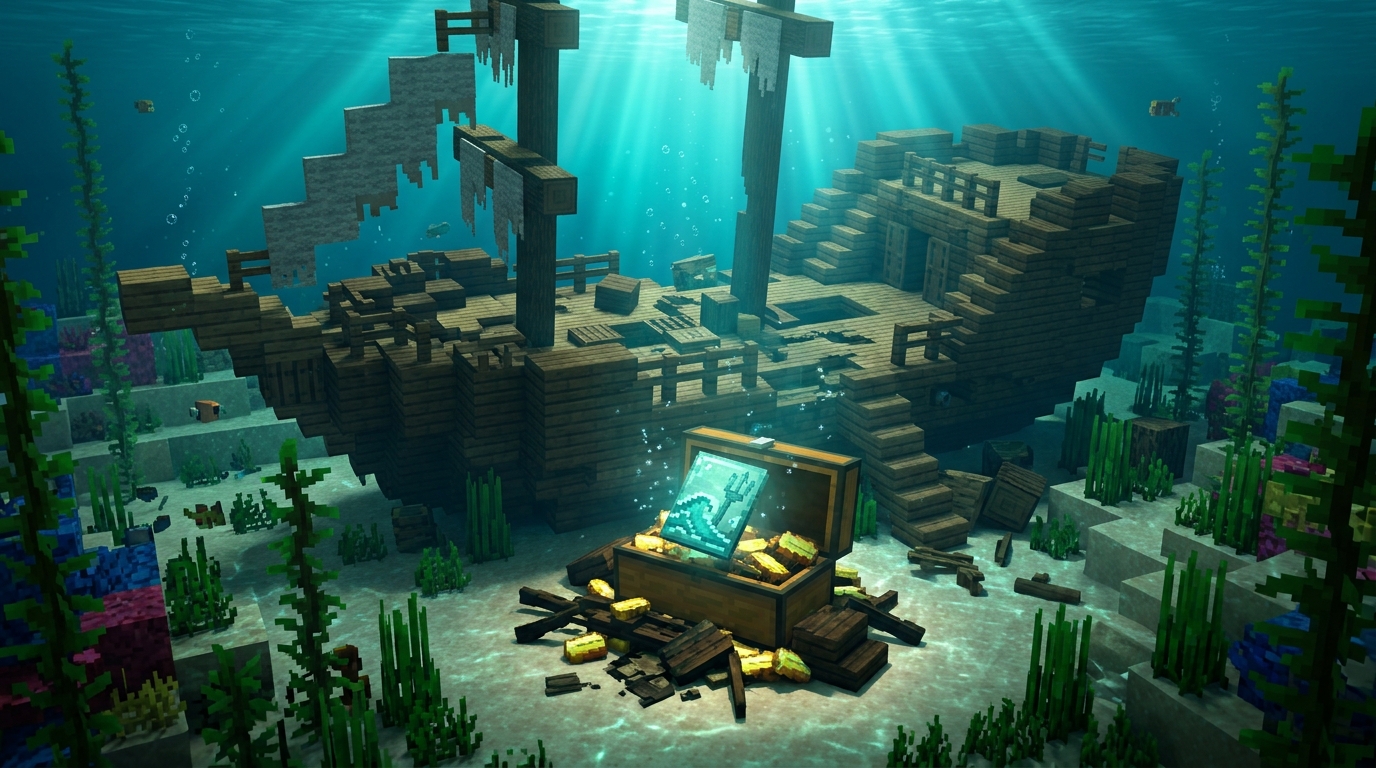
The Coast Armor Trim is the shipwreck armor-trim pattern, and it arrived in Java Edition 1.20, the Trails & Tales update. Because it came later than the wrecks themselves, it gave shipwreck hunting a fresh reason to swim down and check every chest.
Armor trims are decorative patterns that change how your armor looks in Minecraft. This one is tied to shipwrecks, so it sits alongside the items you already hope to find on a wreck. You’re not just chasing food, tools, or a buried-treasure map. You’re also hoping for a pattern that marks your gear as a souvenir from the sea.
Shipwreck chests are the ones associated with the Coast Armor Trim. That means the chests you already search on a wreck, whether the supply chest near the bow or the treasure chest in the upper stern, are where the trim connection lives. Keep an eye out for it every time you open a chest, and don’t skip a chest just because you’ve already got a map or a few useful items.
Think of the trim as a bonus on top of your normal haul. A wreck with an intact hull is still worth searching for its map, and a treasure chest is still a chance at a diamond. The trim just adds one more thing to look for when you crack open a chest.
Keep your expectations realistic, though. Not every wreck will be complete, and a broken section can mean a missing chest. If the chest that holds the trim is gone, you’ll have to look for the trim on another wreck. That’s part of the fun, since each new wreck is a fresh chance to find something you haven’t seen before.
How Can You Dive Around a Wreck Safely?
You can dive around a wreck safely by grabbing the map first, surfacing for air before you search any further, and saving the rest of the ship for a later dive. Drowned and bubble columns both show up around wrecks, so a clear plan keeps you from running low on air in the middle of a search.
Drowned are the main threat you’ll meet inside a wreck. They can carry tridents, and their hits add up quickly if you’re already low on air, so give them room and don’t fight them in a tight corridor. Bubble columns are the other danger. A column rising from soul sand pushes you up toward the surface, while a column rising from magma block pulls you down toward the seabed. Either one can knock you off course right when you’re reaching for a chest.
Here’s the routine that keeps each dive short and the loot coming:
- Swim straight to the lower stern and open the map chest before you touch anything else.
- Take the buried-treasure map, then swim up and breathe at the surface until your air bar is full.
- Decide what to search next only after you’ve refilled your air, and skip any section that would take you too deep.
- Save the bow and the upper stern for a later dive, so each trip has one clear goal.
Dolphins can make the whole trip easier. If you feed a dolphin raw cod or raw salmon, it will swim off and lead you toward nearby shipwrecks and buried treasure, so follow it to the next wreck. Dolphins are often found in open ocean, so keep an eye out for them while you’re swimming between dives.
Before you jump in, check your air bar and make sure it’s full. Count how far the wreck is from the surface, and think about the swim back up before you leave the air pocket behind. Watch for bubble columns as you move through the hull, especially near the dark corners where drowned like to hide. If one is heading your way, swim sideways to step out of its path rather than fighting the current it creates.
Your Next Shipwreck Run Plan
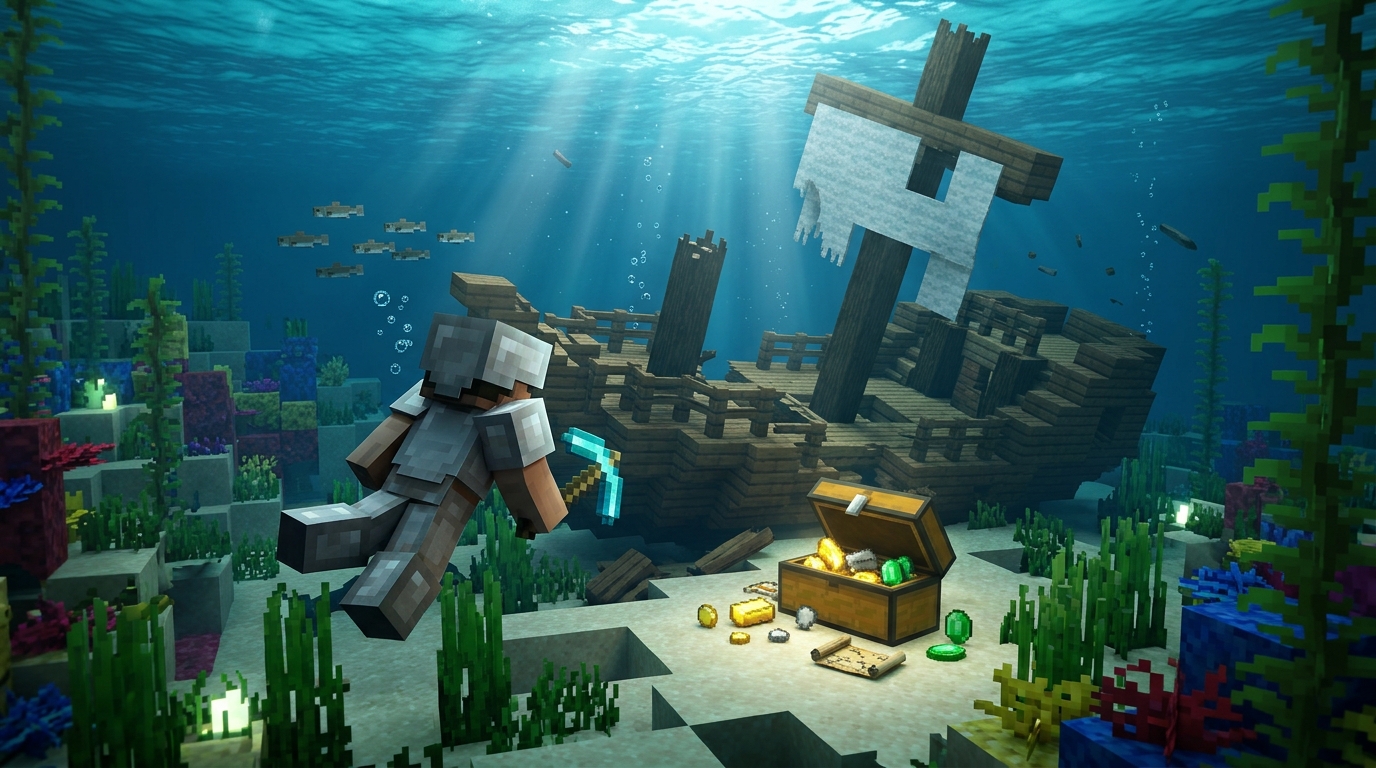
Ready to try one yourself? Your next wreck hunt can be a short, simple trip in your own world. Follow the same steps every time so you never miss the most valuable chest:
- Find the wreck and look at which parts are still standing, from the bow to the upper stern.
- Check which chests remain, and note which ones you can reach from the outside.
- Grab the map chest first, swimming straight to the lower hull before you open anything else.
- Surface for air before you search the rest of the ship.
Here’s how that plays out on a real dive. Say the bow is still standing but the upper stern has collapsed. You’d skip the stern, swim down to the lower hull for the map chest, and rise to refill your air bar. Only then would you decide whether the supply chest at the bow is worth a second trip.
Don’t worry if your first wreck comes up short. Some wrecks never spawn a map chest, and that’s just how the game works. Mark the wreck as checked, move on to the next one, and you’ll quickly get a feel for which ships are worth your time.
Before you jump in, keep a few inventory slots empty and make sure your air bar is full. That way you can grab whatever the wreck hands you without rushing back up too soon.
Your Next Shipwreck Run Plan
Your next step is to pick one wreck in your own world and go in with a single goal: check every chest and write down what each one holds. Before you dive, confirm your game version. If you play Java Edition 1.20 or later, the Coast Armor Trim can show up in shipwreck chests, but older versions won’t have it.
Choose a wreck that still has its lower hull. In Java Edition, any wreck with at least two chests includes a map chest, so that’s the one most likely to give you a buried-treasure map. If you find only one chest, you can still check it, but don’t expect a map.
Keep a simple tally on paper or in a notes app. Record the wreck’s location, which chests you found, and whether each one held a diamond, a trim, or a map. Over a few dives, you’ll see which wrecks are worth revisiting and which ones are picked clean.
If you’re near the open ocean, watch for dolphins. Feed one a raw cod or raw salmon, and it may swim off to lead you toward a nearby wreck.
Once you’ve got a map in your inventory, read our buried-treasure guide next. It covers what to do with the map after you’ve claimed it, and it’s the natural follow-up to everything you’ve just planned.