
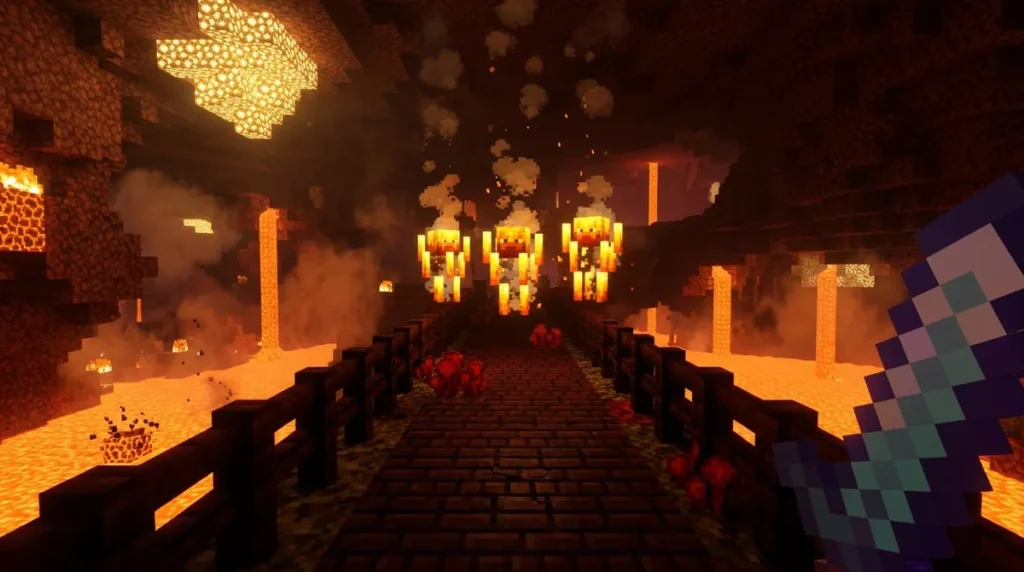
A Nether fortress is a sprawling Nether-brick structure made of bridges, corridors, and towers. It’s the only place in Minecraft where blazes and wither skeletons spawn naturally. Any useful Minecraft Nether fortress guide starts there, because knowing what you’re walking into makes the trip much safer. Each fortress sits in a generation region of 432 by 432 blocks in Java Edition, or 480 by 480 blocks in Bedrock Edition.
On the outer bridges, you’ll find up to two blaze spawner platforms. Each one is fenced in Nether brick and reached by a three-block staircase. Fortress chests can also hold the rib armor trim, with a 6.7% chance per chest, so keep your eyes open as you explore.
Key Takeaways
- Nether fortresses are worth exploring because they’re the only place in Minecraft where blazes and wither skeletons spawn naturally, and they hold the blaze rods and wither skeleton skulls you need.
- Mark your route inside Nether fortress corridors by placing a torch on the floor at each junction, since a single corridor can twist through up to 20 turns and look almost identical at every bend.
- Sneak along narrow Nether fortress bridges instead of sprinting, and eat a cooked steak or porkchop until your hunger bar is full before you step onto the walkway.
- Check your edition before using fortress coordinates, because Java Edition fortress regions measure 432 by 432 blocks while Bedrock Edition regions measure 480 by 480 blocks, and blaze groups at a spawner platform differ too.
What Is a Nether Fortress and Why Explore One?
You explore a Nether fortress mainly to collect blaze rods and wither skeleton skulls, two drops that are hard to find anywhere else in the game. Blaze rods turn into blaze powder, which you need to craft eyes of ender for locating strongholds. They also go into brewing stands. Wither skeleton skulls are the key ingredient for summoning the Wither, one of the game’s toughest bosses.
The fortress is built in two zones. The exterior has open bridges with lava far below and ghasts drifting overhead, while the interior is a maze of enclosed corridors. A lava-well room connects the two, so you’ll pass through it whenever you switch between them.
Don’t skip the corridors. A single corridor can twist through up to 20 turns, and each corner has a one-in-three chance of holding a loot chest. Even if rods are your only goal, a slow walk through the interior can pay off.
Fortresses sprawl, so plan your route before you walk in. Pick a landmark such as the lava-well room, note which direction your entrance faces, and keep a rough count of how far you’ve traveled. Carry spare blocks so you can patch a gap in a bridge if you need to back out quickly.
How Are Fortress Layouts Built Inside?
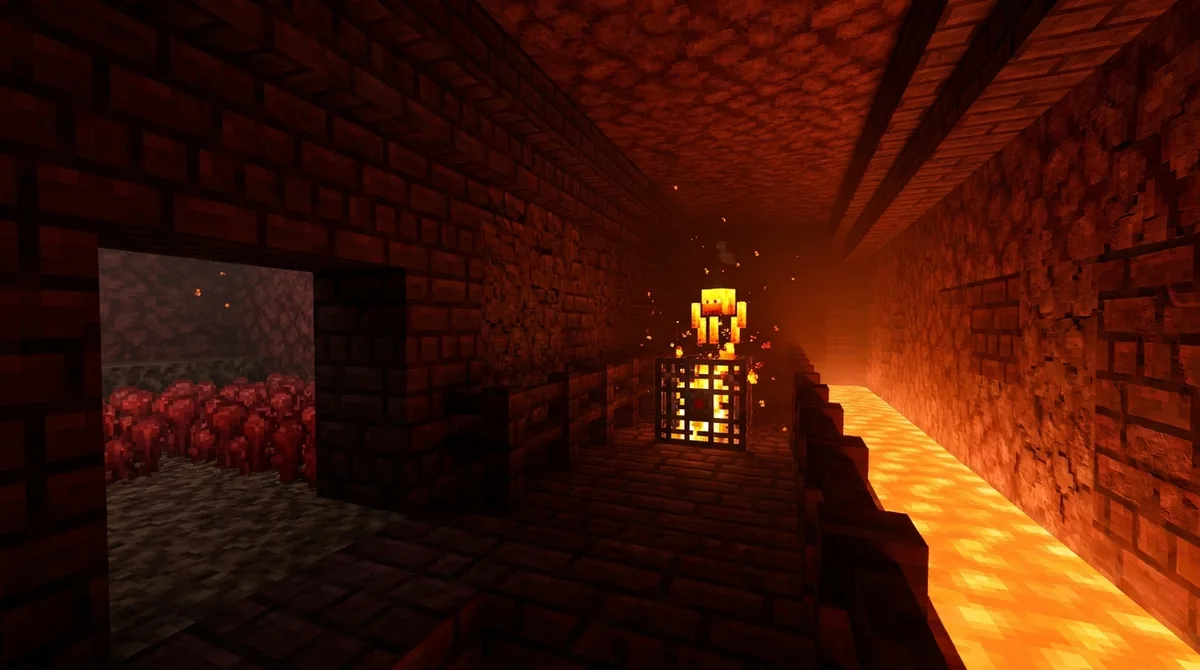
A Nether fortress is split into two zones: an exterior of open bridges and an interior of enclosed corridors. A lava-well room joins them, so every trip between the two areas passes through that one spot.
The exterior is the part most players see first. Its bridges are narrow walkways with lava far below and ghasts drifting overhead. This is also where the blaze spawner platforms sit, each with a fenced spawner at its center that you reach by a short staircase.
Step inside and the feel changes completely. The corridors are walled on every side, and they wind through the fortress with little to show you which way you’re facing. A single corridor can twist through up to 20 turns. Each corner has a one-in-three chance of holding a loot chest, so don’t rush past every bend.
Getting lost is the biggest risk inside. Corridors often look almost identical, and a corner you passed twenty turns ago can look exactly like the one you’re standing at now. Mark your route as you go. Place a torch on the floor at each junction, or set a distinct block like a stone slab along one wall. When you spot your marker again, you know you’re going in circles and can change direction.
Before you go deep, plan your way back. Note the lava-well room, the direction of the bridge you came from, and roughly how many turns you’ve taken since the last marker. If your health gets low or your markers start to run out, head back to the lava-well room and follow your route out.
Where Are the Blaze Spawners Located?
Blaze spawner platforms sit on the exterior bridge side of a Nether fortress, so you’ll find them by walking the open bridges, not the enclosed corridors. A fortress can have none, one, or two of them, so don’t assume a platform is waiting just because you’ve found a fortress.
Look for a small raised area beside the bridge. Each platform is fenced with Nether brick fence, and the spawner sits at its exact center. Keep an eye out for these three details:
- A square ring of Nether brick fence around an open floor
- A caged spawner block in the middle, with a blaze or two inside the cage
- A short staircase leading up to the platform
The stairs are three blocks long, so the climb is quick. That short approach also means you won’t have much room to react once you’re on it. You can read more about the platform design on the Blazes page of the Minecraft Wiki.
Watch for blazes in groups as you approach. In Java Edition, naturally spawning blazes appear in groups of two to three, while the listed Bedrock group size is one to two. Stop at the bottom of the stairs and count how many blazes you can see before you take a single step up. If the group looks bigger than you can handle, back down the stairs and return to the bridge the way you came.
Blazes shoot fireballs, and they’re easy to lose track of when they hover above the fence line. Keep your health topped up before you approach, and don’t fight on a bridge where a fall or a lava spill could finish you off.
Staying Safe on Narrow Nether Bridges
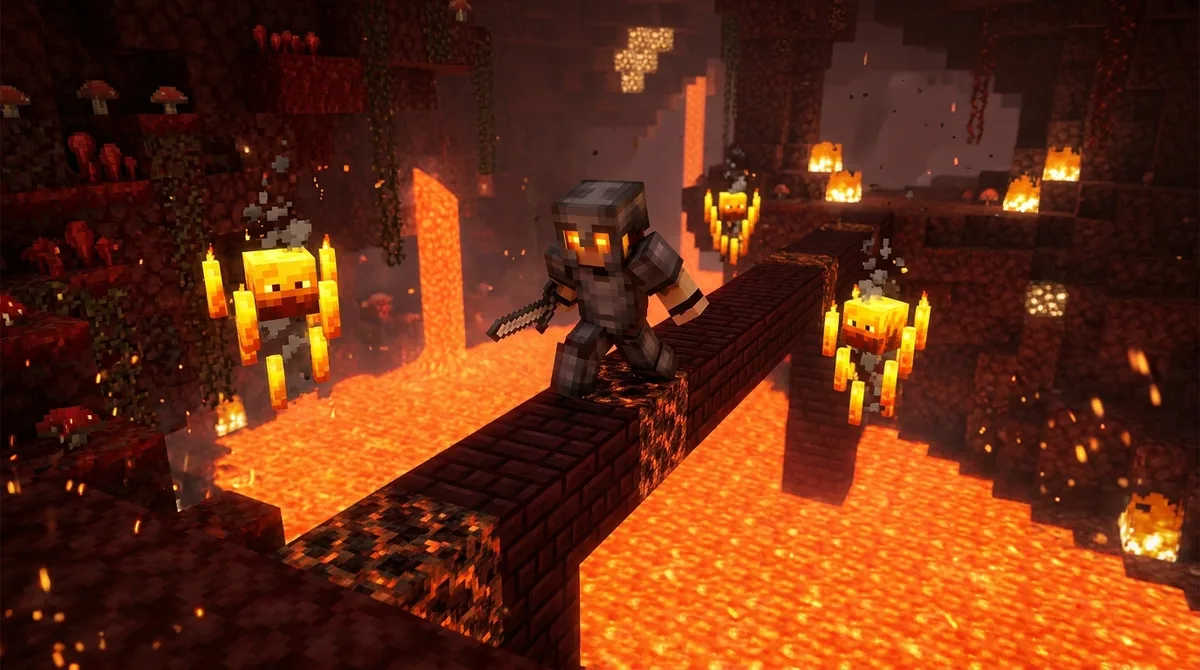
Narrow bridges are the most dangerous part of the exterior, and one wrong step can end your trip. The walkways are narrow, with lava far below and open air on both sides. Ghasts float overhead and fire at you, while blazes hover near the fences and shoot anything below them.
Walk slowly near the edges, and never sprint on a thin walkway. Sprinting carries you past the point where you can stop, and a single misstep can send you over the side. Sneaking is a safer way to move near a drop, because you won’t walk off an edge. Lava spills can also reach across a bridge, so keep moving when you see liquid flowing toward you.
Wither skeletons are the toughest threat here. They hit hard and can inflict the wither effect, which drains your health over time. Fight them one at a time whenever you can, and back up so only one can reach you at once.
Before you step onto the bridge, make sure you’re in good shape. Eat a cooked steak or porkchop until your hunger bar is full, since food lets you heal during a fight. Keep your health topped up, and carry spare blocks so you can bridge a gap if a path breaks.
If several mobs chase you onto the bridge, don’t try to fight them all in the open. Use this retreat plan:
- Stop sprinting and count how many mobs are following you.
- Walk back toward the bridge end you came from, one step at a time.
- Enter the nearest enclosed corridor, the one with walls on every side.
- Turn around inside the corridor so you face the entrance.
- Fight whatever follows through the entrance, one mob at a time.
Java vs Bedrock: Which Fortress Rules Apply?
Java Edition and Bedrock Edition use different fortress rules, so the layout and mob counts you see depend on the version you’re playing. Before you trust a guide, video, or friend’s screenshot, check which edition it was written for.
The biggest difference is how far apart fortresses can sit. In Java Edition, fortresses generate within regions of 432 by 432 blocks. In Bedrock Edition, those regions are 480 by 480 blocks. If you’re searching for a fortress using coordinates from a Java guide, the spacing you expect may not match what you find on Bedrock.
Mob numbers differ, too. In Java Edition, naturally spawning blazes appear in groups of two to three. The listed Bedrock group size is one to two, so a Java player who says they fought three blazes at a platform may be describing a group you won’t see in your world.
| Rule | Java Edition | Bedrock Edition |
|---|---|---|
| Fortress-generation region | 432 by 432 blocks | 480 by 480 blocks |
| Naturally spawning blaze group | 2 to 3 blazes | 1 to 2 blazes |
When you compare notes with another player, start by asking which edition they play. Then check your own version in the game settings before you count blazes at a platform. If the numbers still don’t match, the edition rules are the most likely reason, so don’t assume you did something wrong.
What Loot Can You Find in Fortress Chests?

Fortress chests can hold the rib armor trim, a loot prize worth hunting for inside a Nether fortress. Each chest has a listed 6.7% chance to contain one. Don’t worry if your first few chests are empty.
The chance wasn’t always this high. In the 23w05a snapshot for Java Edition, released on February 1, 2023, the chance rose from 4.7% to 6.7%. If an older guide lists the lower number, it’s out of date.
Chests sit in the corners of corridor turns, so your search is a corner-by-corner job. As you walk, follow this routine:
- Stop at every bend and look into the corner before you turn.
- Scan the floor and walls of that corner for a chest.
- Open each chest you find before you move on.
Chests are easy to miss when you’re focused on the path ahead, so slow down in the interior. Keep track of the corners you’ve already checked, especially if you’ve placed torch markers at junctions. A quick mental tally helps you avoid searching the same bend twice and leaving the rest of the corridor unchecked.
Your Next Steps for a First Fortress Trip
Before you set out, turn everything in this guide into a simple plan you can follow from the portal to the lava-well room.
- Learn the exterior bridges and the interior corridors, and know which zone you’re about to enter before you step through the lava-well room.
- Pick one blaze spawner platform on the outer bridges to check first, and count the blazes from the bottom of its three-block staircase.
- Work through the corridors corner by corner, placing a torch or stone slab marker at each junction so you can track your route.
- Pack cooked steak or porkchops, a stack of spare blocks for bridging gaps, and a clear escape route back to the lava-well room.
- Stop and reset your plan if the bridge ahead looks too narrow for safe movement, then choose a different route or walk back to the lava-well room.
Keep your first trip short. One platform and a handful of corridor bends are plenty for a beginner, and you can return once you know how the fortress feels under your feet.
Planning Your First Fortress Trip
Before you open the portal, pick one goal for your first trip. It could be finding one blaze rod, reaching a single blaze spawner platform, or simply walking the exterior bridges and returning safely. A single target keeps you from drifting into the corridors without a plan.
Next, check which edition you’re playing. Open your game settings or the title screen to confirm whether you’re on Java or Bedrock. That answer matters when you count blazes at a platform, because a group of two to three on Java won’t match the one to two you’d expect on Bedrock.
Once you’re in the Nether, head for the exterior bridges first, since they’re the easiest zone to retreat from. Walk slowly, carry torches or stone slabs for marking junctions, and note which way your entrance faces when you reach the lava-well room. If you find a platform, count the blazes from the bottom of its staircase before you decide whether to climb.
When you get back to the Overworld, write down what you saw: the number of blazes, how many turns you walked, and whether any chest held a rib armor trim. Those notes become your map for the next trip, so start there and build from it.