

Minecraft fishing loot falls into three groups: fish, junk, and treasure. On Java Edition, an unenchanted rod gives you an 85% chance of fish, a 10% chance of junk, and a 5% chance of treasure on each catch. You’ll reel in plenty of cod before a single enchanted book shows up. The standard wait before a bite is 5 to 30 seconds, and every level of Lure trims five seconds off both ends of that range.
Those odds shift with your gear and your spot. Luck of the Sea III pushes the treasure chance to about 11.34% per catch, but only when your bobber sits in qualifying open water. Rain can also cut the wait by about 20%. Keep reading to see exactly what you can pull from the water and how to tune your setup.
Key Takeaways
- On Java Edition, an unenchanted fishing rod gives you an 85% chance of fish, a 10% chance of junk, and a 5% chance of treasure on each catch, so you will reel in plenty of cod before a single enchanted book shows up.
- Enchant your fishing rod with Luck of the Sea III to raise the treasure chance to about 11.34% per catch, but only when your bobber sits in qualifying open water on Java Edition.
- Each level of Lure cuts five seconds off both ends of the 5 to 30 second wait before a bite, so your rod gets more casts in less time without changing which fish, junk, or treasure you catch.
- Hang on to string from junk loot, since bows and fishing rods both need it, and drop or store the rest in a chest so your inventory stays open for treasure.
What Can You Catch When Fishing in Minecraft?
Minecraft fishing gives you one of three things: fish, junk, or treasure. On Java Edition, an unenchanted rod gives you an 85% chance of fish, a 10% chance of junk, and a 5% chance of treasure on each catch, as long as treasure is eligible. Fish make up most of your haul. Raw cod is the most common, at about 51% of all catches from an unenchanted rod. Raw salmon, pufferfish, and tropical fish fill out the rest of the fish category.
Treasure is the prize most players want. It includes bows, enchanted books, fishing rods, name tags, nautilus shells, and saddles. Junk is less exciting but still useful in a pinch. It can include lily pads, leather boots, bones, and rotten flesh.
Treasure only comes up when your bobber meets the open-water condition, which checks a 5×4×5 area around the water surface. Your gear matters too. The same rod can give you different results depending on its enchantments and where you cast it.
How Often Will You Catch Each Type of Fish?
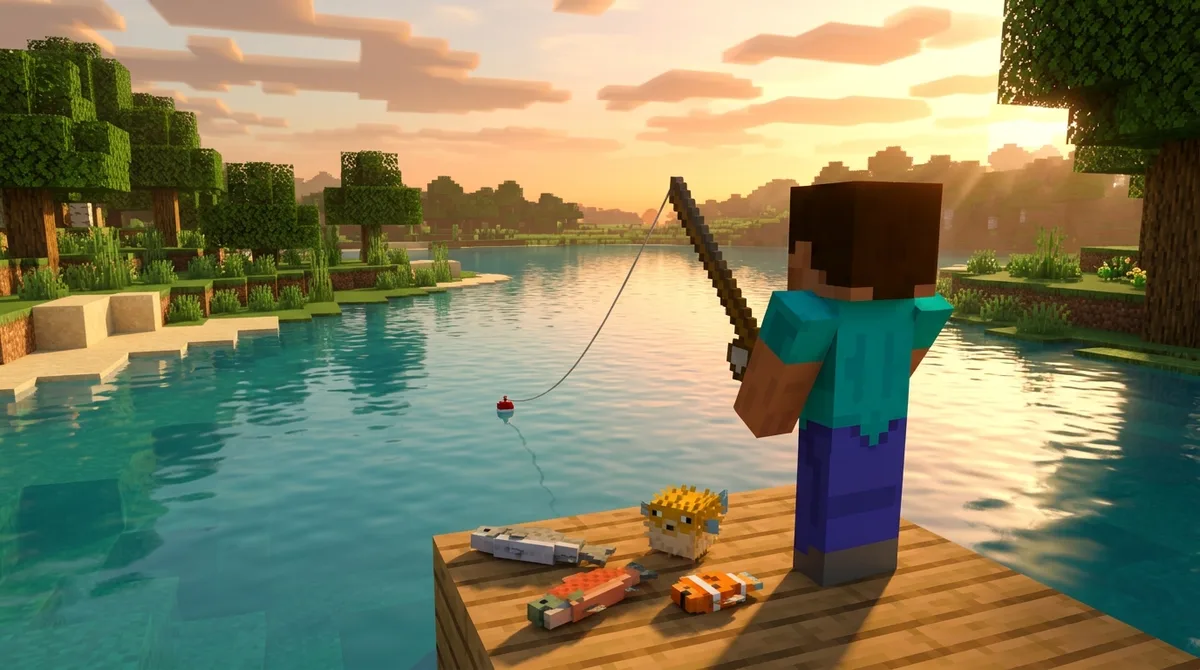
Most of your catches will be cod, with raw salmon a distant second. Outside jungle biomes on Java Edition, raw cod makes up 60% of fish-category catches, which works out to about 51% of everything an unenchanted rod pulls from the water. Plan on reeling in a lot of it.
Here is how the full fish category breaks down outside jungles:
- Raw cod: 60% of fish catches
- Raw salmon: 25% of fish catches
- Pufferfish: 13% of fish catches
- Tropical fish: 2% of fish catches
Together, cod and salmon make up 85% of the fish category, so most of your fish will be one of those two. Pufferfish turns up now and then, but you’ll need many casts before a tropical fish appears. Keep in mind that these percentages only describe the fish slice of your results. Junk and treasure each get their own share of every catch.
Jungle biomes are the exception. They follow different fish odds, so the numbers above don’t carry over if you fish in a jungle. If you plan a jungle fishing trip, don’t assume you’ll see the same mix of fish you get elsewhere.
Lure won’t change which fish you land. It only shortens the wait before each bite, so you’ll get more casts in less time. Stacking Lure with a steady supply of cod and salmon is a good way to fill your food supply quickly.
Which Treasure Items Are Worth Waiting For?
Nautilus shells and saddles are the treasure finds players mention most often as genuinely useful, but every item in the group has a purpose. On Java Edition, the treasure category holds six items:
- Nautilus shells, a key crafting ingredient for conduits
- Saddles, which let you ride pigs, horses, and striders
- Bows, useful for hunting and ranged fights
- Enchanted books, which carry enchantments you can add to your gear
- Fishing rods, so you can start a better rod without crafting one from scratch
- Name tags, which give mobs custom names
Treasure is a single category, and each treasure roll hands you one random item from that list. A catch could be any of the six, so you won’t know what you’ve got until the bobber reels in.
The waiting part comes from the odds. With an unenchanted rod, treasure makes up 5% of each catch in open water. That works out to about 20 catches per treasure roll on average. Some players will hit one sooner, and others will go much longer, because the chance is applied fresh on every cast.
The Luck of the Sea enchantment shortens that wait. At Luck of the Sea III, the treasure chance rises to about 11.34% per catch, so you’ll land treasure roughly eleven times in every hundred casts instead of five. That’s a big jump for the same amount of time spent at the water.
Keep your bobber in open water the whole time. If it isn’t in a qualifying spot, treasure can’t come up at all, no matter how many casts you make.
Is Junk Loot Worth Keeping?
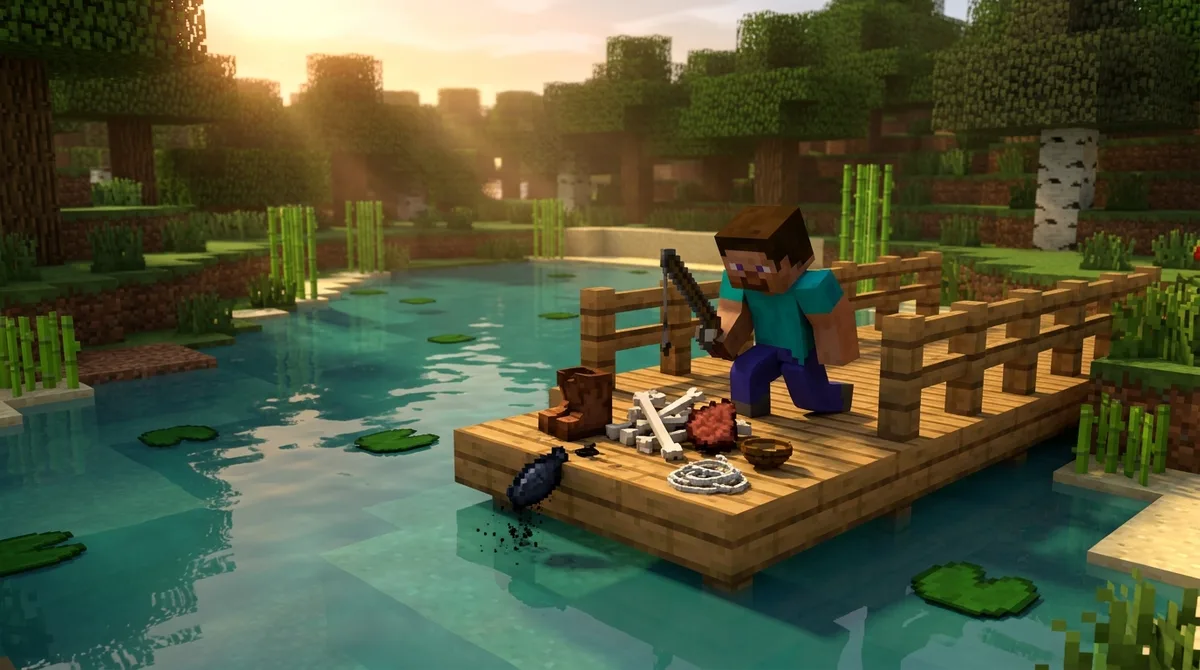
Junk loot is worth keeping when you need its raw materials, and you can safely ignore the rest. Roughly one catch in ten from an unenchanted rod is junk, so you’ll collect plenty over a long session. The possible items are lily pads, leather boots, leather, bones, water bottles, string, fishing rods, bowls, sticks, ink sacs, tripwire hooks, rotten flesh, and bamboo.
Some of it pays off fast. String is the one to hang onto, since bows and fishing rods both need it. Leather can go into item frames and books, and bones can tame wolves or turn into bone meal for growing crops.
The rest is easy to let go of. Sticks, bowls, and water bottles are cheap to find elsewhere, and rotten flesh will make you hungry if you eat it. Ink sacs turn into black dye, so keep a few if you like decorating.
Junk takes up inventory slots, so sort it as you go. Drop the pieces you won’t use, or store the useful ones in a chest at your base so your hotbar and backpack stay free for the catches that matter.
How Do Luck of the Sea and Lure Change Your Results?
Luck of the Sea changes what you catch, while Lure changes how long you wait. Luck of the Sea shifts your rolls toward treasure, and Lure gets you to the next bite faster.
Luck of the Sea works on the category odds. With an unenchanted rod, each catch has a 5% treasure chance. At Luck of the Sea III, that chance climbs to about 11.34% per catch in open water, or roughly one treasure roll in nine. The fish and junk categories give up a little ground to make room for the extra treasure.
Lure leaves the odds alone. The standard wait before a bite is random, somewhere between 5 and 30 seconds. Each level of Lure subtracts 5 seconds from both the shortest and longest possible wait. At Lure I, the range becomes 0 to 25 seconds, and at Lure II it becomes 0 to 20 seconds, so you spend less time watching your bobber between catches.
A faster bite is not the same as better loot. Lure gives you more casts per minute, but each cast still rolls the same fish, junk, and treasure chances. If you want more treasure, Luck of the Sea does the work. Lure is the better pick when you want to fill your inventory with cod and salmon quickly. The two enchantments stack well if you want both benefits.
Does Where You Fish Affect Your Loot?
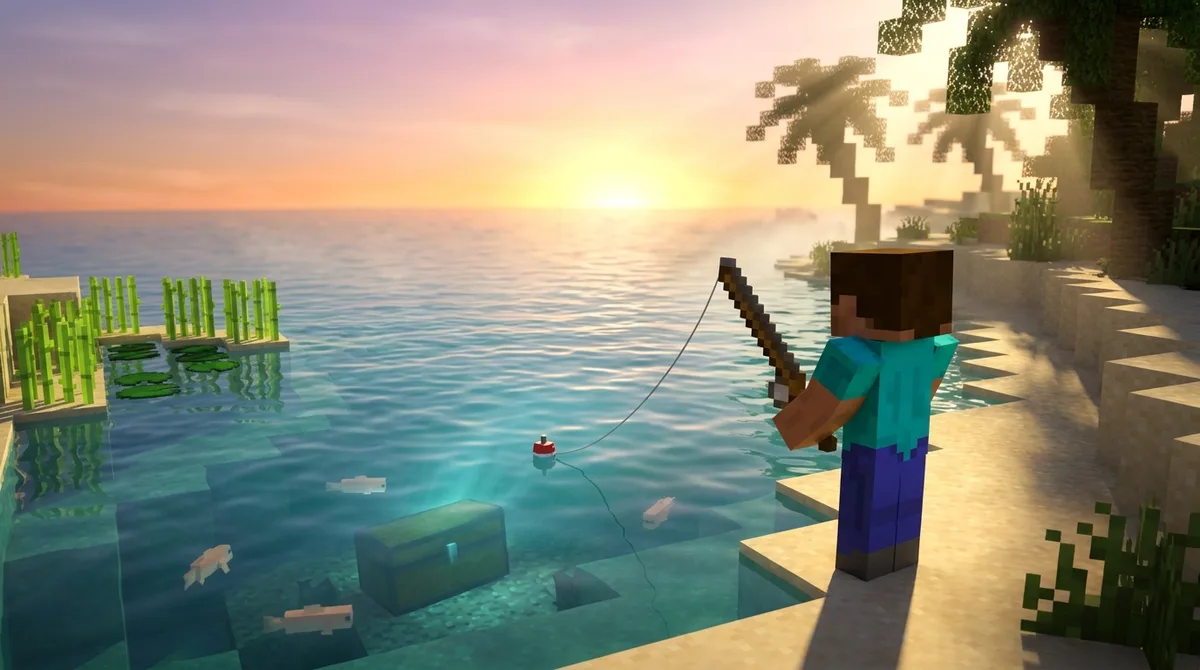
Treasure can only come up on Java Edition when your bobber sits in qualifying open water, which the game checks in a 5×4×5 area around the water surface. Fish and junk still show up elsewhere, so a spot without open water costs you the treasure chance, not your whole catch.
Rain is the other location factor, and it works differently. When the bobber’s block is exposed to rain, the wait before a bite drops by about 20%. That gives you more casts in the same stretch of time, which is handy during a storm. Rain doesn’t change the loot odds, though. Each catch still rolls the same fish, junk, and treasure chances as a dry cast in open water.
Don’t want to hunt for a good lake? You can build your own spot in a few minutes:
- Dig a small hole in flat ground, just big enough to hold a little pool.
- Fill the hole with water using a bucket, so the surface sits level with the ground around it.
- Clear away leaves, roofs, and overhanging trees so the space above the water stays open.
- Stand at the edge and cast your rod toward the middle of the pool.
How Does Bedrock Fishing Loot Differ From Java?
Bedrock fishing loot starts from the same 85, 10, and 5 split that Java uses for an unenchanted rod, so the base odds line up on both editions. The sample fishing loot table in Mojang’s bedrock-samples repository on GitHub rolls once per catch. That roll picks fish with weight 85, junk with weight 10, and treasure with weight 5. Each cast on Bedrock gives you the same starting mix you’d get on Java.
The fishing table is built from pools of entries, and Microsoft’s loot table reference says each pool is rolled independently. In plain terms, every pool makes its own roll, so one result doesn’t cancel out another.
Enchantments work the same way they do on Java. Microsoft’s enchantment documentation says Luck of the Sea increases your chance of good fishing loot, and Lure decreases the time until a fish bites. Those descriptions are general, so for exact percentages and seconds, stick with the Java numbers earlier in this guide.
The open-water check covered earlier is a Java Edition rule, so Bedrock players can focus on their enchantments and their casting rhythm instead.
Setting Up Your Best Fishing Setup
Start by checking which edition you play, because the open-water rule and the exact odds in this guide are Java rules. On Java, find a spot where your bobber sits in qualifying open water, then keep casting from that same spot so you aren’t walking around between bites.
Next, decide what you want most. If treasure is the goal, Luck of the Sea III is the enchantment to chase, since it lifts the treasure chance to about 11.34% per catch. If you mostly need food, Lure gets you more casts in less time, and you can add Luck of the Sea later.
Then run a short test. Cast 40 times from your spot and write down everything you pull out. With an unenchanted rod, you should expect about two treasure items, but a dry run is normal. Each cast rolls fresh odds, so streaks happen in both directions.
Finally, pick your next read. If cod is your main target, the fish breakdown earlier in this guide shows what to expect. If you’re after a saddle or a nautilus shell, focus on the treasure section and your Luck of the Sea level. Head out tonight, and sort your junk as you go so your inventory stays open for the catches that matter.