
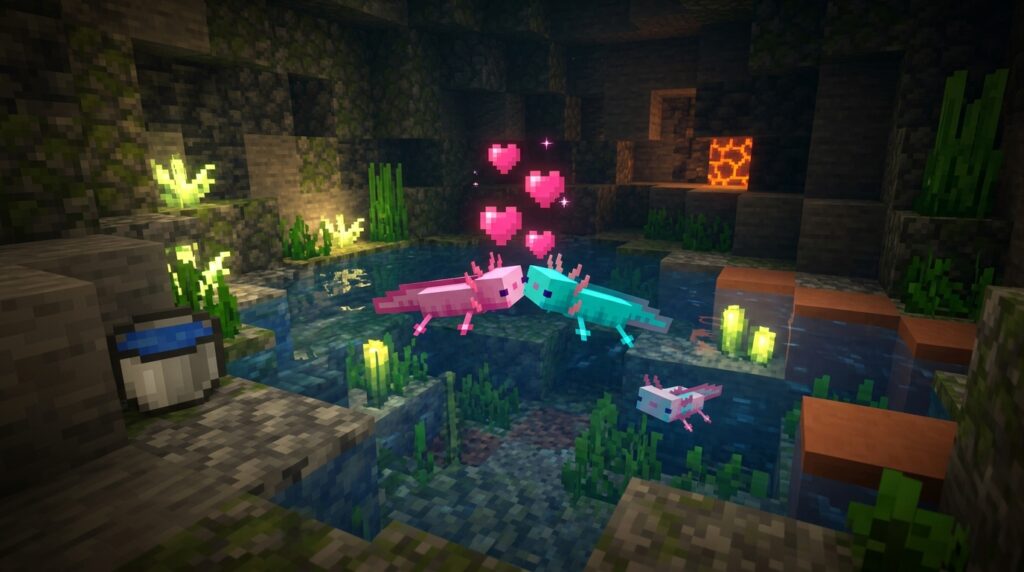
Breeding axolotls in Minecraft is simple once you have the right setup. Finding and managing enough tropical fish takes more planning. This axolotl breeding guide shows you how to build a safe water pen, bring two axolotls together, and use buckets of tropical fish to start breeding. With repeated breeding, you can also try to raise the rare blue axolotl.
Keep adult axolotls in a secure pool so they cannot wander into danger, and leave enough room for babies to grow. Each successful breeding creates one baby axolotl and starts a short cooldown. A steady supply of tropical fish lets you grow your collection faster. With a safe enclosure and some patience, you can build a group of axolotls for your underwater adventures.
Key Takeaways
- Find axolotls in lush caves, especially in water pools below sea level with clay bottoms. Use water buckets to collect and safely transport them to your base or aquarium.
- Breed two adult axolotls by feeding each one a bucket of tropical fish; regular fish items do not work. Breeding produces one baby, followed by a five-minute cooldown, while babies mature in about 20 minutes.
- Keep axolotls in a secure, water-filled enclosure with solid walls and enough room for babies. They can dry out on land, escape unsafe areas, or become trapped if the habitat is too small.
- The blue axolotl is exceptionally rare, with about a 1-in-1,200 chance per baby and no natural spawning. Axolotls also support underwater combat by attacking aquatic enemies and potentially granting Regeneration while removing Mining Fatigue.
Introduction To Minecraft Axolotls
Minecraft axolotls spawn in water inside lush caves. To find them, explore underground areas with moss, glow berries, spore blossoms, and clay pools. Their bright colors make them easy to spot, but water-breathing potions, a turtle shell, or nearby air pockets can help you search safely. Once you find an axolotl, it can help you fight aquatic enemies. If you help it defeat a hostile mob, you can receive Regeneration and have Mining Fatigue removed. This makes axolotls useful companions at ocean monuments and during other underwater challenges.
This axolotl breeding guide explains how to collect these friendly mobs with water buckets and move them safely to an aquarium or base. You can breed two adult axolotls by feeding each one a bucket of tropical fish. This creates a baby axolotl and gives you an empty bucket afterward. Keep your breeding area enclosed and filled with water so your axolotls do not wander onto land and take damage. You will also learn how to transport them by bucket, boat, or carefully prepared water paths.
Axolotls come in several color variants, including wild brown, leucistic pink, gold, cyan, and the rare blue type. You can identify each variant by its body color and markings. The blue axolotl is especially difficult to obtain through breeding. This guide explains where to find each color, how breeding works, and how to build a safe collection area. With the right setup, you can create a colorful axolotl habitat and bring helpful allies to your next underwater adventure.
Finding Axolotls In Lush Caves
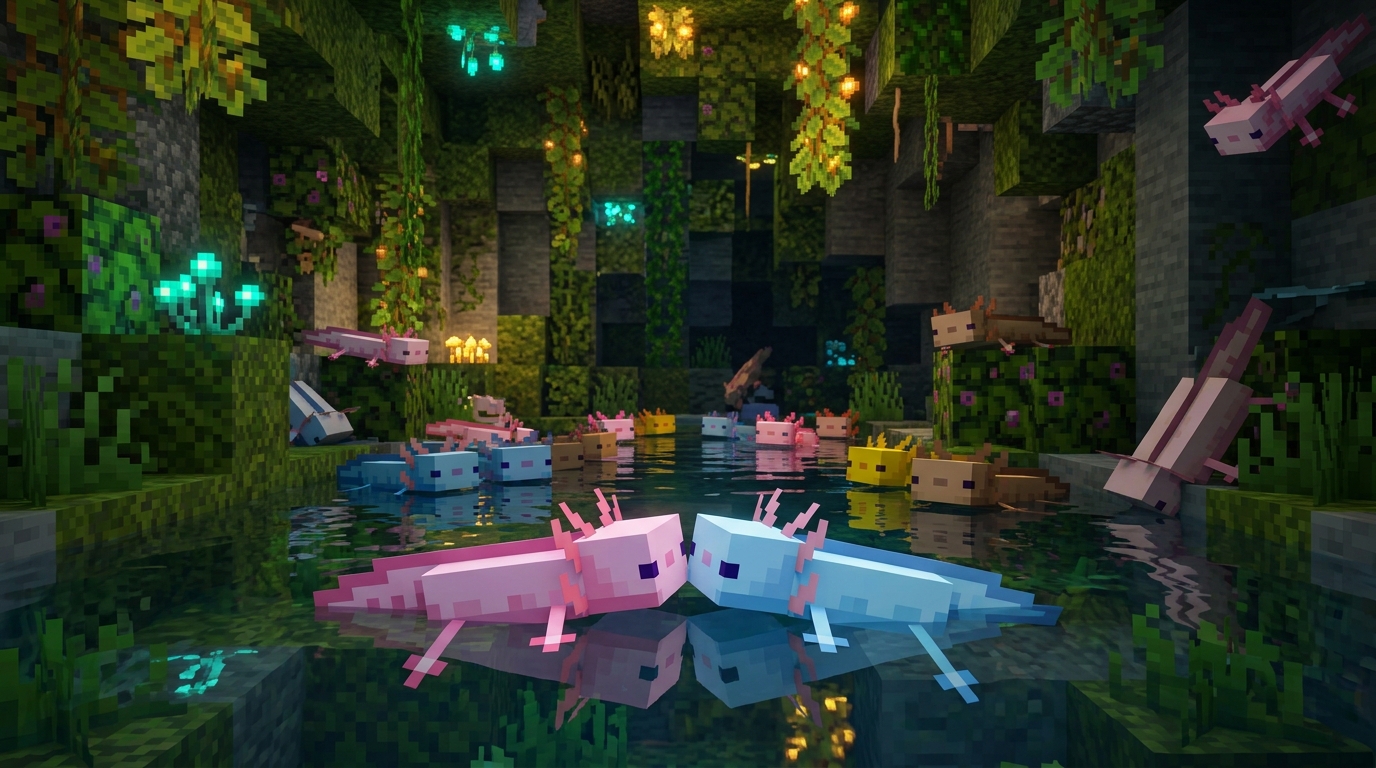
Lush caves are the best place to search for axolotls in Minecraft. You can recognize them by their moss, glow berries, spore blossoms, and clay pools. Look for a lush cave entrance below a spruce or azalea tree, or explore large underground cave systems until you find these plants. Axolotls usually spawn in water below sea level, often in pools with clay at the bottom. Check small, dark water pockets instead of searching only the largest lakes. Place torches along your route, but keep the water visible so you can spot moving axolotls.
Bring food, a water bucket, spare blocks, and a pickaxe before you explore. Use a water-breathing potion, a turtle shell, or air pockets made with blocks when you need to stay underwater. Keep a few buckets of tropical fish ready if you plan to start breeding. Axolotls follow you when you hold a bucket of tropical fish, and you can use the fish to breed them. When you find one, scoop it up with a water bucket to transport it safely, then name it or place it in a secure tank at home. Axolotls come in several colors and can help during underwater fights, so collect only as many as you can house and feed.
Breeding Axolotls With Tropical Fish
Build a safe, enclosed water area before breeding. A small pool with solid walls and no gaps keeps axolotls from wandering away. Bring two adult axolotls into the pool with water buckets, then release them close together in water at least one block deep. Use a water bucket on tropical fish to collect buckets of tropical fish. Regular fish items will not start the breeding process. Feed one bucket to each axolotl. Heart particles show that they are ready to produce a baby.
A baby axolotl appears shortly after both parents enter breeding mode. It may inherit a parent’s color or, rarely, appear as the blue variant. The parents then have a five-minute breeding cooldown, so you must wait before feeding them again. Baby axolotls grow into adults after about 20 minutes. Feeding them more buckets of tropical fish can speed up their growth. Keep extra tropical fish and buckets ready if you want to build a larger group, but make sure the enclosure has enough space and water.
Axolotls are useful companions during underwater fights because they attack many aquatic enemies. They can also help you after you assist them in battle. Store them in buckets when you need to move them to an ocean monument, underwater base, or another safe area. If you are collecting several babies, use separate pools or expand the enclosure so they do not get stuck or escape. This lets you enjoy different axolotl colors while keeping your Minecraft breeding area easy to manage.
Collecting And Transporting Axolotls
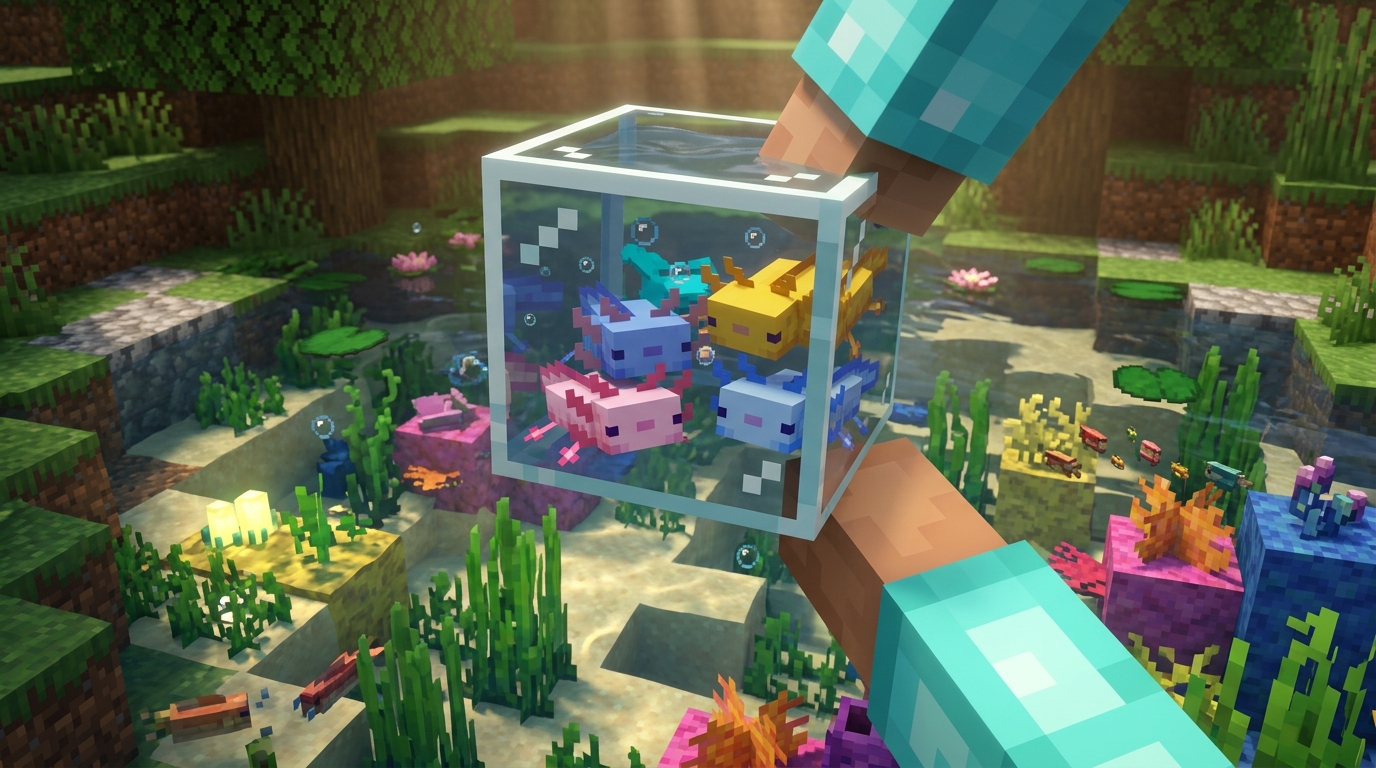
Collect axolotls with a water bucket instead of trying to push them through a cave. Find one in a lush cave, place water beside it if needed, and use the bucket directly on the axolotl to create a Bucket of Axolotl. Keep color variants such as wild brown, leucistic pink, gold, cyan, and the rare blue type in separate buckets so you can plan your breeding pairs. Label or sort the buckets in a chest if you are gathering several axolotls for a larger habitat.
A bucket makes long-distance travel much safer, especially when you need to cross caves, ravines, or dangerous tunnels. Carry the axolotl through your mine, along a boat route, or through a Nether portal in your inventory. Avoid releasing it near lava, hostile mobs, or open drops. Before moving a breeding pair, prepare the destination with enough water, solid walls, and a clear path for placing the buckets. This keeps your axolotls from swimming away while you build the aquarium or underwater base.
Release each axolotl by using its bucket on a water-filled aquarium, enclosed pond, or room inside your underwater base. Keep the area filled with water because an axolotl left on land can dry out after several minutes. Once the axolotls settle in, feed two adults a bucket of tropical fish to breed them. You can then collect the babies with water buckets if you need to move them. Axolotls can also attack aquatic enemies, so placing them near your base gives you a colorful habitat and useful underwater support.
Axolotl Colors And Underwater Combat
Minecraft axolotls come in several colors, and all variants have the same useful abilities. Wild axolotls are brown, gold axolotls are yellow, and cyan axolotls have a bright blue-green body with pink details. The blue axolotl is extremely rare because it does not spawn naturally. You can only get it through breeding, with about a 1 in 1,200 chance for each baby. To try for one, feed two adult axolotls a bucket of tropical fish. Collect the baby with a water bucket if you need to move it before it grows up.
During underwater battles, axolotls attack many aquatic mobs, including drowned, guardians, elder guardians, fish, squid, and glow squid. Release a few from buckets near an ocean monument, and they can distract hostile mobs while you attack from a safer position. An axolotl may play dead after taking damage, causing enemies to ignore it while it recovers. When you help defeat a mob that an axolotl is fighting, you can receive Regeneration and have Mining Fatigue removed. This makes axolotls valuable allies during underwater raids.
Find and Breed Axolotls in Minecraft
Finding and breeding axolotls is straightforward once you know where to look. Search lush caves, then check water pools below sea level, where axolotls can spawn alongside clay. Bring tropical fish in buckets, use one on each of two adult axolotls, and wait for a baby to appear after they enter breeding mode. The baby may have a different color variant, so breeding can help you build a varied collection.
Moving axolotls with water buckets keeps them safe and lets you transport them to an aquarium or underwater base. Release them into a water-filled enclosure with enough space, and do not leave them on land because they can dry out after several minutes. During underwater fights, axolotls attack aquatic enemies such as guardians and drowned, and they may play dead to recover health. If you help an axolotl defeat a hostile mob, it can grant you brief Regeneration and remove Mining Fatigue. These small companions are both useful allies and friendly pets.