

You’ve spent hours building your dream Minecraft base, but one thunderstorm can turn your beautiful oak roof into a pile of ash. Proper lightning rod placement is the only way to shield your hard work from a sudden fire or a stray strike that could turn your pet creepers into high-voltage nightmares. Instead of leaving your builds to luck, you can use smart positioning to catch every bolt before it touches your blocks.
In Minecraft, a single lightning rod protects a massive area, but putting it in the wrong spot can leave your chimneys or towers completely exposed. You should focus on placing rods at the highest points of your build, like the tip of a spire or along the ridge of a gable, to maximize their reach. By following a few simple spacing rules, you can keep your wooden structures safe and ensure your base stays standing through every storm.
Key Takeaways
- Place lightning rods at the highest points of a structure, such as roof ridges or chimneys, to maximize their protective reach and intercept bolts before they hit lower blocks.
- Maintain a minimum distance of 32 blocks between the lightning rod and flammable materials like wood or wool to prevent the ‘fire splash’ from igniting your build.
- Mount lightning rods on non-flammable surfaces like stone or deepslate to create a safe buffer zone that contains the heat and energy of a strike.
- Hide lightning rods one block beneath flooring or roof tiles to maintain a build’s aesthetic while still benefiting from the 128-block protection radius.
Distance Rules For Safe Copper Rod Positioning
When you are protecting your beautiful wooden cottage or a grand library, placement is everything to avoid a fire disaster. While the copper lightning rod is great at attracting strikes, it actually emits a small burst of fire or “splash” when it gets hit. To keep your flammable blocks safe, you must place the rod at least 32 blocks away from any wood, wool, or leaf blocks. This distance ensures that the electrical energy doesn’t accidentally ignite your roof during a heavy thunderstorm. You can test this by building a small stone pedestal or a tall chimney to act as a dedicated strike zone.
Think of your lightning rod as a magnet that needs its own personal space to work safely. If you place the rod directly on a wooden plank roof, the bolt will hit the rod but the resulting fire will instantly spread to the surrounding structure. By positioning the rod on non-flammable surfaces like stone bricks or deepslate, you create a buffer zone that contains the heat. A popular trick is to use a decorative stone tower or a floating copper weather vane to keep the strike point high and isolated. This strategy allows you to enjoy the aesthetic of wooden builds without the constant fear of them burning down.
Managing the 32-block radius is the best way to ensure your interior decorations and structural supports remain intact. You should always count your blocks carefully from the base of the lightning rod to the nearest piece of wood in any direction. If your build is particularly large, you might need multiple rods spaced out to cover the entire area effectively. Just remember that each rod needs its own clear zone to prevent the fire splash from jumping to your walls. Following these simple spacing rules will keep your base looking great and completely fireproof during the most intense Minecraft storms.
Vertical Placement Strategies For Tall Roof Peaks
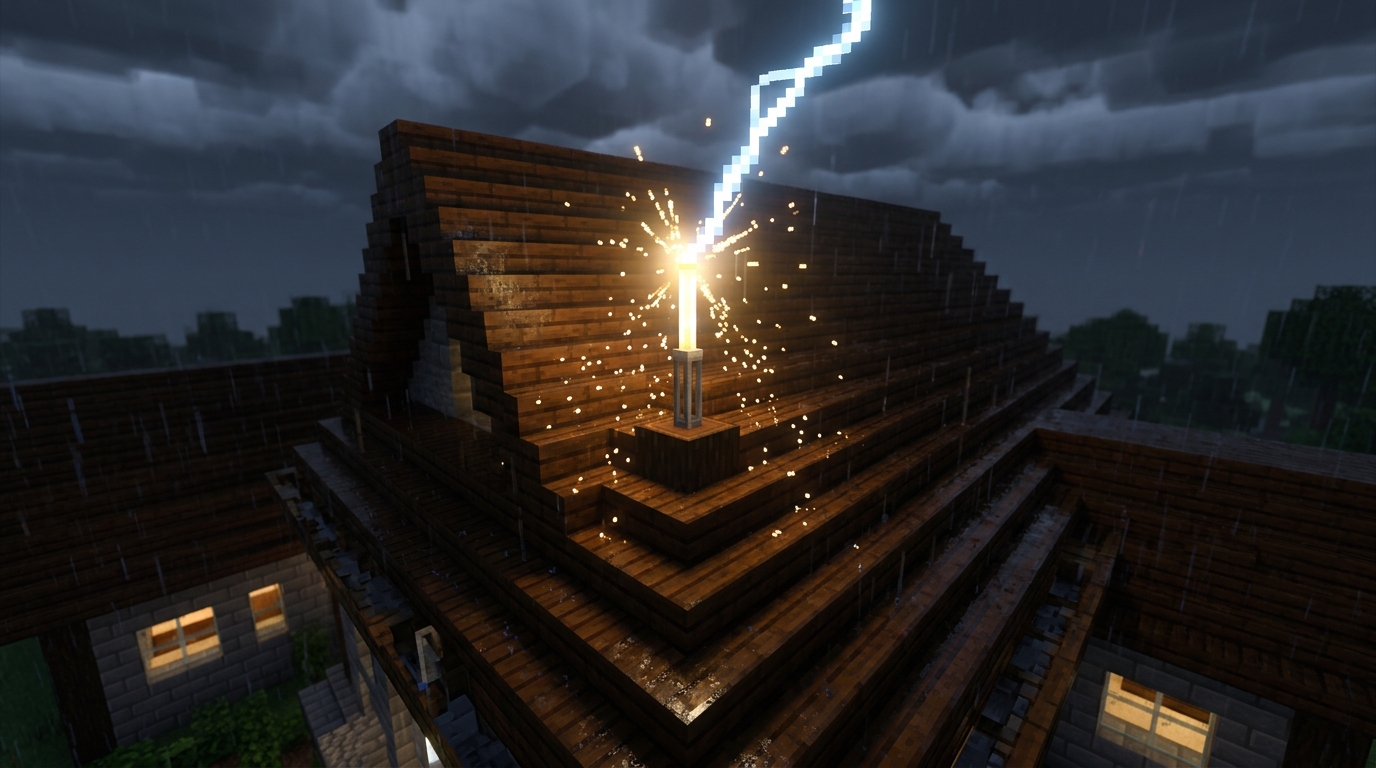
When you are building a beautiful wooden mansion or a cozy gable-roofed cottage, a single thunderstorm can turn your hard work into a pile of ashes. To prevent this, you should place your lightning rods on the highest points of your structure, such as the tips of your gables or the very top of a chimney. These rods act as a magnet for strikes, pulling the electricity away from your flammable wood blocks and into the copper rod itself. By targeting these peaks, you ensure that the hit box of the lightning strike is caught before it can touch your roof. This simple step is the best way to keep your interior decorations and structural frames safe from fire during a surprise storm.
Proper spacing is just as important as height when you are protecting a large roof ridge. You should place a lightning rod every few blocks along the highest ridge line to ensure there are no gaps in your coverage. If your house has multiple peaks or a complex roof shape, make sure each individual high point has its own rod. This creates a protective shield that covers the entire surface area of your build. You can even hide them slightly by placing them on top of stone walls or chimneys to make them look like decorative architectural details.
If you have a tall chimney made of brick or stone, this is the perfect spot for a primary lightning rod. Since stone blocks do not catch fire, putting the rod here provides a safe landing spot for the strike that is well away from your wooden shingles. You can also use lightning rods horizontally on the sides of tall towers if you want to catch strikes from different angles. Just remember that the rod will give off a redstone signal when it gets hit, so keep it away from any TNT or sensitive redstone contraptions you might have nearby. Following these placement rules will let you enjoy the rainy weather without worrying about your home burning down.
Hidden Lightning Rod Placement Underneath Flooring
You do not have to ruin the look of your beautiful wooden mansion or barn just to keep it safe from a sudden thunderstorm. While copper lightning rods are essential for preventing fire damage, placing them directly on top of your roof can sometimes clash with your carefully chosen color palette. To solve this, you can learn how to build modern house designs that incorporate these safety features seamlessly. To solve this, you can simply hide the rod exactly one block beneath your flooring or roof tiles. Because lightning rods in Minecraft have a massive 128-block protection radius on the Java Edition, a hidden rod will still intercept every strike within its range. This trick allows you to keep your aesthetic perfectly clean while ensuring your wooden structures never go up in flames.
Setting up this hidden protection is easy and only takes a few seconds during your building process. Start by identifying the highest point of your roof or the center of your top floor, then break one block to create a small hole. Place your lightning rod on the surface below that hole and then cover it back up with your original building material, such as wood planks or stone slabs. The game engine still recognizes the rod as a valid strike point even when it is tucked away out of sight. You can now relax during the next heavy storm knowing your base is completely fireproof without a single piece of copper showing on the exterior.
Where to Place Your Lightning Rods
Protecting your beautiful wooden mansions and cozy cabins starts with placing your copper lightning rods on the highest points of your build. You should prioritize placing these rods on roof ridges, chimneys, and the tips of towers where lightning is most likely to strike during a storm. Because a single rod only covers a spherical area with a radius of 128 blocks in Java Edition or 64 blocks in Bedrock Edition, you need to be mindful of your horizontal coverage. If you have a sprawling estate, make sure you space several rods out to ensure every wooden block falls under their protection. This simple setup keeps the fire from spreading to your flammable walls and keeps your hard work intact.
You can get creative with your placement by disguising these rods as part of your architectural details or interior decor. Even if you are just starting out with simple starter base designs, adding a rod to your roof is a smart move. Since lightning rods can be placed on all sides of a block, you can hide them tucked away on the sides of stone chimneys or use them as decorative accents on top of fence posts. If you want to avoid the weathered green look over time, remember to use a honeycomb on your copper rods to wax them and keep that bright orange shine. You can also connect them to redstone lamps to create a visual signal whenever the rod takes a hit from the sky. This turns a necessary safety feature into a cool mechanical addition to your base.
By following these simple spacing rules and focusing on your rooflines, you will never have to worry about a sudden thunderstorm ruining your survival world again. It only takes a few copper ingots to save hours of building and resource gathering from a single unlucky bolt. Make sure to double check that no flammable blocks like wool or wood are directly touching the rod, as the strike can still cause a small amount of heat damage. Once your perimeter is set, you can sit back and enjoy the atmosphere of the rain while your home stays perfectly safe and dry. This final step in your building process ensures that your legacy in the game stands the test of time and weather.
Frequently Asked Questions
1. Where is the best place to put a lightning rod on my house?
You should always place your lightning rod at the highest point of your build, such as the tip of a spire or the ridge of a roof. This positioning maximizes the rod’s reach and ensures it catches bolts before they hit your lower structures.
2. How far away should my lightning rod be from wooden blocks?
You must place your lightning rod at least 32 blocks away from any flammable materials like wood, wool, or leaves. This distance prevents the small burst of fire created during a strike from spreading to your beautiful home.
3. Can I place a lightning rod directly on a wooden roof?
No, you should never place a rod directly on wood because the strike creates a fire splash that will burn your roof down. Instead, build a small pedestal made of stone bricks or deepslate to act as a safe buffer zone for the lightning.
4. What is the effective protection range of a single lightning rod?
In the Java Edition, a lightning rod protects a spherical area with a radius of 128 blocks. If you are playing Bedrock Edition, the rod covers a smaller area of 64 blocks, so you may need more rods for very large bases.
5. How do I stop lightning from turning my creepers into charged creepers?
Place a lightning rod on a stone pillar near your creeper farm or pen to redirect strikes away from your mobs. This ensures that a random bolt won’t accidentally transform them into high-voltage nightmares that could blow up your base. For even more protection, you can learn how to use gamerules to prevent mob explosions from damaging your terrain.
6. Is there a way to make lightning rods look good on my builds?
You can turn your lightning rods into decorative features by placing them on top of stone chimneys or using them as weather vanes. Using non-flammable blocks like stone or copper blocks for these decorations keeps your build safe while looking professional.