
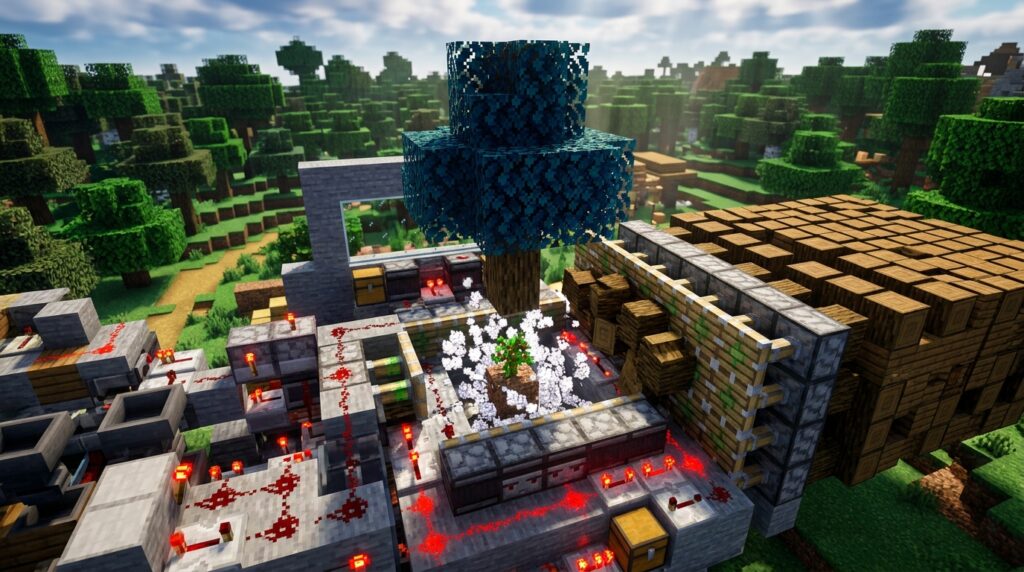
Imagine standing in front of a machine that turns a single sapling into a massive stack of wood in the blink of an eye. With the latest breakthroughs in instant tree farm redstone, you can now produce up to 29,000 logs every hour without ever touching an axe. These high-speed builds use rapid bone meal dispensers and instant piston cycles to clear space the second a tree grows. You no longer have to wait for leaves to decay or trees to grow naturally to get the building materials you need.
Whether you are playing on Java or Bedrock, these universal designs now handle the toughest blocks like Mangrove and Dark Oak with ease. Modern setups even include massive storage units that can hold 24 stacks of logs before you even need to think about clearing them out. This means you spend less time grinding for wood and more time working on your mega-base. You get maximum efficiency with every bone meal used, making your survival world more productive than ever before.
Key Takeaways
- Modern instant tree farms utilize rapid bone meal dispensers and observer-based circuits to produce up to 29,000 logs per hour, eliminating the need for manual chopping.
- Universal redstone designs now handle complex tree types like Mangrove, Dark Oak, and Acacia by using growth chambers that force logs into manageable columns for automated harvesting.
- High-efficiency setups incorporate piston feed tapes and log processing units to clear the planting area instantly, ensuring the machine never jams during high-speed operation.
- Self-sustaining systems use industrial composters to recycle leaf waste into bone meal and TNT blast chambers to automatically collect wood, creating a fully autonomous resource factory.
Rapid Bone Meal Circuits And Growth Chambers
To achieve maximum efficiency in your tree farm, you need a redstone circuit that reacts as fast as you can plant. By placing an observer facing the sapling spot, the game detects the block update the moment your sapling hits the dirt. This triggers a rapid clock that fires a dispenser filled with bone meal several times per second. You will see the sapling transition through its growth stages almost instantly, often maturing into a full tree in less than half a second. This setup ensures that you are never waiting around for nature to take its course, allowing you to focus entirely on the harvest.
The growth chamber is the heart of your operation and must be designed to handle different tree heights and shapes. For single-sapling trees like Oak or Birch, you should surround the planting area with solid blocks or glass to force the logs into a specific column. Adding a piston at the top of the chamber can help push the logs out of the way immediately so the next sapling can be planted. This constant movement is what allows high-end farms to reach production rates of over 20,000 logs per hour. It turns a tedious chore into a streamlined process that fills your chests with building materials in no time.
Reliability is key when you are dealing with such high speeds, so make sure your bone meal supply is consistent. You can connect a large chest or a dedicated moss-based bone meal generator to your dispensers using hoppers to keep the farm running smoothly. If you are working with tricky trees like Acacia or Dark Oak, you might need extra dispensers positioned at different heights to ensure every part of the sapling is reached. Once you have the timing of your observer clock dialed in, you will be able to master your Minecraft world and watch a forest grow and disappear right before your eyes. This level of automation is a massive upgrade for any survival player who loves to build big.
Piston Feed Tapes And Log Processing Units
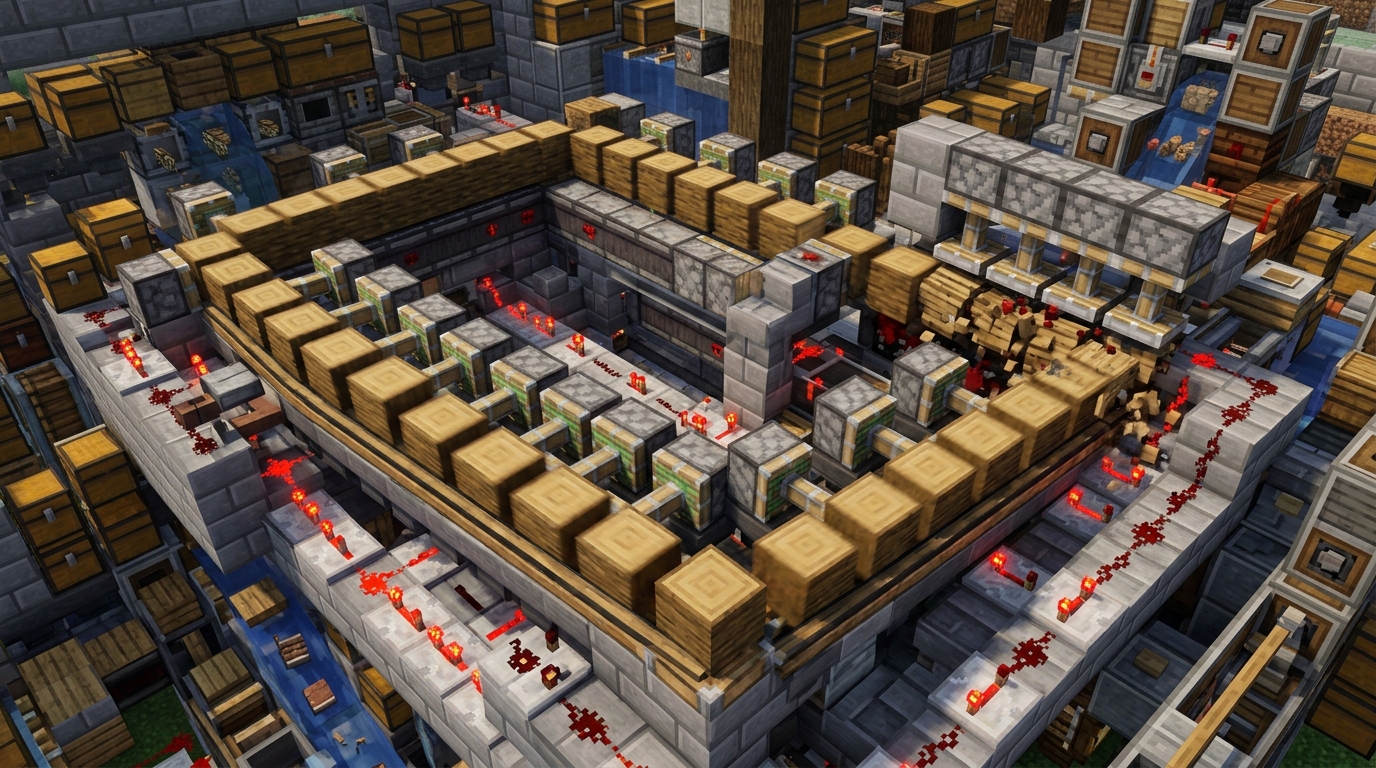
To keep your farm running at peak speeds, you need a way to clear out logs the very moment they grow. Piston feed tapes act like a high speed conveyor belt, using perfectly timed pulses to push wood blocks away from the planting spot. This setup ensures that your sapling area is empty and ready for the next bone meal cycle in a fraction of a second. By moving the logs immediately, you prevent the machine from jamming and allow the growth circuit to fire again without any delay.
Once the logs are pushed out of the main growing chamber, they enter a log processing unit or a cubing station. These clever redstone modules use rows of pistons to reorganize messy tree shapes into neat, solid blocks of wood. Modern designs can handle difficult trees like Acacia or Dark Oak by shifting branches into a centralized stream for easy harvesting. This organization makes it possible to store thousands of logs in a compact area until you are ready to use TNT or a silk touch axe to collect them.
Building these units correctly is the secret to reaching massive production rates of over 20,000 logs per hour. You will want to use easy redstone clock designs and repeaters to synchronize the movement so that the pistons never collide with each other. This constant motion allows you to stand in one spot and hold down the place button while the machine does all the heavy lifting. High capacity storage units in these farms can hold dozens of stacks, meaning you spend less time moving items and more time building your next big project.
Self Sustaining Leaf Composting And TNT Blast Chambers
To keep your instant tree farm running at peak performance, you need a smart way to handle the massive amount of leaves these machines produce. Instead of letting leaf blocks clutter your build or lag your game, you can use a series of pistons to push them into industrial composters. This system automatically recycles the waste products from your oak or birch trees and turns them back into bone meal. By looping this resource back into your dispensers, you significantly reduce the amount of manual farming you have to do. It creates a closed loop that keeps your saplings growing as fast as you can place them.
Once your logs are pushed into a collection point, using a TNT blast chamber is the most efficient way to gather your materials. These chambers use precise redstone timing to drop a TNT entity at the exact moment your log cube is full, blowing the blocks into item form instantly. High speed farms can produce over 20,000 logs per hour, making manual chopping completely impossible to keep up with. Water streams at the bottom of the chamber then wash all the dropped items directly into your chest setup. This hands free approach ensures you spend your time building with your wood rather than grinding for it.
Setting up these systems requires some careful redstone placement, but the payoff for your survival world is massive. You can integrate obsidian platforms to protect your machinery from the TNT blasts while ensuring every single log is collected. Modern universal designs even account for tricky trees like mangrove and acacia, which used to be much harder to automate. By mastering automatic crafter redstone setups, you can further automate your resource processing to turn these logs into planks or chests instantly. You can also keep your Minecraft farms running even when you are far away by using advanced technical tricks. You will never have to worry about running out of building blocks or bone meal again as you scale up your base.
Mastering Your Automated Wood Supply
Building an instant tree farm is one of the most rewarding redstone projects you can undertake in your survival world. Once you have finished placing the final observers and pistons, you gain access to a nearly limitless supply of building materials. These high-speed machines can produce over 20,000 logs per hour, ensuring you never have to spend hours manually chopping down trees again. It is an incredible feeling to stand back and watch your bone meal stash turn into a massive wall of wood in just a few minutes. Whether you are building a giant wooden mansion or a massive storage facility, this farm has you covered.
Now that your redstone is firing and the TNT blast chamber is ready, you can focus on the creative side of Minecraft. Having a steady flow of oak, spruce, or even tricky acacia logs allows you to experiment with different textures and designs without worrying about resource costs. You can also build an automatic bamboo wood farm to complement your tree farm and ensure you have a diverse range of building materials. You will find that your building speed increases significantly when you have double chests full of wood ready to go. These universal designs make it easy to switch between sapling types whenever you need a new color palette for your base. Enjoy the convenience of your new machine and start planning your next mega-project today.
Frequently Asked Questions
1. How many logs can I actually get from an instant tree farm?
You can produce up to 29,000 logs every single hour using these high-speed redstone designs. This massive output allows you to collect a stack of wood in just a few seconds without ever needing to use an axe.
2. Do these farms work on both Java and Bedrock editions?
Yes, these universal designs are built to work perfectly whether you play on a PC, console, or mobile device. You can use the same redstone logic to farm tough wood types like Mangrove and Dark Oak on any platform.
3. How does the machine know when to grow the tree?
An observer block watches the exact spot where you plant your sapling to detect a block update. The moment you plant, it triggers a rapid clock that fires bone meal from a dispenser several times per second until the tree matures.
4. What happens if the storage fills up while I am away?
Modern setups include massive storage units that can hold up to 24 stacks of logs before they need to be cleared. This gives you plenty of time to focus on building your mega-base while the machine handles all the heavy lifting for you.
5. Can I use this farm for trees that grow in different shapes?
You can customize your growth chamber by placing solid blocks or glass around the planting area to force logs into a straight column. Adding a piston at the top of the chamber helps push the logs out of the way instantly so you can plant the next sapling.
6. Is it efficient to use so much bone meal?
These machines are designed for maximum efficiency to ensure every piece of bone meal counts toward a growth stage. By using rapid-fire circuits, you waste zero time and get the highest possible wood return for your resources.