
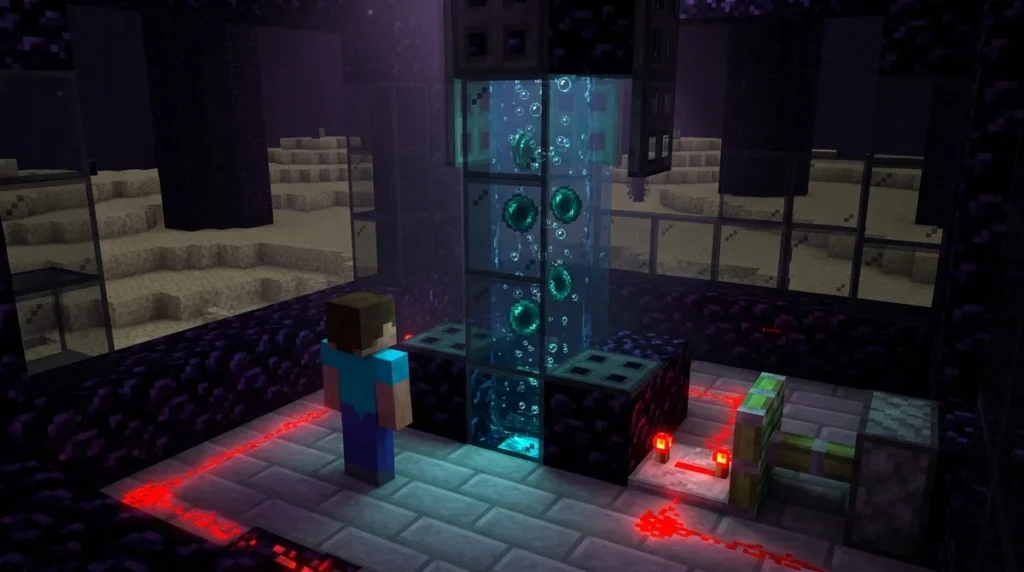
An ender pearl stasis chamber is a redstone build that holds your thrown ender pearl in place until a trigger makes it hit a solid surface, such as a trapdoor. That hit teleports you straight back to the setup. In Java Edition, the common design places soul sand beneath source water to create an upward bubble column, and the pearl floats on top until you are ready to return. Bedrock Edition instead places honey blocks around the bubble column, and Java Edition 1.21.2 added chunk loading for thrown pearls. Because the designs differ between editions and updates, pick the method that matches the version you play.
Java Edition 1.21.2 added ender pearl chunk loading, so a pearl can keep its chunk ticking while it exists. Each chunk ticket times out after 2 seconds and is refreshed while the pearl is still there. Keep in mind that the pearl unloads when you log out and reappears when you log back in. Snapshot 24w37a also changed how pearls interact with bubble columns, so test your chamber on your exact version before you rely on it.
Key Takeaways
- Your Java or Bedrock edition and exact game version should be set before you gather blocks, because Java uses soul sand under source water while Bedrock relies on honey blocks around the bubble column.
- Your ender pearl stasis chamber should be tested with a spare pearl before you store your trip pearl, since a Minecraft update can break a build that worked before.
- In Java Edition 1.21.2 and later, a thrown ender pearl keeps its chunk ticking through repeated 2-second chunk tickets, but that pearl unloads when you log out.
- A missing ender pearl is usually still waiting in its column, so you should log back into the same account and world before assuming it is gone.
- Your first real ender pearl trip should be a short one, such as a few chunks from home, so a failed return costs you very little.
What Is an Ender Pearl Stasis Chamber?
An ender pearl stasis chamber is a storage spot for one thrown ender pearl. You throw the pearl into the chamber, it stops there instead of flying on, and it waits until you need it. When a redstone signal releases it, the pearl drops onto a solid block such as a trapdoor, and you are pulled back to the spot where it landed. The chamber works like a stored ride home that you can call up whenever you want.
Normally a thrown pearl keeps going until it hits something, so it would never stay in one place. A bubble column changes that. Water moving upward pushes the pearl up and keeps it bobbing at the top of the column instead of letting it fall. As long as the current keeps running, the pearl stays put.
In Java Edition, the usual build puts soul sand on the floor and places source water directly above it. The soul sand sends the current upward through the water, so the column rises and holds the pearl near the surface. Your redstone part then sits beside the column and is wired to open a path for the pearl to escape toward a trapdoor.
Bedrock Edition does not use the same arrangement. Its stasis method relies on honey blocks placed around the bubble column, so a Java build will not work there. That is why you should settle on your edition and game version before you gather blocks. Updates can also change how pearls react to bubble columns, so the exact version you play on matters as much as the edition.
Before you build anything, pick one ender pearl to use only for the chamber. That way you will not mix it up with the pearls you throw during normal play, and you will always know which one is waiting for its trip home.
How Do You Build a Java Edition Stasis Chamber?
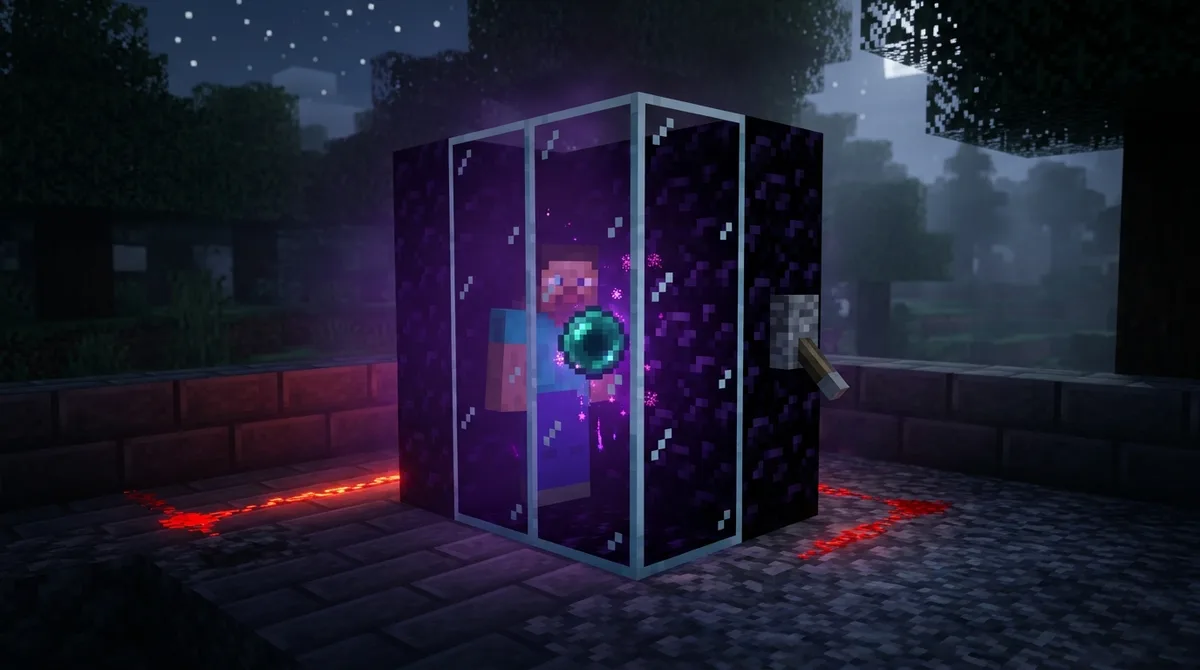
To build a Java Edition stasis chamber, you place soul sand on the floor of an enclosed room, put source water on top of it, and wire a trapdoor and a redstone switch so you can release the pearl from another room. The soul sand keeps the upward current running, so the water block above it matters less than the sand underneath.
Choose a small room with walls on every side so the water cannot spill out and break the column. Build the column first, then set up the trapdoor and the switch, because it is easier to reach the water before the wall is finished. Keep the whole column in sight from the spot where you will stand, so you can watch the pearl while it floats.
- Place soul sand on the floor of a sealed room, such as a single block in the middle of a stone floor.
- Place a source water block directly on top of the soul sand to start the upward bubble column.
- Stand above the column and throw your chamber pearl onto the water so it stays afloat at the top.
- Place a trapdoor on the wall in the pearl’s path, so that a closed trapdoor is the first solid block the pearl would strike.
- Run redstone dust from the trapdoor through the wall to a lever or button in a second room.
- Use the lever or button from the other room to power the trapdoor, which closes it across the pearl’s path and fires the pearl at it.
- Test the trigger with a spare pearl before you rely on the chamber for a real trip, and check that the pearl hits the trapdoor and sends you back.
Testing matters because updates change how pearls react to bubble columns. The Mojira bug tracker logged a Java change that broke previously working stasis designs, so a build that worked last month may not work after an update.
What Is the Bedrock Edition Honey Block Method?
The Bedrock Edition honey block method is a stasis setup where your ender pearl sits in an upward bubble column placed between two honey blocks. The Minecraft Wiki describes this arrangement as the Bedrock stasis method, and it is built differently from the soul sand design used in Java Edition.
“Orthogonally touching” means the two honey blocks sit side by side and touch along a full face. Picture two honey blocks on the same floor layer, one directly east of the other, with their flat sides pressed together. Two blocks that meet only at a corner, such as one at 10, 64, 10 and another at 11, 64, 11, are diagonal, and that does not count for this build.
Do not copy the Java build directly. In Java, you place soul sand under source water, but Bedrock players should follow the honey block layout instead of putting soul sand under the water and expecting the same result. The honey blocks are what the Bedrock method depends on, so start from that layout.
Bedrock updates can change how pearls react to bubble columns, so confirm your exact Bedrock version before you gather materials. You can find the version in your game’s settings or on your launcher, then check the Minecraft Wiki’s stasis entry for that version to make sure the method still matches. If the wiki and your version disagree, trust the version you are playing.
Once the chamber is built, run a test in a spare area rather than your main base. Use a spare ender pearl, throw it into the column, and release it to confirm it hits the trapdoor and sends you back. Only use the chamber for real trips after the test works on your version.
Follow these steps to build the Bedrock layout:
- Pick a flat stone floor inside a sealed room so the bubble column has no open edge where water can escape.
- Place your first honey block on the floor, for example at 10, 64, 10.
- Place the second honey block directly beside it at 11, 64, 10, so the two touch along a full face.
- Create the upward bubble column in the open space between the two honey blocks, as the Minecraft Wiki’s Bedrock method describes.
- Stand above the column and throw your chamber pearl into it, so the pearl rises and stays afloat.
- Place a trapdoor in the pearl’s path and wire it to a switch in another room, so you can release the pearl on demand.
Why Did My Ender Pearl Disappear From the Chamber?
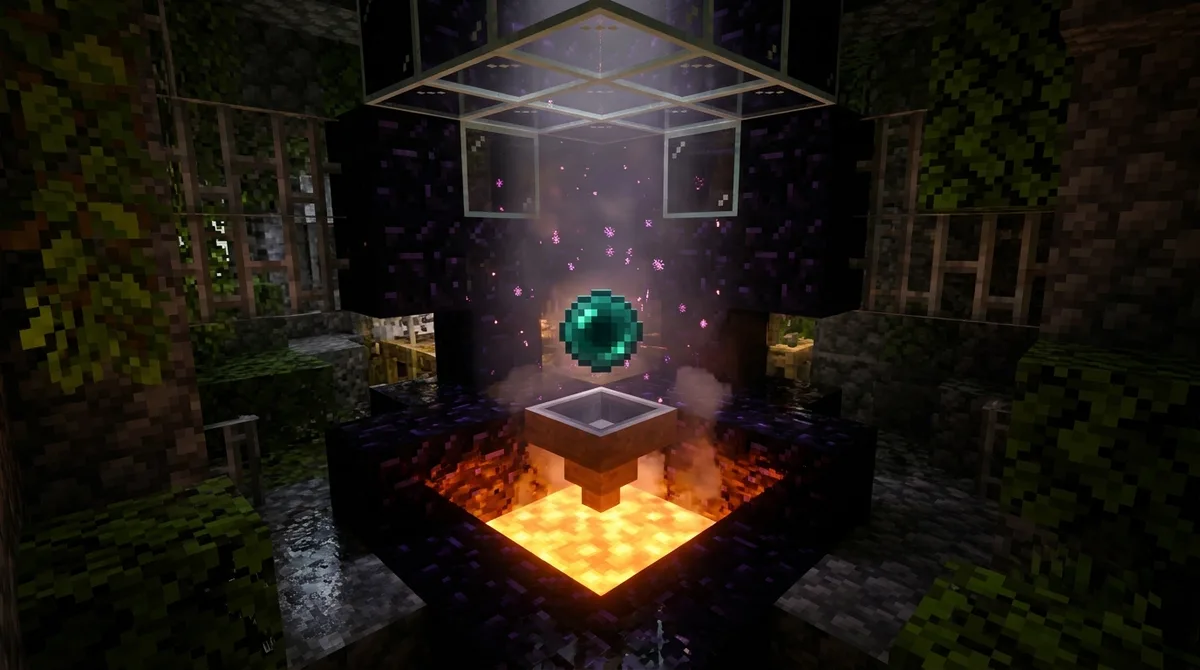
A missing ender pearl is often still in the chamber, just not visible while you are offline. Pearls unload when their owner logs out and reappear when the owner logs back in, so log back in on the same account and world before you assume the pearl is gone. If you throw a pearl, leave the game, and come back later, check the column first.
If the pearl is still missing after you return, the next suspect is your game version. Snapshot 24w37a changed how pearls interact with bubble columns, and that change broke some stasis designs that worked before. Bug record MC-276954 tracks this change, so check it if your chamber stopped working after an update.
When a pearl seems to have disappeared, work through this short checklist:
- Confirm the trigger opened: check that the trapdoor closed or opened as expected, and that the redstone dust from your switch reaches it without a break.
- Confirm the pearl is still above the column: look at the water block above the soul sand in Java, or between the two honey blocks in Bedrock, and make sure the pearl has not drifted out of the current.
- Confirm your game version: compare your Java or Bedrock version with the version your build was tested on, because a change in either can stop the chamber from holding the pearl.
If the pearl still does not appear after these three checks, throw a spare pearl into the column and watch what happens. That test shows whether the chamber holds a pearl at all, which tells you whether the problem is with the build or with your saved chamber pearl.
Do Pearl Stasis Chambers Load Chunks?
Yes. In Java Edition 1.21.2 and later, a thrown ender pearl loads and ticks the chunk it sits in and any chunk it travels into, which is what lets a chamber hold it. The pearl does this with a chunk ticket, a short instruction that tells the game to keep an area active. Each ticket lasts only 2 seconds, according to the Minecraft Wiki, but it is refreshed again and again for as long as the pearl exists. That repeated refresh keeps the chunk under your chamber running.
Picture a chamber built in a chunk near your farm at 120, 64, -48. As long as the pearl floats in its column, the game keeps that chunk ticking, so the pearl stays where you left it. The chunk does not need you standing nearby to stay active.
The chunk stays active only while you are online. Pearls unload when their owner logs out and reappear when that owner logs back in, so a chamber does not keep the world loaded for an offline player’s pearl. If you plan to leave a pearl waiting overnight, expect it to be unloaded while you are away and back in its column when you return.
Bedrock Edition chunk behavior can differ from Java, so do not assume the same result. Before you trust a Bedrock chamber, check the chunk on your own version. Throw a spare pearl, walk several chunks away, and see whether the pearl is still in place when you come back.
Testing Your Chamber Before You Rely on It
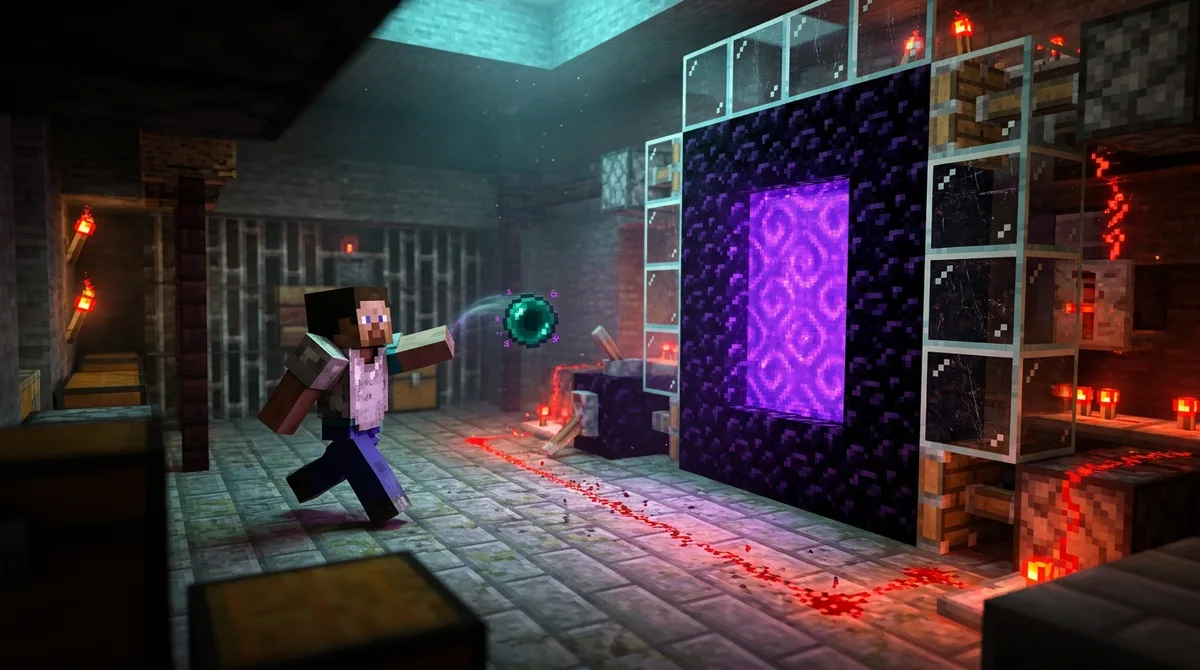
Start every test with a spare pearl in a flat, open area away from your main base. Throw it into the column, release it, and watch whether it hits the trapdoor and sends you back. Only store your valuable trip pearl after that test works.
Check your game version on both editions before you trust the build. Java players should compare their version with the one the chamber was tested on, because bubble column behavior changed in a recent Java snapshot. Bedrock players should confirm their version in settings, since the honey block method depends on the version you run.
Retest whenever you change the build, and check three things each time: – Confirm the trigger: press the lever or button and make sure the redstone dust reaches the trapdoor. – Confirm the trapdoor path: make sure nothing blocks the pearl between the column and the trapdoor. – Confirm the landing spot: stand where you expect to arrive and check that it is clear of lava and hostile mobs.
Write down the coordinates of the column, the trapdoor, and the landing spot in one notes file. For example, you might record the column at 120, 64, -48 and the landing at 120, 64, -40. Good notes tell you exactly where the pearl will return you, even after a long break from the game.
Setting Up Your First Pearl Travel Point
Start by writing down your edition and exact game version before you touch a block. If you play Java, note whether you are on 1.21.2 or later, since that is when pearls began loading chunks. If you play Bedrock, follow the honey block layout and leave soul sand out of the build entirely.
Next, pick a flat, open spot far enough from your main base that a failed test cannot damage it, such as a grass plain at 300, 64, 300. Build a small test chamber using the design for your edition, with one trapdoor and one switch. Use a spare pearl, not the one you plan to keep for trips.
Throw the spare pearl into the column, release it, and watch whether it hits the trapdoor and sends you back to your landing spot. Then log out, log back in, and check that the pearl reappeared in its column. If both checks pass, your build works on your version.
Once the test is clean, build the real chamber in a sealed room at a new location, and record its coordinates in your notes file. Make your first real trip a short one, such as a few chunks from home, so a failed return costs you little. Only after that trip works should you rely on the chamber for longer journeys.