
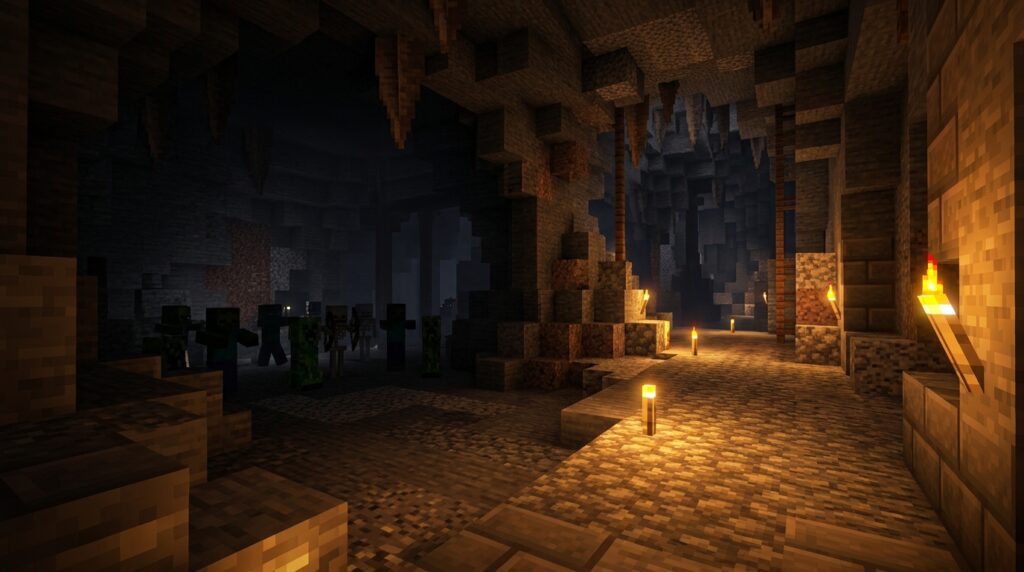
A single dark corner can fill your base with zombies, skeletons, and creepers, but proper lighting can stop them from appearing. This light level spawn guide gives you the key numbers for Java and Bedrock Edition, so you know where to place torches, lanterns, and other light sources. In Java Edition, most ordinary hostile mobs need a block light level of 0, while level 1 or higher usually prevents them from spawning.
Bedrock Edition uses a wider spawn range, with many hostile mobs appearing at block light levels 0 through 7. For dependable spawn-proofing, light areas to level 8 or higher, then check caves, rooftops, and shadows where mobs may still gather. Remember that light is only one requirement. Blocks, available space, and other mob-spawning rules matter too.
Key Takeaways
- In modern Java Edition, most ordinary hostile mobs require block light level 0, so level 1 or higher usually prevents natural spawning. In Bedrock Edition, many hostile mobs can spawn at levels 0–7, making level 8 or higher the safer spawn-proofing target.
- Block light decreases as it travels, while sky light can disappear at night or under roofs and overhangs. Check corners, caves, rooftops, ledges, and spaces behind walls rather than relying on daylight or a single torch.
- Place torches, lanterns, or other light sources in overlapping patterns across floors, caves, paths, and base exteriors; in Bedrock, torches spaced roughly six blocks apart in open areas can help maintain level 8 or higher, but uneven terrain requires extra coverage.
- Lighting is only one part of spawn prevention: valid blocks and sufficient space are also required. Use bottom slabs, glass, carpets, or similar non-spawnable blocks on unwanted surfaces, while keeping intended mob-farm platforms dark and nearby areas lit.
Introduction To Minecraft Light Levels
Minecraft light levels determine whether hostile mobs can appear around your base, in caves, near villages, or inside a mob farm. In modern Java Edition, most ordinary hostile mobs need a block light level of 0, so even a small amount of block light can stop normal spawning. Bedrock Edition commonly allows hostile mobs to spawn at block light levels from 0 through 7, making level 8 or higher a safer target for spawn-proofing. Other conditions still matter, including the required block type, available space, and distance from you.
Block light comes from placed items such as torches, lanterns, glowstone, and jack-o’-lanterns. Sky light comes from the sun and open areas above the world. A torch is brightest at its position, then becomes weaker as the light travels across nearby blocks, so dark pockets can remain behind walls, under stairs, or around uneven cave floors. You can check light levels with the debug information available in Java Edition, or use the conservative Bedrock target when building a safe area. Remember that a roof, overhang, or deep cave can remove sky light even when an area looks close to the surface.
To stop unwanted spawns, place torches in caves, on rooftops, beneath bridges, and around the outside of your base. Then check corners and lower areas for missed spaces. You can also use spawn-proofing blocks such as bottom slabs, glass, carpets, and other blocks that do not provide a normal full surface for hostile mobs. For a mob farm, keep the spawning platform dark while lighting nearby caves and land, so mobs are more likely to spawn where your farm can collect them. This balance between bright safe zones and controlled dark platforms helps your light level spawn guide work in both survival builds and automated farms.
Java And Bedrock Spawn Thresholds
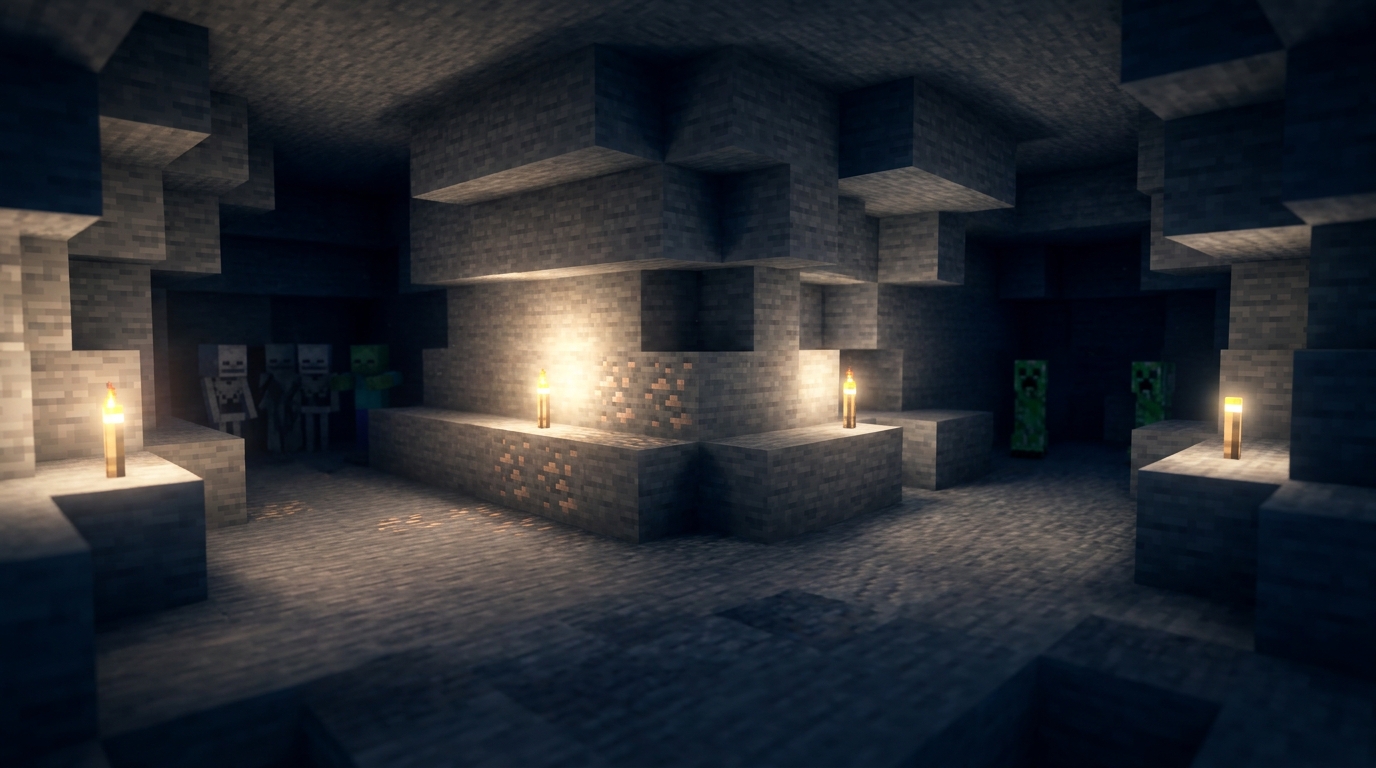
In modern Java Edition, most ordinary hostile mobs need block light level 0 to spawn, as long as the floor, available space, and other conditions are suitable. That means a torch raising an area to block light level 1 is usually enough to stop normal hostile spawns. For example, place torches so their light reaches every block in a cave, around your base, or beneath a mob-free farm. Keep in mind that sky light and special mob rules can affect some locations, so light level is not always the only requirement.
Bedrock Edition commonly allows hostile mobs to spawn at block light levels from 0 through 7, so you should raise the light to level 8 or higher for reliable spawn-proofing. A torch near a doorway may not cover the dark corner behind your storage room, so check the light level across the entire floor and add more torches where needed. Older Java Edition versions often allowed ordinary hostile mobs to spawn at light level 7 or lower, which is why older guides recommend lighting areas to level 8. Match your torch placement and target level to the edition and version you are playing.
Block Light And Sky Light Explained
Minecraft uses a light scale from 0 to 15, where 0 is completely dark and 15 is the brightest. A regular torch produces block light level 14, while a lantern, glowstone, sea lantern, and other bright blocks can reach level 15. Light becomes one level weaker as it spreads to each nearby block, so a torch may not protect every corner of a large room. Place lights along walls, floors, and cave branches instead of relying on one torch at the entrance.
Block light is only one part of the light level spawn guide because sky light also affects mob spawning. Open sunlight provides sky light up to level 15 during the day, and that light can travel down through openings, windows, and shafts. This is why a dark cave may have safe areas near its entrance during the day, even when deeper sections remain dangerous. Once the opening is covered or night arrives, those areas can become dark enough for hostile mobs to spawn if the other conditions are met.
For reliable spawn-proofing, aim for block light level 1 or higher in modern Java Edition, where most ordinary Overworld hostile mobs need block light level 0. In Bedrock Edition, level 8 or higher is the safer general target because many monster-spawning rules allow brightness from 0 through 7. Check ceilings, ledges, rooftops, and spaces behind walls, since a single unlit block can create a spawning spot near your base or farm. For consistent results, combine well-spaced lanterns or torches with solid spawn-proof blocks, and do not depend on daylight alone.
Torch Placement For Spawn Proofing
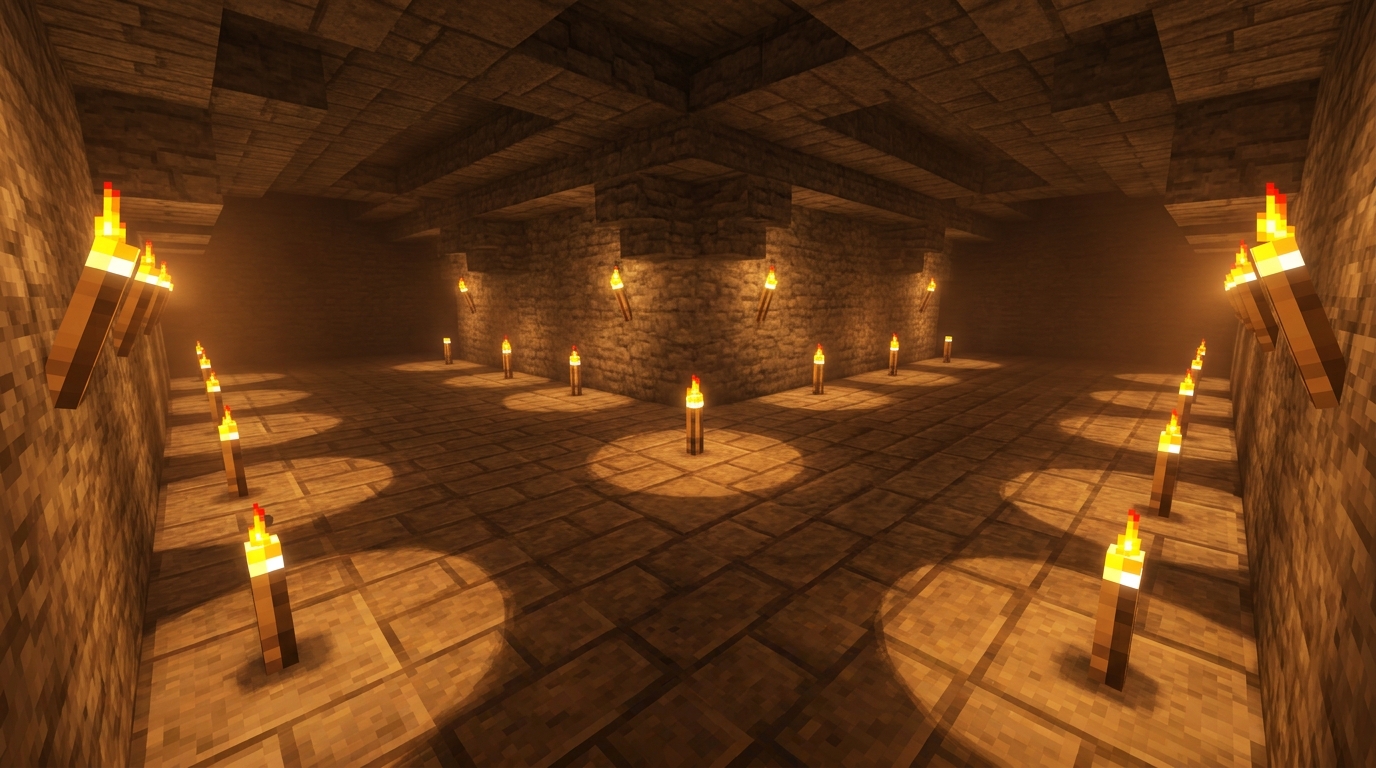
Place torches where their light covers the floor, not just beside walls or entrances. A torch gives off block light level 14, and that level normally drops by one for each block of distance through open air. As a result, a torch can leave dark spots around corners or behind walls. In a home, place torches near doors, in room corners, and along hallways. Add one every 10 to 12 blocks on longer paths as a safe starting point. In caves, stagger torches along both sides and light every branch, dead end, and ledge where a hostile mob could stand.
For underground rooms, use a simple grid instead of relying on a few torches near the entrance. Place torches across the floor or on the walls so no section is far from a light source, especially beneath low ceilings where dark patches are easy to miss. On Java Edition, press F3 and check the light information on the debug screen, usually shown as “Client Light” or “Light,” to see the block light level at your position. Ordinary hostile mobs in modern Java generally need block light level 0, so a block light level of 1 or higher usually prevents normal spawning when all other conditions are met.
Bedrock Edition uses a more conservative rule for reliable spawn-proofing, so aim to keep every spawnable block at light level 8 or higher. Because a torch starts at level 14, placing torches no more than about six blocks apart in a clear line keeps the light at 8 or above. However, walls, corners, and uneven floors can reduce coverage. Leave extra spacing on paths and in caves, and place torches in a regular pattern instead of measuring only from torch to torch through open air. If you cannot check the exact light level easily, adding a few extra torches is safer than leaving a dark gap.
Spawn Proofing Caves And Mob Farms
Light every cave, tunnel, and hidden pocket near your hostile mob farm so mobs do not use those spaces instead of your spawning platforms. In Java Edition, most ordinary Overworld hostile mobs need block light level 0, so even level 1 blocks their normal spawning. In Bedrock Edition, use light level 8 or higher as a safe target because many monsters can spawn at levels 0 through 7. Place torches, lanterns, or other light sources throughout nearby caves, especially in dark corners behind water, under ledges, and beneath the farm.
Keep the farm’s spawning platforms completely dark, and separate them from your lit work areas with solid walls or a roof. Cover nearby ledges and unused surfaces with bottom slabs, glass, or carpets, since these blocks generally do not allow ordinary hostile mobs to spawn. Bottom slabs are useful for floors and cave paths, glass can seal openings without blocking your view, and carpets can stop spawns on existing floors. Check the blocks above and below the platforms as well, because a single dark shelf or crawl space can create an unwanted spawn area.
Lighting and spawn-proofing reduce most surprise spawns, but they cannot override every mob rule. Some mobs have special requirements involving biomes, block types, fluids, height, or nearby structures, and mobs from spawners do not follow normal natural-spawn checks. If enemies still appear, inspect caves, roofs, water pockets, and nearby platforms instead of adding torches directly to the farm. Keeping the intended platforms dark while making every other valid surface bright or spawn-proof gives your farm the best chance to work consistently.
Minecraft Spawn Proofing Checklist
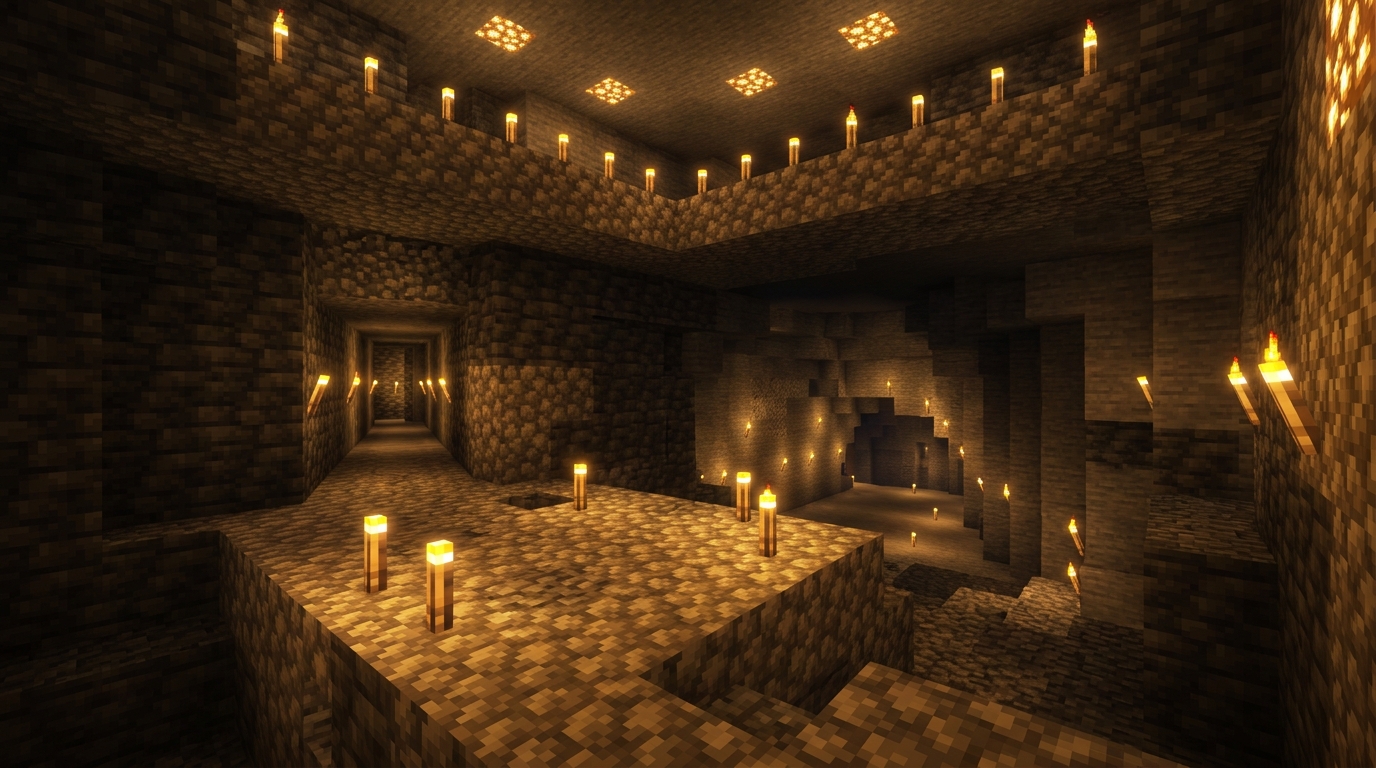
In Java Edition, most hostile mobs in the Overworld need a block light level of 0 to spawn, so light level 1 or higher usually prevents normal hostile spawning. In Bedrock Edition, many hostile mobs can spawn at light levels from 0 through 7, so aim for level 8 or higher when you want reliable spawn-proofing. Torches, lanterns, glowstone, and other light sources work best when their coverage overlaps instead of leaving gaps between them. Remember that sunlight can help during the day, but it may not protect an area at night or under solid blocks.
Check more than the paths around your base, because dark caves, ravines, rooftops, bridges, and spaces beneath buildings can all become hiding spots for mobs. Look for spawnable blocks such as full blocks, grass, stone, and other solid surfaces with enough open space above them. Carpets, bottom slabs, glass, and other non-spawnable blocks can help protect specific areas, but they should support your lighting plan rather than replace it everywhere. If mobs still appear, inspect nearby caves and high surfaces first, then check the light level and block type at the exact spawn location.
Use a simple checklist to finish your light level spawn guide: inspect the area, place lights evenly, verify dark spots, and test the result in your world. Walk around your base at night and check cave entrances, farm platforms, rooftops, and less visible corners. Add lights or spawn-proofing blocks wherever you find a level below your edition’s target or a valid spawning surface. Afterward, wait through a few night cycles and confirm that hostile mobs no longer appear where you want them gone.
Stop Hostile Mob Spawns With Light
Understanding light levels makes it easier to stop hostile mobs from appearing around your base, farms, and paths. In modern Java Edition, most ordinary Overworld hostile mobs need block light level 0, so light level 1 or higher usually prevents them from spawning when other conditions are met. Bedrock Edition commonly allows spawning from brightness level 0 through 7, so lighting areas to level 8 or higher is a safer target. Remember that mobs also need a valid spawning block and enough space, so light alone is not the only part of spawn-proofing.
For reliable results, place torches or other light sources so their coverage overlaps across floors, rooftops, cave entrances, and the area around your farm. Check hidden spaces behind walls and under platforms, since one dark block can create an unexpected spawn point. You can also use non-spawnable blocks, such as bottom slabs, glass, or buttons, to protect important surfaces without covering everything in torches. With the right light level and safe block choices, you can keep your home secure and help hostile-mob farms produce only where you want them to.