
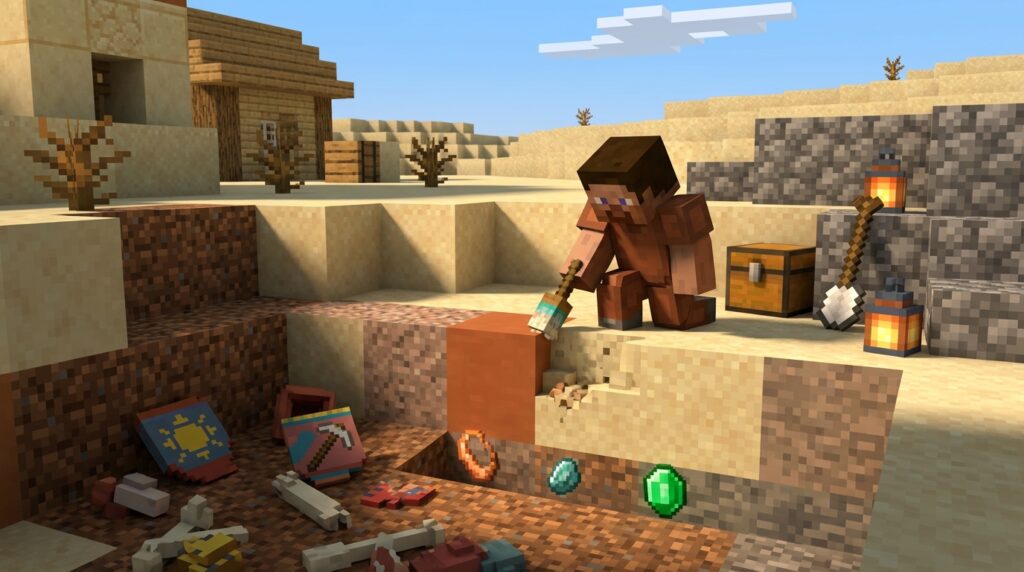
A good Minecraft archaeology guide can help you turn dusty ruins into rare loot, pottery sherds, and hidden history. You will learn how to spot Suspicious Sand and Suspicious Gravel, then uncover them safely with a Brush instead of breaking them by hand. One careless move can destroy what is buried inside, so patience matters.
Search Trail Ruins, Desert Temples, Ocean Ruins, and Warm Ocean Ruins for archaeological blocks. With the right tools and a careful approach, you can collect unique pottery patterns, useful items, and even the Relic music disc while exploring Minecraft.
Key Takeaways
- Craft a Brush with one feather, one copper ingot, and one stick, then use it to excavate Suspicious Sand and Suspicious Gravel at sites such as Desert Temples, Wells, Ocean Ruins, Trail Ruins, Ancient Cities, and Trial Chambers.
- Never mine, punch, move, or let suspicious blocks fall; breaking or disturbing them destroys the hidden loot. Clear surrounding blocks carefully, keep the target supported, and brush it directly until the item is revealed.
- Archaeology can yield pottery sherds, Decorated Pot designs, Sniffer Eggs, armor trims, emeralds, tools, and the Relic music disc. Combine four pottery sherds to create a Decorated Pot, with each sherd determining one side’s pattern.
- Prepare for safe, efficient expeditions by bringing spare Brushes, food, torches, building blocks, water-breathing gear for ocean sites, and inventory space. Mark excavated areas, store valuable finds, and plan routes between nearby structures to avoid losing loot or repeating work.
Crafting Brushes and Excavating Blocks
Craft a Brush using one feather, one copper ingot, and one stick. Place the feather in the top slot, the copper ingot in the center, and the stick in the bottom slot of a crafting table. Take the Brush to an archaeology site, such as a Desert Well, Desert Temple, Trail Ruin, or Ocean Ruin, and look for Suspicious Sand or Suspicious Gravel. These blocks resemble regular sand or gravel, so check unusual patches before digging around them.
Equip the Brush and use it on the suspicious block to slowly uncover its hidden item. Keep brushing until the block releases its loot, which may include a pottery sherd, a decorative item, or another rare find. Each Brush has 64 uses, and every brushing action reduces its durability, so bring a spare when exploring several sites. Do not mine, punch, or let Suspicious Sand or Suspicious Gravel fall. Breaking or moving these fragile blocks destroys the hidden item instead of dropping it.
Archaeology Sites and Suspicious Blocks
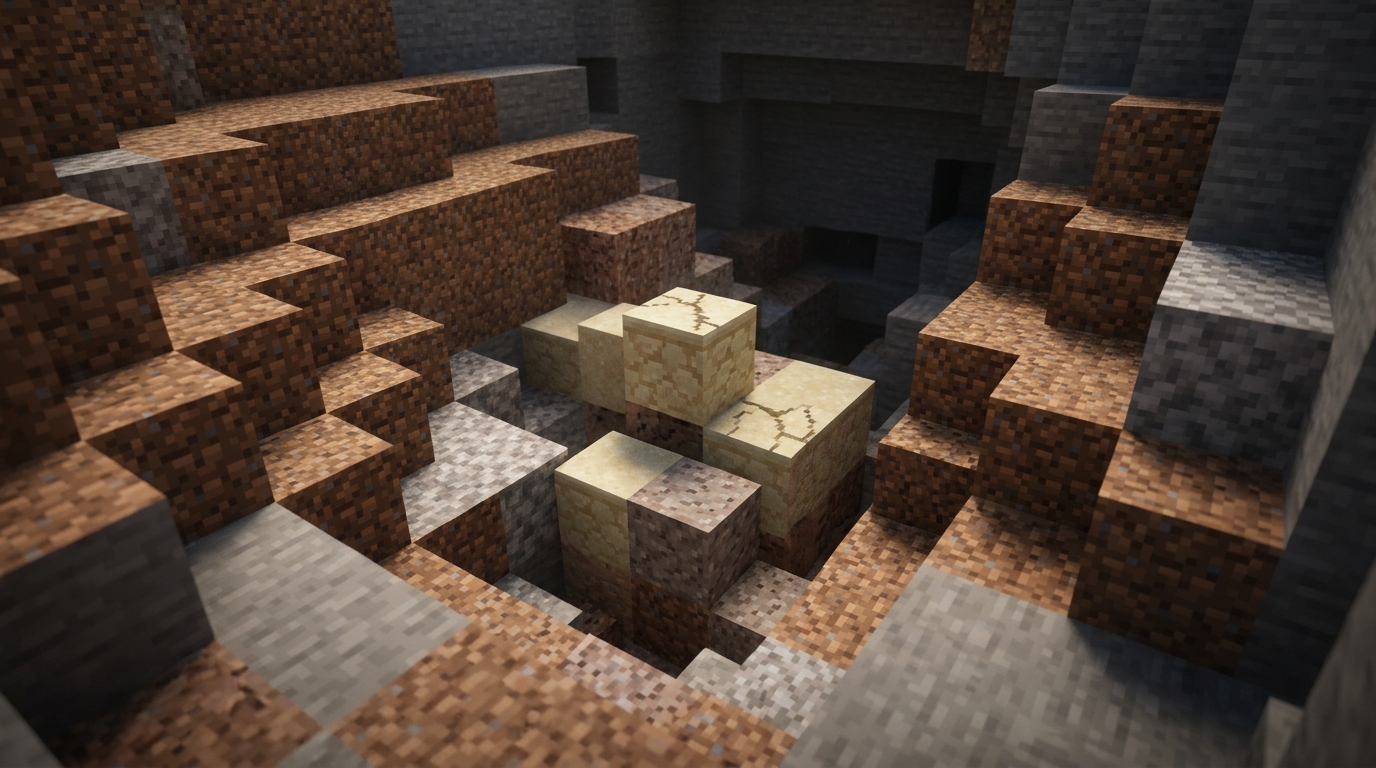
Desert Pyramids, also called Desert Temples, are some of the best places to begin your archaeology search because Suspicious Sand can hide beneath their floors. Desert Wells can also contain Suspicious Sand, so check around the base and nearby areas instead of treating them as simple water stops. In Warm Ocean Ruins, look for Suspicious Sand among buried stone and sand blocks, then brush carefully for pottery sherds and other finds. Cold Ocean Ruins use Suspicious Gravel instead, often mixed with the gravel and stone around the underwater structures. Bring a Brush, food, and water-breathing gear if you plan to explore Ocean Ruins.
Trail Ruins offer another major archaeology site, with Suspicious Gravel buried in their paths, walls, and surrounding rubble. These structures can appear in several Overworld biomes, so watch for unusual stone, terracotta, and gravel shapes that stand out from the natural ground. Trial Chambers also contain Suspicious Gravel, giving you another reason to inspect their rooms and passages after dealing with their challenges. You can find rare pottery sherds and other loot across these sites, but each structure has its own possible rewards. Search slowly and mark blocks you have already checked so you do not repeat work or miss a hidden patch.
Suspicious Sand and Suspicious Gravel look almost like their regular versions, but their textures are slightly rougher and include small differences that become easier to notice with practice. Do not mine, place blocks against, or let these blocks fall, because breaking them or triggering gravity destroys the hidden item inside. Clear ordinary blocks around a suspicious block with care, leave support beneath it, and use your Brush directly on the block until the item comes out. If you are unsure whether a block is suspicious, compare it with nearby regular sand or gravel before touching it. Careful excavation keeps the loot safe and makes every archaeology site worth exploring.
Pottery Sherds and Rare Archaeology Loot
Pottery sherds come from Suspicious Sand or Suspicious Gravel at specific archaeology sites, so check the right structures with your Brush. You can find them in places such as Desert Wells, Desert Pyramids, Ocean Ruins, Trail Ruins, Ancient Cities, and Trial Chambers. Four sherds can be combined into a Decorated Pot, with each sherd setting the design on one side. Mix sherds for a unique pattern, or use bricks when you want a plain side.
Archaeology sites can also hide useful and rare rewards beyond pottery. As you brush suspicious blocks, you may uncover Sniffer Eggs, armor trims, emeralds, tools, candles, and other items, depending on the structure you explore. Warm Ocean Ruins are especially worth checking for Sniffer Eggs, while Desert Pyramids, Ancient Cities, Trail Ruins, and Trial Chambers offer different armor trims and supplies. Keep the suspicious block in place while brushing, because mining it or letting it fall destroys the hidden reward.
Trial Chambers add three pottery sherds to your collection: Flow, Guster, and Scrape. Search their Suspicious Gravel carefully, then use these sherds to give your Decorated Pots new patterns connected to the chamber challenge. Bring extra Brushes and clear nearby blocks before excavating, since careful digging helps you avoid breaking fragile Suspicious Gravel. With patience, each site becomes a chance to collect display pieces and valuable loot.
Safe Excavation and Efficient Exploration
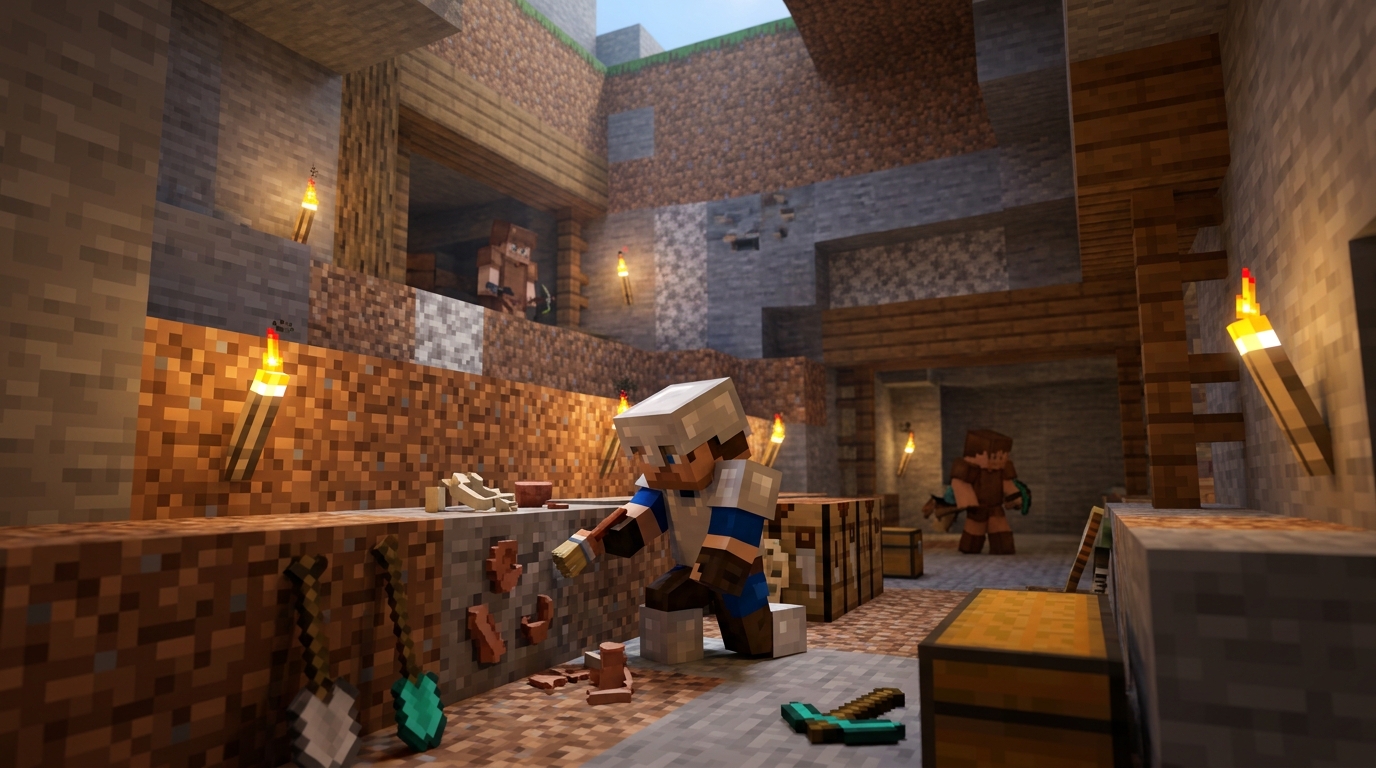
Before brushing Suspicious Sand or Suspicious Gravel, clear nearby mobs and remove ordinary blocks one layer at a time. Do not dig directly beneath the fragile block, since falling sand, gravel, or your own mining can destroy its hidden loot. Build a small rim of solid blocks around the site, and place blocks across nearby holes so you have a safe path while working. For a deep drop, put water at the bottom or use a water bucket to catch yourself, but keep flowing water away from the suspicious blocks. Light the area and mark excavated spots so you do not accidentally return with a shovel and break an untouched block.
Pack at least two Brushes, plenty of torches, building blocks, food, and several empty inventory slots before leaving. A chest or shulker box near the dig site gives you somewhere to place pottery sherds, Decorated Pots, Sniffer Eggs, and other fragile finds without risking them during travel. Plan a route that links nearby structures, such as a Desert Well and Desert Temple, or a Trail Ruin and nearby Cold Ocean Ruins, while marking each location with signs or coordinates. Finish brushing one structure and store its loot before moving to the next instead of carrying everything through caves, oceans, or hostile areas. This careful route keeps rare archaeology rewards safe and makes it easier to continue exploring when your inventory fills up.
Unearth Minecraft’s Hidden Archaeology Rewards
Craft a Brush is your first step toward uncovering Minecraft’s hidden archaeology rewards. Combine one feather, one copper ingot, and one stick in a crafting table to make it. The best places to search include Desert Temples, Desert Wells, Warm Ocean Ruins, Trail Ruins, and Ocean Ruins, where Suspicious Sand or Suspicious Gravel can hide loot. Trial Chambers are also worth exploring because they contain Suspicious Gravel and pottery sherds added in Minecraft 1.21.
Excavate suspicious blocks slowly with your Brush instead of mining them with a tool or your hand. Keep sand and gravel supported, since falling blocks can destroy the hidden item inside, and clear nearby blocks carefully so you do not break the target by accident. Watch for pottery sherds and other rare rewards as the brushing animation reveals each item. Take your time, explore carefully, and you can collect rare pottery sherds while uncovering every hidden reward.