
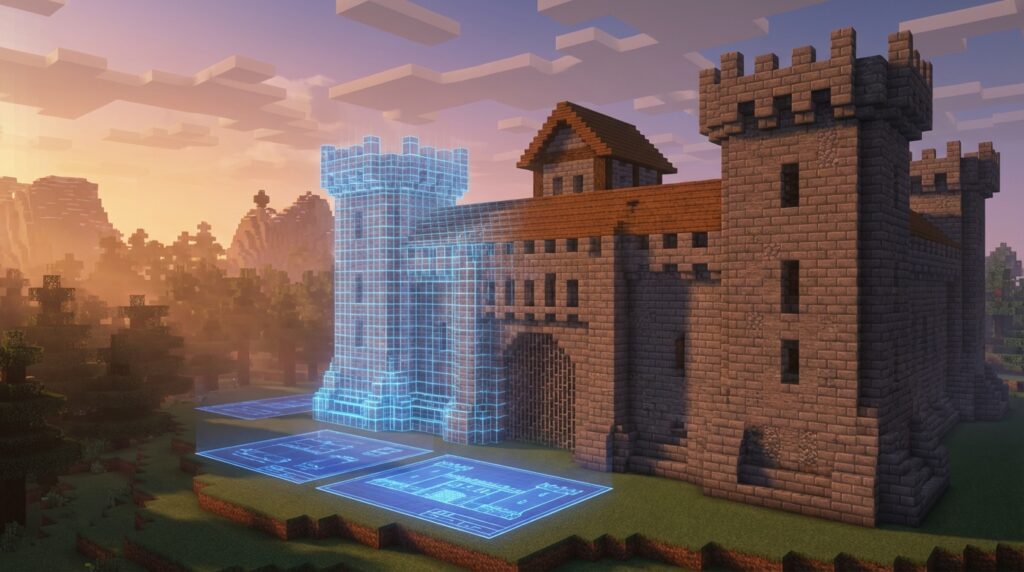
Building a massive stone fortress is a classic Minecraft project, but placing blocks randomly usually leaves you with a giant, boring gray box. To build a truly epic survival base, think like an ancient architect and use medieval castle blueprints. Instead of just spamming cobblestone, planning out specific zones helps you create a structured stronghold that looks amazing and defends your loot from creeper explosions.
Real-world fortresses were split into clever sections that translate perfectly to your in-game needs. You can design a towering central keep to hold your diamond storage and respawn bed, wrapping it in an outer bailey filled with animal pens and villager trading halls. Mapping out these historical courtyard layouts with dirt blocks before you start building saves hours of frustrating tear-downs and gives you a magnificent mega-base.
Key Takeaways
- Map out your castle’s footprint using brightly colored blocks like wool or dirt before placing permanent walls to visualize the layout and prevent frustrating tear-downs.
- Divide your fortress into distinct historical zones, securing your most valuable items in the central keep and placing large farms or stables in the outer courtyards.
- Create an authentic, weathered exterior by mixing regular stone with cobblestone and cracked bricks, using dark deepslate blocks for high-contrast roofing.
- Bring the castle interior to life by adding immersive, functional details like grand fireplaces in the great hall and armor stands in the guard barracks.
Mapping Your Castle Keep And Baileys
Before you start placing heavy stone bricks, map out the footprint of your medieval fortress using bright blocks. Grabbing stacks of red or blue wool is the perfect way to sketch your ideas directly onto the grass without committing to permanent walls. Start by outlining the central keep, which serves as your main stronghold and primary survival base. This towering structure should sit at the highest point of your terrain and include enough space for your bed, storage chests, and crafting tables. Leave a generous footprint of at least twenty by twenty blocks so you have plenty of room for a grand dining hall on the ground floor.
Once your central tower is clearly marked, draw the lines for your surrounding courtyards. Use a different color of wool to outline the inner bailey right next to your keep. This secure area is perfect for your most valuable outdoor setups, like an enchanting table area or a safe nether portal room. Further out, map the massive outer bailey where you will eventually build stables for your horses and automated farms for your crops. Creating these distinct zones ensures your castle feels like a real historical settlement rather than a big empty box.
Connecting these colored outlines with a final ring of wool helps you visualize the massive exterior defensive wall. Take a moment to pillar up with some dirt blocks so you can look down at your blueprint from above. This aerial view lets you check if your courtyards are wide enough and if your gateways line up correctly. If a section looks too cramped for your villager trading hall, simply break the wool and shift your lines outward. Taking the time to perfect this colorful map guarantees your final stone fortress will look impressive and function perfectly.
Constructing Curtain Walls And Gatehouses
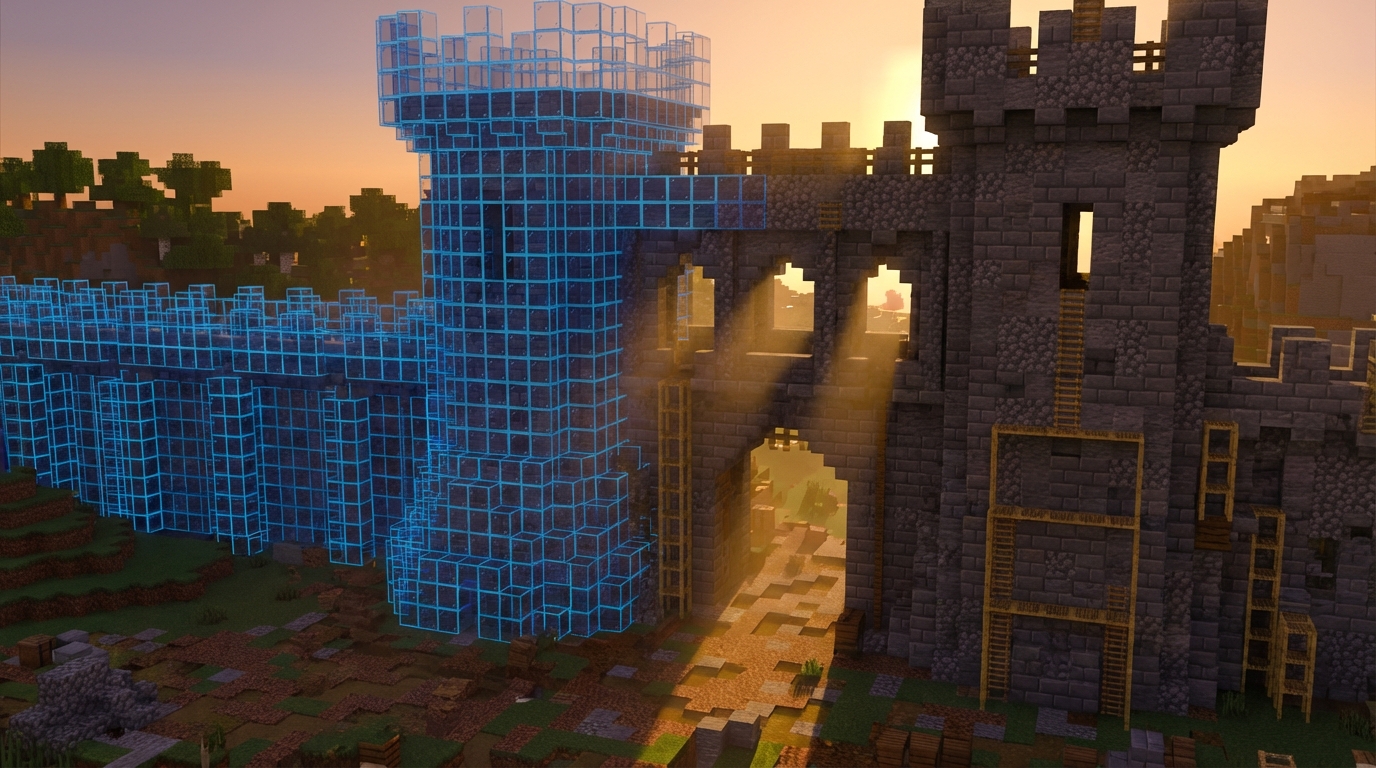
When you start outlining your medieval castle blueprints, the towering curtain walls are usually the first things you need to build. These massive outer defenses protect your inner courtyard from hostile mobs and give your fortress that classic medieval look. To make these walls look realistic, avoid using just one type of block for the entire structure. Mix regular stone bricks with patches of andesite and cracked stone bricks to create a weathered, battle-tested appearance. Adding a walkway at the top with a simple pattern of solid blocks and gaps gives you the perfect spot to defend your base from skeletons and zombies with your bow.
Every strong fortress needs a secure entrance to keep creepers out, which is exactly where your gatehouse comes into play. This structure should be the thickest part of your outer wall, featuring two flanking towers that overlook the main doorway. You can build a highly realistic portcullis by hanging rows of iron bars from the ceiling of your entrance tunnel. For an extra layer of detail, place some sticky pistons hidden in the ceiling to make it look like the gate can actually be raised and lowered. Framing the archway with cobblestone stairs and slabs adds depth and makes the iron gate stand out even more against the gray stone.
Connecting your gatehouse to the curtain walls requires careful planning to make sure everything lines up perfectly on your grid. Leave enough room inside the walls for your walkways to flow smoothly right into the upper floors of the gatehouse. Placing unlit campfires creates excellent wooden roofing for the towers above your entrance. Torches or lanterns hanging from chains along the outer walls will stop zombies from spawning while adding a warm glow to your medieval build. Once these outer defenses are fully connected, you will have a safe and beautiful perimeter ready to house your main castle keep.
Furnishing The Great Hall And Barracks
Once you finish building the exterior stone walls of your medieval castle, it is time to bring the inside to life. The great hall serves as the heart of your fortress where all your friends and villagers can gather. Create a massive dining area by placing rows of spruce wood stairs upside down to form long tables. Line the sides of these wooden tables with matching spruce signs or trapdoors to act as sturdy chairs for your guests. To make the room feel truly royal, roll out a long red wool carpet right down the center of the hall.
A massive gathering room needs plenty of warmth and light to keep hostile mobs away. Build a grand fireplace at the end of the hall using cobblestone walls and iron bars for a grate. Place a few campfires on the ground and surround them with stone bricks to create a safe, working chimney that sends real smoke up through your roof. Hang lanterns from chains across the ceiling to brighten up the dark corners of the large room. Adding a few item frames with cooked meat on the tables will make it look like a real feast is about to begin.
Just outside the main hall, set up a barracks area to house your loyal guards. Line the walls with armor stands and equip them with full sets of iron or chainmail armor to look like soldiers standing at attention. Place rows of simple beds using colored wool that matches your castle banners. Add barrels and chests at the foot of each bed so your troops have a place to store their swords and shields. These small details completely transform your empty stone floors into a bustling medieval stronghold.
Choosing The Best Medieval Block Palette
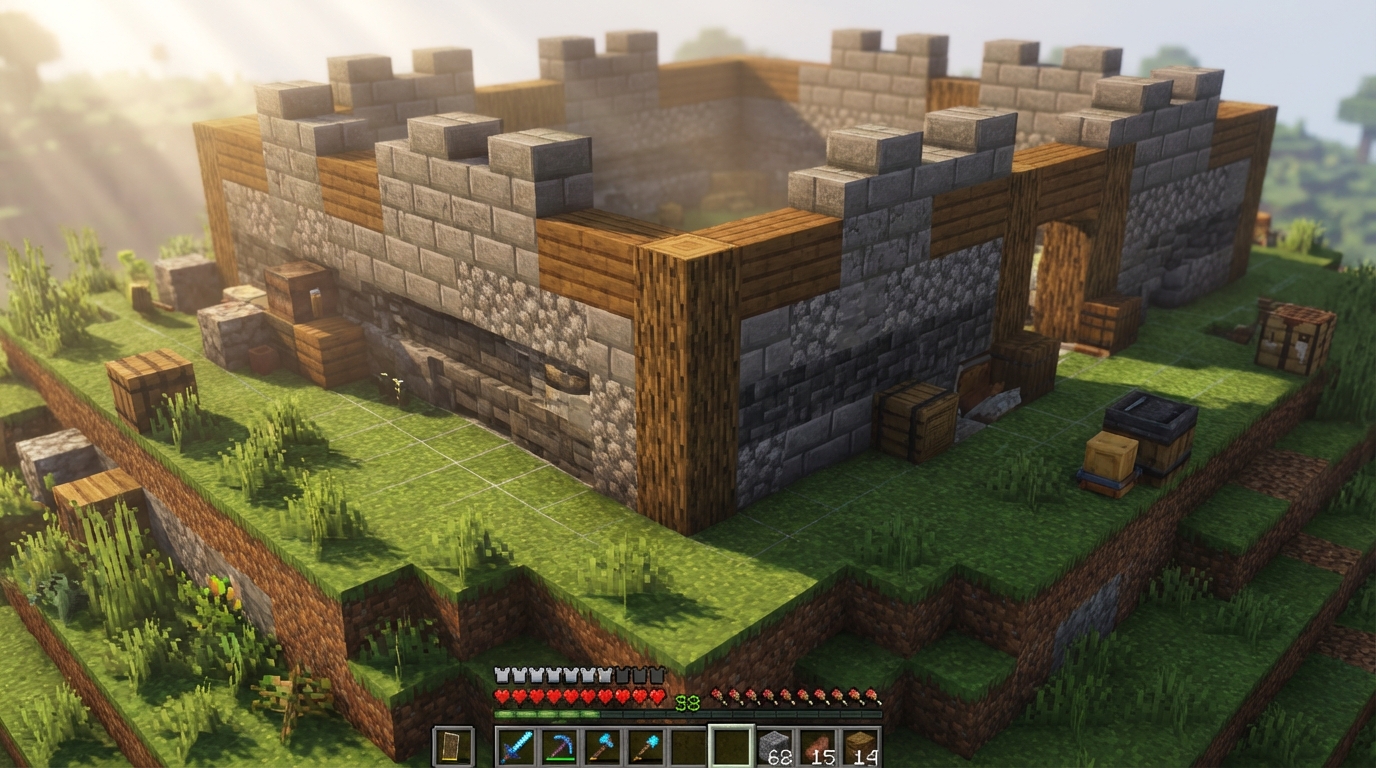
When you start planning your medieval castle blueprints, picking the right mix of blocks is the secret to making your fortress look truly authentic. You want your walls to tell a story of ancient battles and centuries of harsh weather. Instead of building a flat wall using only regular stone blocks, create a textured base by mixing in large amounts of cobblestone and stone bricks. This simple combination instantly breaks up boring gray surfaces and gives your exterior a sturdy historical foundation. You can even scatter in a few mossy stone bricks near the bottom where moisture would naturally collect near the moat.
To push your castle design to the next level, add realistic damage and darker contrast. Swapping out random blocks for cracked stone bricks makes your defensive walls look like they have survived a few creeper explosions or rival siege attacks. For your roofs and structural trims, deepslate is the perfect material to bring everything together. The dark tones of cobbled deepslate or deepslate tiles create a beautiful contrast against the lighter gray walls of your keep. Using these darker blocks for the tops of your towers makes your entire build look like a professional reconstruction of a real medieval stronghold.
As you map out the different zones of your layout, let your block choices guide the purpose of each area. The inner bailey and the main keep should feature cleaner materials like polished andesite to show the wealth of the castle lord. Meanwhile, the outer bailey where you place your stables and blacksmith workshops can rely heavily on rougher materials like tuff and gravel. Blending these specific blocks throughout your floor plan guarantees that your finished fortress will look visually amazing from every angle. Your friends will be completely blown away when they walk through the gates of your carefully planned medieval masterpiece.
Outline Your Castle Blueprint With Dirt Blocks
Planning your ultimate medieval castle comes down to mapping out those core blueprint elements before you start building. Decide where your central keep will stand and how large your inner and outer baileys need to be. Using cheap blocks like dirt or cobblestone to outline your walls and towers on the ground is a great way to visualize the final layout. Once you have your basic floor plan marked out, you can easily adjust the size of your courtyards to fit your horse stables, blacksmiths, and storage rooms. Taking the time to plan these zones ensures your fortress looks authentic and functions perfectly for your daily survival needs.
With your layout finalized, grab your best enchanted diamond or netherite pickaxe and get to work. You will need to clear out a massive plot of land to make room for those sprawling stone brick walls and deep moats. Flattening a mountain or filling in a ravine takes a lot of effort, but a perfectly level foundation makes placing your blocks much easier. Gather plenty of deepslate, spruce wood, and iron bars to give your stronghold that classic medieval aesthetic. Filling up a few shulker boxes with these essential building materials will save you countless trips back to your starter base.
Now comes the most exciting part of the entire project: finally placing your blocks and watching your castle rise from the ground. Start by building up the main walls of your central keep before moving outward to your defensive towers and gatehouses. Do not be afraid to mix in cracked stone bricks or mossy cobblestone to give your fortress a weathered, historical feel. As you add the final touches like custom banners, hanging lanterns, and heavy wooden doors, your massive project will truly come to life. Your new medieval castle will stand as a magnificent monument in your Minecraft world for all your friends to admire.
Frequently Asked Questions
1. Why should I use medieval castle blueprints instead of just building as I go?
Placing blocks randomly usually leaves you with a giant, boring gray box. Using a blueprint helps you plan specific zones for your base. This structured approach makes your stronghold look amazing and defends your valuable loot from creeper explosions.
2. What is the best way to plan my castle layout before building?
Map out the footprint of your fortress using bright blocks like red or blue wool. Sketching your ideas directly onto the grass lets you see the layout without committing to permanent stone walls. This simple step saves you hours of frustrating tear-downs later.
3. How big should my central keep be?
Your central keep should have a footprint of at least twenty by twenty blocks. This gives you plenty of room for a grand dining hall on the ground floor. It also ensures you have enough space for your respawn bed, crafting tables, and diamond storage chests.
4. What should I build inside the inner bailey of my castle?
The inner bailey sits right next to your keep and acts as a highly secure courtyard. This area is perfect for your most valuable outdoor setups. You can use this secure space to build a quiet enchanting table area or a safe nether portal room.
5. What goes in the outer bailey of a Minecraft castle?
The outer bailey is the massive courtyard that wraps around your inner defenses. This wide open space is exactly what you need for your larger survival farms. You can easily fit all your messy animal pens and busy villager trading halls right here.
6. How do real-world castle designs help me survive in Minecraft?
Real-world fortresses were split into clever sections that translate perfectly to your in-game needs. By separating your base into a keep and courtyards, you create multiple layers of defense. If a creeper breaches your outer wall, your main storage and bed stay completely safe inside the central tower.
7. What blocks should I use to sketch my castle footprint?
Use bright, highly visible blocks that stand out against the green grass. Stacks of red or blue wool are perfect for drawing the lines of your courtyards and towers. You can also use simple dirt blocks to map things out quickly and cheaply before placing heavy stone bricks.