
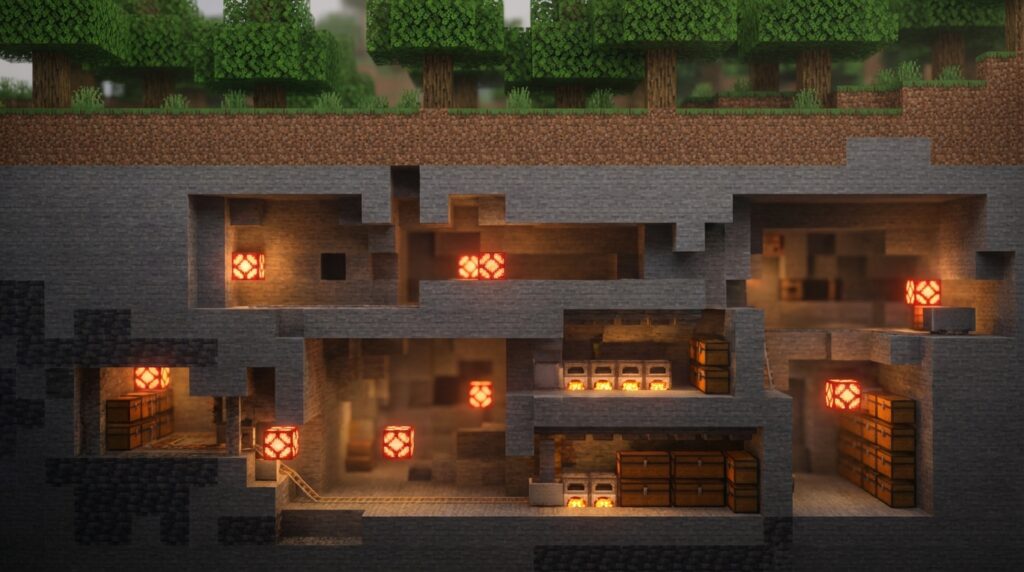
Building your home deep underground in Minecraft keeps you safe from Creeper explosions and annoying Phantom attacks. Simply digging a giant hole in the stone isn’t enough to make a great survival home. Planning the right underground base layout turns a dark cave into a massive, highly organized bunker. You can easily separate your noisy automated mob farms from your quiet bedroom and main storage rooms.
Instead of getting lost in a messy maze of cobblestone, use modular tunnel designs to connect different sections of your base quickly. You might build a secure, hidden vault for your diamonds and enchanted gear, then run minecart tracks straight to a massive super smelter room. By setting up these specific zones, your subterranean shelter becomes an efficient and safe place to survive.
Key Takeaways
- Build your base deep within the deepslate layer below Y=0 and use redstone-concealed entrances to hide your valuables from other players.
- Implement a modular layout with a central hallway and identical branching rooms to keep your bunker organized and easily expandable.
- Secure your most precious endgame gear by placing an obsidian-lined, blast-resistant vault at the deepest, furthest point of your underground complex.
Deepslate Level Secret Entrances
When you play on a busy multiplayer server, protecting your hard-earned diamonds means building your base far away from prying eyes. The best way to start your hidden layout is by digging straight down past Y=0 into the dark and gloomy deepslate layer. Most players rarely explore this deep unless they are actively strip mining for resources. By setting up shop near the bottom of the world, you reduce the chances of someone stumbling across your valuable loot. You can hollow out a massive cavern in this tough stone to create the perfect foundation for your secret underground bunker.
Just digging deep is not enough to keep your valuables safe, so you need a clever way to hide your front door. A flush piston door is a fantastic choice because it perfectly matches the surrounding deepslate blocks when closed. You can wire this door to a hidden button or a sculk sensor that only activates when you sneak and throw a snowball. If you want something even more secretive, try setting up a hidden hopper minecart just beneath the floor. Dropping a specific item onto a random block of deepslate tuff triggers the hopper, sending a redstone signal to open a trapdoor beneath your feet.
Designing the area right outside your secret entrance is just as important as the redstone hiding it. Make the tunnel look like natural cave generation by mixing in blocks of cobblestone, gravel, and unmined redstone ore. Leaving a few fake dead ends or small lava pools convinces wandering players that the cave is empty. Make sure you cover up any exposed redstone dust or sticky pistons so nobody spots your mechanical tricks. Once your entrance blends flawlessly into the deepslate environment, you can relax knowing your base layout is secure.
Modular Hallway and Farm Designs
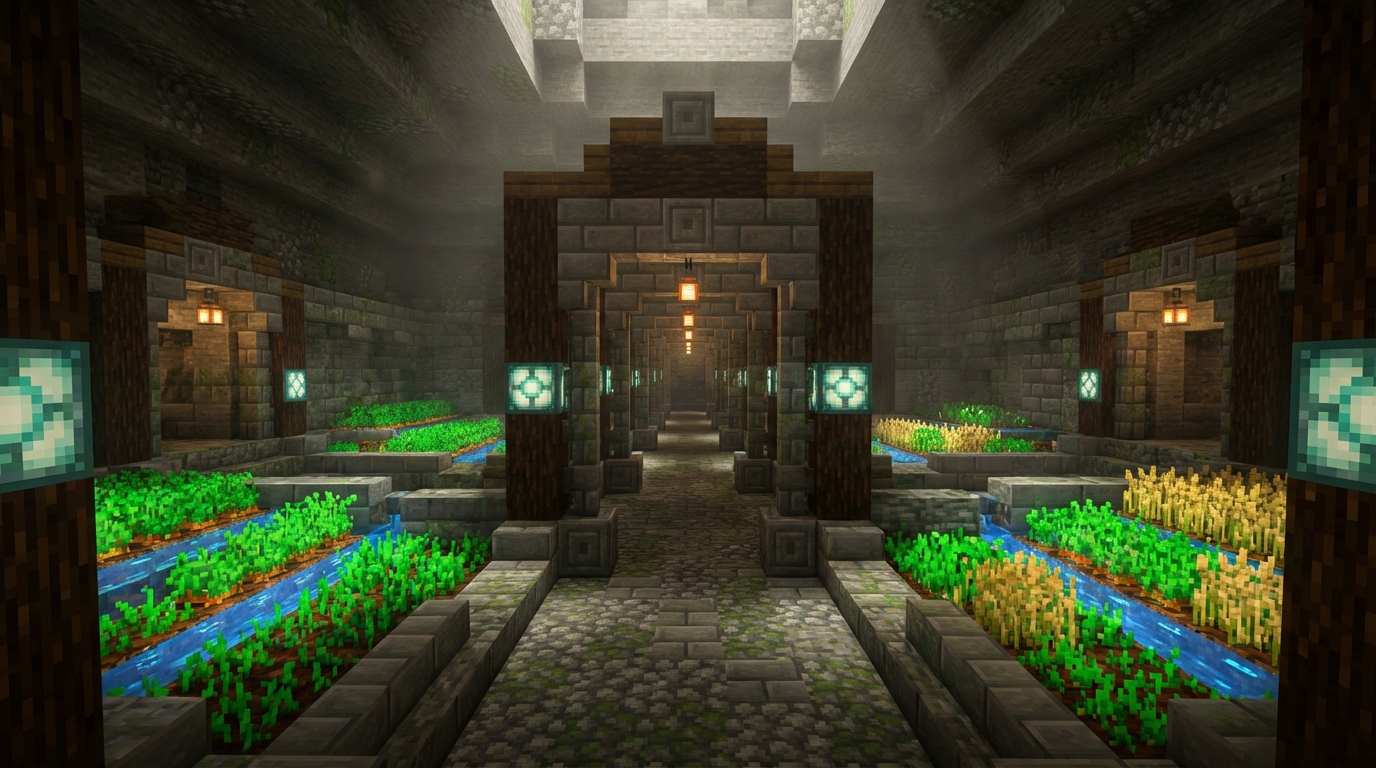
When you play on a crowded multiplayer server, keeping your best loot hidden from other players is a top priority. A smart way to stay off the radar is to dig deep underground and build a central layout based on a standard 3×3 main tunnel. This wide central corridor gives you plenty of room to sprint back and forth without bumping into walls, while keeping your entire base invisible from the surface. You can line the walls of this main artery with deepslate bricks or smooth stone to give it a clean, finished look. By keeping your entrance hidden behind a secret piston door or a fake lava pool, your underground bunker remains safe from griefers.
As you travel down your main hallway, carve out identical side rooms that branch off like a subway system. This modular design is helpful because you can easily add new spaces whenever you need them without ruining your existing layout. For example, you might dedicate the first branch to a massive villager trading hall filled with librarians selling mending books. The next room down the line could hold a super smelter built with hoppers and blast furnaces to process your iron ore quickly. Because every room is the exact same size, your hidden base will look organized and professional.
This expandable setup also works perfectly for securing your food supply safely underground. You can easily dig out another standardized room to house an automatic crop farm powered by water dispensers and farmer villagers. If you suddenly decide you need a separate space for an automatic melon farm or a massive storage system with hundreds of chests, just mine out another identical chamber further down the tunnel. You will never have to worry about running out of space or exposing your valuable resources to the world above. Your hidden subterranean city can keep growing as your survival needs change.
Obsidian-Lined Secure Loot Vaults
When you build on a crowded multiplayer server, protecting your hard-earned treasures requires some serious planning. Place your primary storage room at the absolute deepest, furthest point of your underground base layout. Forcing potential raiders to navigate a maze of empty rooms and confusing tunnels drains their time and resources. By the time they reach the back of your subterranean complex, they will likely give up or run out of mining tools. This sneaky strategy ensures your most valuable items stay hidden away from casual griefers who only check the main entrance.
Once you carve out that hidden back room, reinforce every single surface with obsidian blocks. Wrapping your walls, floors, and ceiling in this blast-resistant material creates an impenetrable barrier against explosive attacks. Players often use TNT minecarts or standard TNT blocks to blow through base defenses and access locked chests. Obsidian takes a long time to mine even with an enchanted diamond pickaxe, which heavily discourages thieves. A fully encased vault acts as the ultimate security blanket for your underground bunker.
Inside this heavily armored safe room is where you should store your absolute best gear. Fill your chests with precious diamond blocks, rare Netherite ingots, and fully enchanted armor sets. You can also add an extra layer of protection by placing water over your chests to stop any accidental blast damage that might slip through. Keeping your common cobblestone and dirt in the front of your base tricks raiders into thinking you have nothing good to steal. Your obsidian-lined vault will quietly sit at the end of your layout, keeping your endgame riches safe.
Design Your Secret Underground Base Layout
Protecting your hard-earned diamonds on a busy multiplayer server requires a perfect blend of secrecy and smart design. A hidden entrance is your first line of defense against sneaky players looking to raid your chests. You can use clever redstone contraptions like flush piston doors hidden behind a waterfall or a secret lever disguised by a simple oak tree. Once you secure that secret doorway, plan out the space beneath the surface. Combining that invisible exterior with an organized interior ensures you can safely expand your operations without drawing unwanted attention.
Creating a modular layout inside your bunker makes upgrading your survival setup easy over time. You can start with a basic central hub and branch out into specific tunnels for your automated wheat farms, super smelters, and villager trading halls. Keeping these functional rooms separate prevents your base from feeling cramped while you strip mine for ancient debris. If you ever need more storage for your cobblestone or deepslate, carve out another identical room at the end of a hallway. This organized approach keeps your underground city fully functional and ready for any future projects you want to tackle.
Now that you understand the mechanics of a great subterranean shelter, grab your best enchanted diamond pickaxe and get to work. Find a quiet mountain biome or a dense forest far away from the world spawn point to begin your excavation. Remember to light up your new tunnels with plenty of torches or sea lanterns to keep hostile creepers from ruining your hard work. With a little patience and some strategic planning, you will soon have the ultimate secret bunker to keep all your treasures safe.
Frequently Asked Questions
1. Why should I build my Minecraft base underground?
Building your home deep underground keeps you safe from Creeper explosions and annoying Phantom attacks. It also gives you plenty of space to organize your rooms. You can easily separate noisy mob farms from your quiet bedroom and storage areas.
2. How do I stop my underground base from feeling like a messy maze?
Instead of digging random holes, use modular tunnel designs to connect different sections of your base. Try running minecart tracks straight from your diamond vault to a massive super smelter room. Setting up specific zones makes your subterranean shelter efficient and easy to navigate.
3. What is the best level to build a hidden underground base?
The best place to hide your base is deep below Y=0 in the dark deepslate layer. Most players rarely explore this far down unless they are strip mining for resources. Hollow out a massive cavern in this tough stone to create a hidden foundation for your bunker.
4. How can I hide the front door to my secret base?
A flush piston door is a fantastic choice because it perfectly matches the surrounding deepslate blocks when closed. You can wire this door to a hidden button to keep prying eyes away from your loot. This ensures your hard-earned diamonds stay safe on busy multiplayer servers.
5. Can I use redstone to make a cooler secret entrance?
Absolutely! You can hook your hidden door up to a sculk sensor that only opens when you sneak and throw a snowball. Another great option is placing a hidden hopper minecart just beneath the floor. Dropping a specific item onto a random block triggers the hopper and opens your secret path.
6. How should I organize my underground rooms?
Planning a good layout means keeping your different activities in separate zones. Put your noisy automated mob farms far away from your main storage rooms and quiet bedroom. You can connect these areas with quick minecart tracks so you never get lost in the cobblestone.
7. Does building in deepslate make my base safer?
Yes, building in the deepslate layer adds a huge level of protection to your survival home. Because deepslate is much tougher than regular stone, it takes longer for other players to dig through it. Plus, staying that deep reduces the chances of someone stumbling across your valuable gear.