
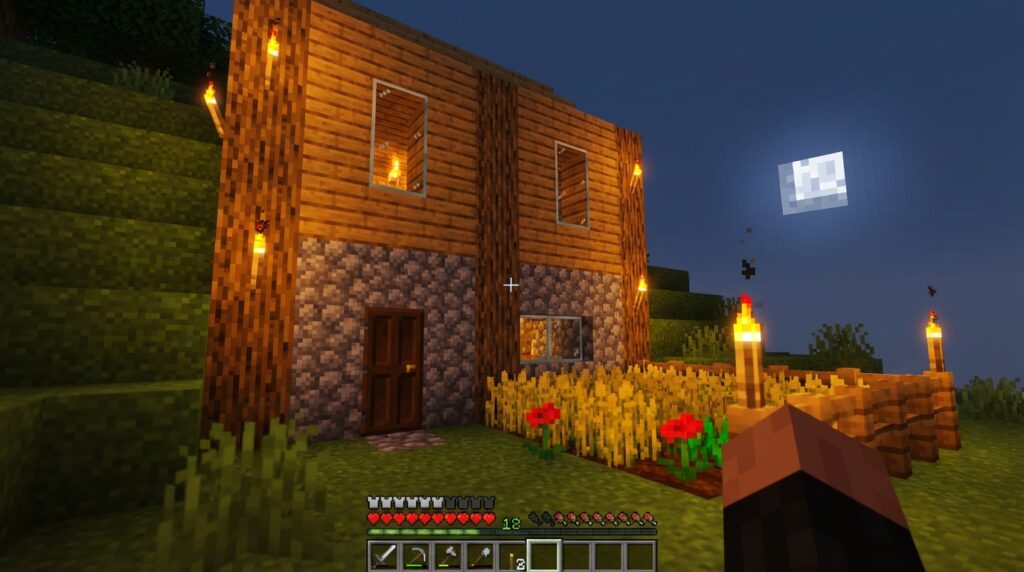
Starting your new world with a hole in the dirt is a classic move, but you deserve a home that actually works for you. Finding easy starter base designs that balance quick construction with enough room for your gear is the secret to surviving your first few nights. You need a space that fits your bed, crafting table, and furnace array without feeling cramped or messy.
A simple 9×9 footprint using spruce logs and cobblestone gives you a sturdy, professional look without requiring hours of mining. This modular layout allows you to organize your double chests and armor stands while keeping creepers at a safe distance. Building small and smart early on ensures you spend less time gathering wood and more time exploring nearby villages or deep caves.
Key Takeaways
- A 9×9 footprint using spruce and cobblestone provides the ideal balance of interior utility and structural defense for a first-day shelter.
- Vertical space management, such as using slabs to create a sleeping loft, doubles usable floor area for storage and crafting without increasing the building’s footprint.
- Modular L-shaped additions allow for the integration of secure, high-yield farms that provide immediate food security while maintaining a compact base layout.
- Strategic organization—placing beds in corners and stacking chests along walls—minimizes travel time between tasks and ensures a safe respawn point.
Essential Core Four Layout For Maximum Utility
Building your first home in Minecraft doesn’t have to be a complicated project that takes hours of gathering materials. By focusing on a compact 9×9 footprint, you can create a cozy space that keeps all your most important tools within arm’s reach. This specific size is perfect because it allows you to fit a full bed, a crafting table, several furnaces, and plenty of storage without feeling cramped. You can easily build this layout using basic blocks like cobblestone and oak planks found right near your spawn point. It provides a safe haven from creepers while making sure you don’t waste time running across a massive room just to smelt some iron.
Organization is the secret to surviving your first few nights without getting overwhelmed by a messy inventory. Inside your 9×9 base, you should dedicate one wall to your crafting table and a furnace array to process ore and food quickly. Place your bed in a corner away from the door to ensure you have a safe respawn point if things go wrong during an exploration trip. You can tuck double chests into the floor or stack them along the walls to maximize every inch of available space. This layout ensures that as soon as you walk through the door, you can drop off your loot and get right back to building.
The beauty of the Core Four layout is how easily you can upgrade it as you find better resources like spruce wood or deepslate. Since the foundation is a simple square, you can eventually add a second floor for an enchanting setup or a basement for a small farm. Starting with this small, efficient design prevents you from burning out on a massive construction project before you even have iron tools. It gives you a finished, functional home on day one so you can focus on the fun parts of the game. Having everything organized from the start makes your entire Minecraft journey much smoother and more enjoyable.
Building With Spruce And Cobblestone Palettes
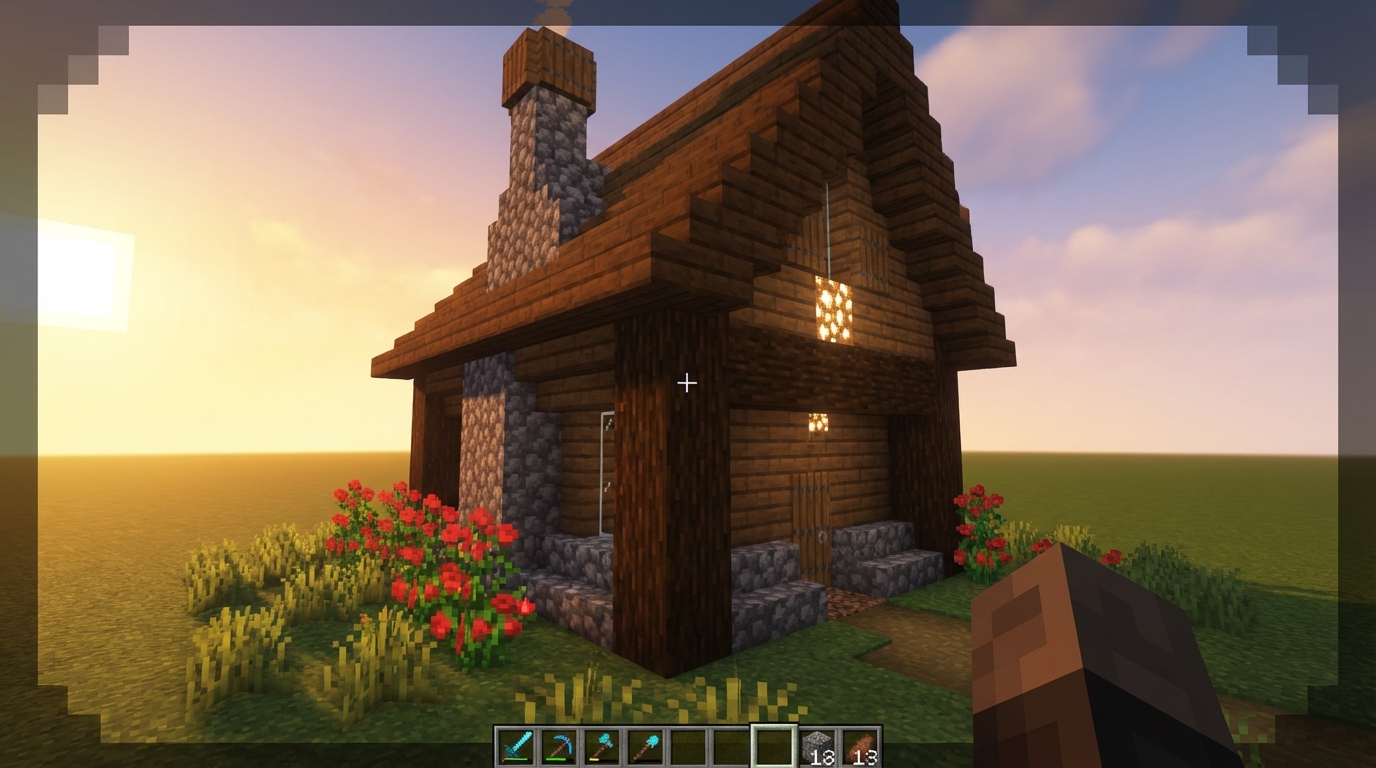
You do not need to spend hours mining rare blocks to create a house that looks like it was built by a pro. When you are just starting out on day one, the combination of spruce logs and cobblestone is your best friend because these materials are everywhere. Using dark spruce for the frame and light oak planks for the walls creates a natural contrast that makes your home feel warm and cozy. Cobblestone works perfectly for the foundation or a sturdy roof because it adds texture without requiring you to use a furnace. This simple palette allows you to focus on surviving your first night while still having a base you can be proud of.
A great way to start is by laying down a simple 7×9 footprint using cobblestone for the floor and base layer. You can place upright spruce logs at each corner to give the build some height and a strong, structural look. Instead of flat walls, try tucking your oak planks one block behind the spruce frame to add depth and shadows to the exterior. This small trick makes a basic square house look much more detailed and professional than a simple wooden box. You can even swap a few cobblestone blocks for stone bricks later on to show how your base is growing.
Inside your new home, this palette continues to shine by making the space feel organized and functional. You can use spruce slabs to create shelving for your double chests or a dedicated crafting nook along one wall. Since these blocks are so easy to find, you can quickly expand your storage or add a small porch without running out of resources. This modular approach means you can spend less time grinding for materials and more time exploring your world. Your first base should be a place where you feel safe and ready for your next big adventure.
Using The Loft Trick To Save Space
When you are building your very first Minecraft home, every block of floor space is precious. The loft trick is a clever way to double your usable area without needing to gather extra wood for a massive expansion. By using wooden slabs instead of full blocks, you can create a raised sleeping platform that sits just high enough to walk under. This design keeps your bed safely tucked away near the ceiling while leaving the entire ground floor open for your crafting table and furnace. It is the perfect solution for a small 7×9 starter base designs where you want to stay organized from day one.
Setting up your loft is simple and only requires a few oak or spruce slabs. Place the slabs at the top half of the second block height so you have enough head clearance to move around underneath. You can then fit several double chests or even a small automatic smelter directly below your bed. To reach your new second floor, just place a few ladders against the wall or create a tiny staircase using more slabs. This vertical layout makes your starter house feel much larger and ensures you never trip over your storage boxes while trying to get some sleep.
Expanding Into L-Shaped Farm Additions
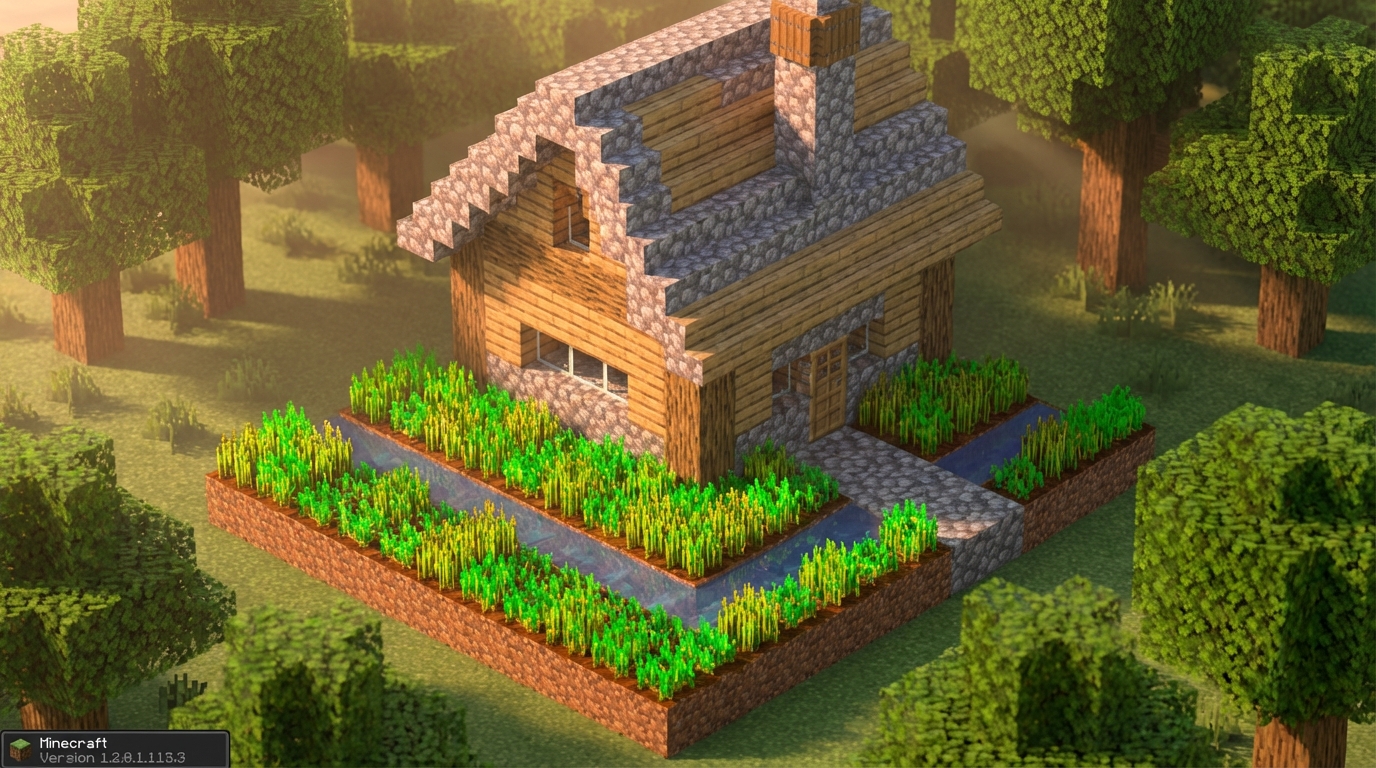
Once you have your basic four walls and a roof, you can easily grow your home by adding an L-shaped wing dedicated to farming. This simple addition involves extending one side of your house by five or six blocks to create a protected corner for your crops. By wrapping the new section around your main living area, you create a natural courtyard that feels cozy and organized. This layout is perfect for beginners because it keeps your food source right outside your door. You can use oak fences to secure the perimeter and keep stray creepers away from your harvest.
The best part about an L-shaped farm is how it organizes your resources like wheat and carrots into manageable rows. Start by tilling the ground with a stone hoe and placing a single water bucket in the center to keep the soil hydrated. You can use spruce trapdoors as decorative borders or simple wooden gates to make moving in and out of the garden easy. Planting wheat early on is a smart move because it provides bread for hunger and seeds for breeding chickens. Adding a few torches along the fence line will keep your crops growing through the night and prevent monsters from spawning in your garden.
As your survival world progresses, this modular design allows you to add even more wings for sheep pens or berry bushes. You can swap out dirt paths for cobblestone walkways to give the area a finished, professional look without spending hours on complex builds. Simple materials like oak planks and stone bricks work together to make the transition from your house to the farm look seamless. This expansion method ensures you never run out of storage or food as you prepare for bigger adventures. Keeping your base compact yet functional is the secret to a successful first week in your new world.
Lighting and Securing Your Starter Home
Once you have finished placing your last oak planks and cobblestone blocks, it is time to focus on safety. Your beautiful new home will not be very relaxing if a Creeper wanders through the front door while you are crafting. Start by placing torches every few blocks around the exterior walls to keep the light level high enough to prevent monsters from spawning. You should also place a few torches on the roof and inside your storage room to ensure every corner stays bright and safe. This simple step turns your basic build into a true sanctuary where you can rest without worry.
A sturdy fence is the final touch every great starter base needs to keep the local wildlife and monsters at a distance. You can craft fences easily using sticks and wood planks to create a secure perimeter around your 7×9 footprint. Make sure to include a fence gate so you can come and go easily while keeping zombies and skeletons out. If you have extra wood, adding a small gated garden inside this fence is a perfect way to start your first wheat farm. These small finishing details make your first Minecraft house feel complete and professional, especially when you incorporate creative furniture design ideas to fill out the interior. Later on, you can even add an automatic armor swapper to your bedroom to change gear instantly before heading out.
Frequently Asked Questions
1. How much space do I really need for a starter base?
A 9×9 footprint is the perfect size because it gives you enough room for all your essentials without feeling overwhelming. You can easily fit your bed, a furnace array, and several double chests while keeping everything within a few steps of the entrance.
2. What are the best materials to use for a quick build?
Stick to basic blocks like cobblestone and spruce or oak logs that you can find right near your spawn point. These materials are sturdy enough to keep creepers out and give your home a professional look without requiring hours of mining.
3. How should I organize my chests to save space?
You can stack double chests along the walls or even tuck them into the floor to keep your walking paths clear. Dedicate one specific wall to your crafting table and furnaces so you can process your loot quickly after a long day of exploring.
4. Where is the safest place to put my bed?
Place your bed in a corner far away from the door to ensure you have a safe respawn point. This prevents monsters from being too close when you wake up and keeps your sleep area separate from your busy work zones.
5. Why should I build a small base instead of a large mansion right away?
Building small and smart early on saves you from spending all your time gathering wood and stone. A compact base lets you focus your energy on exploring nearby villages or diving into deep caves for diamonds much sooner.
6. How do I keep my base safe from creepers?
Using solid blocks like cobblestone for your walls provides a strong defense against unexpected blasts. Keeping your base compact also makes it easier to light up the surrounding area with torches so mobs cannot spawn near your front door. As you advance, you can even look into automatic crafting to help manage your resources more efficiently.
Finding the best starter houses for survival in Minecraft is all about balancing aesthetics with immediate utility.