
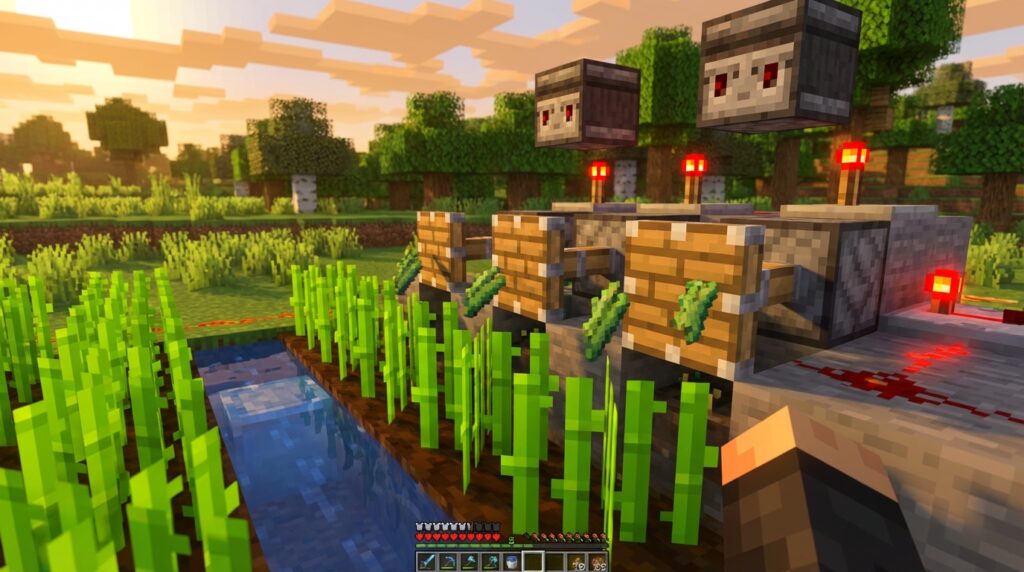
Tired of manually harvesting reeds every time you need to craft rockets for your Elytra or books for an enchanting table? This automatic sugarcane farm tutorial will help you set up a hands-free system so you can focus on exploring your world instead of farming. Whether you are playing on the latest 1.21 update or an older version, these farms are essential for keeping your chests stocked with paper and sugar.
You only need a few basic redstone components like observers and pistons to turn a simple patch of sand into a high-speed production line. By using an observer to watch the sugarcane grow and a piston to knock it down, you can collect every drop without ever lifting a sword. It is the perfect project for your starter base that stays useful all the way into the late game.
Key Takeaways
- Automate sugarcane harvesting by placing observers at the three-block height and pistons at the second-block height to ensure the plant continues growing after every harvest.
- Ensure every planting block—whether sand, dirt, or grass—is directly adjacent to a water source to maintain the farm’s growth cycle.
- Implement a hopper minecart system running beneath the planting blocks to efficiently collect drops through solid surfaces and transport them to a centralized storage chest.
- Utilize a modular design to easily scale production by stacking units or extending rows as your demand for books and firework rockets increases.
Essential Blocks For Your Sugarcane Automation
To get started on your farm, you will need to gather a few stacks of building blocks and your essential redstone components. The most important items in your inventory are the observers and pistons because they handle the detection and harvesting automatically. You will also need plenty of redstone dust to create a signal path between these two blocks. Since sugarcane only grows next to water, make sure you have a water bucket ready to create those necessary irrigation channels. Having these basics on hand ensures you can build a modular design that expands as your need for paper grows.
Once you have your materials, you should focus on the placement of your observers to ensure the farm runs efficiently. These blocks act as the eyes of your build, watching for the sugarcane to reach its full height of three blocks tall. When the observer sees the growth, it sends a quick pulse through the redstone dust to trigger your pistons. The pistons then push forward to break the middle stalk, which causes the top pieces to drop into your collection system. This simple loop allows you to walk away and focus on other adventures while your chests fill up with resources.
Don’t forget that your choice of planting surface can be grass, dirt, or sand, as long as it is directly touching a water source. You might want to use glass blocks for the front of your farm so you can watch the pistons in action without any items flying out of bounds. If you are planning to craft a lot of firework rockets or enchanted books, consider building several rows of this setup side by side. Connecting all these units to a single hopper line and a large chest will give you a massive supply of paper for your library or elytra flights.
Setting Up The Foundation And Water Source
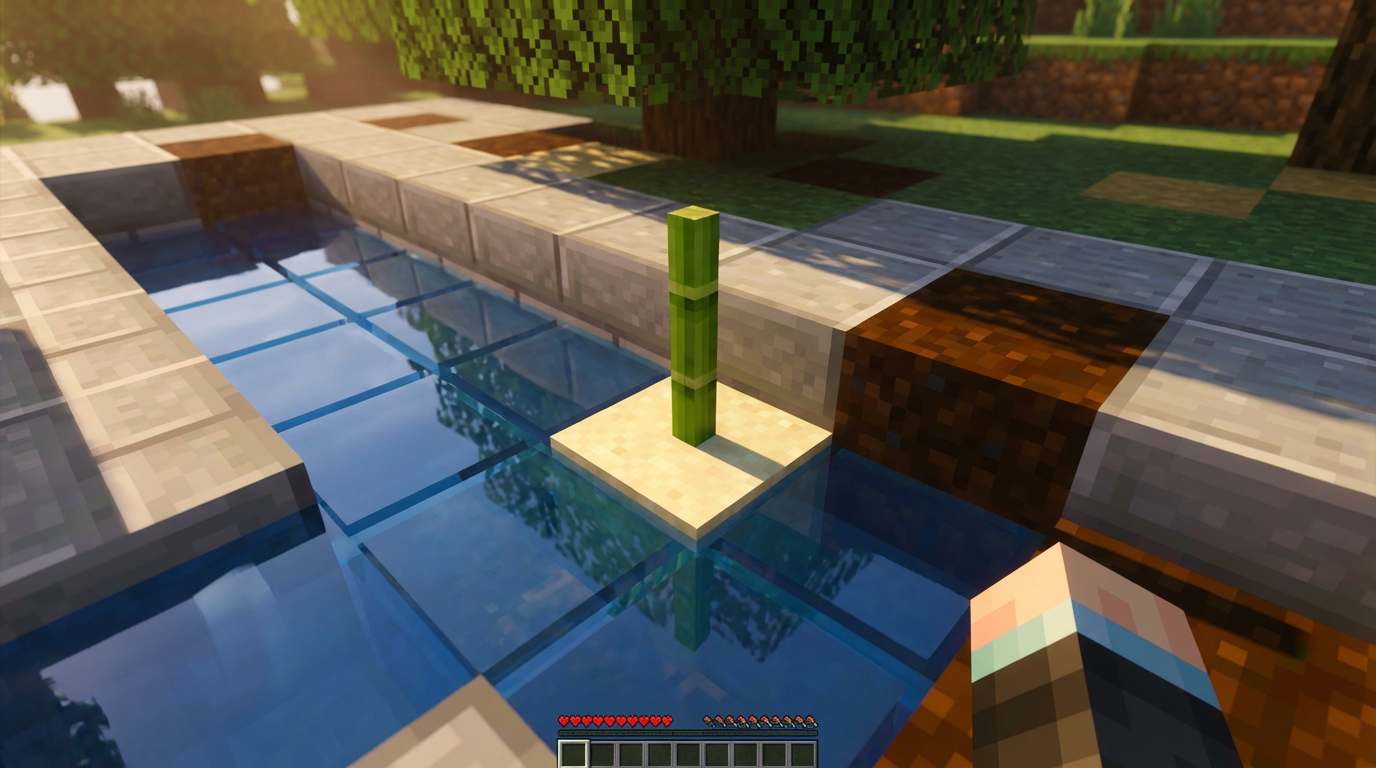
To get your automatic farm started, you need to lay down a solid row of dirt, grass, or sand blocks. Sugarcane isn’t picky about which of these three you use, so feel free to grab whatever you have the most of in your inventory. Most players prefer a long straight line because it makes connecting the redstone much easier later on. Make sure you leave a gap right next to these blocks where your water will flow. This foundation is the most important part because it determines how large your final paper factory will be.
Once your blocks are placed, you must add a water source directly adjacent to every single block of dirt or sand. In Minecraft, sugarcane simply will not stay planted unless there is water touching the block it sits on. You can dig a trench and fill it with water buckets to create a long stream that keeps the soil hydrated. For a more advanced setup, you can even place your water under a row of solid blocks or slabs to keep the area looking clean. This ensures your crops have the perfect environment to grow tall enough for the harvesting pistons to do their work.
After your water and soil are ready, go ahead and plant your first pieces of sugarcane on the blocks. It is a good idea to check that every plant has a water source nearby so nothing pops off unexpectedly. This layout serves as the footprint for the rest of your build, including the collection system and the observer towers. You are now ready to move on to the mechanical parts that make this farm run on its own. Following a sugarcane farm tutorial to have this consistent supply of paper is going to make crafting books and firework rockets much easier for your survival world.
Installing The Piston And Observer Detection System
Once your sugarcane is planted and growing, you need to set up the mechanical heart of the farm. Start by placing a row of solid blocks behind your sugarcane, one level above the ground, and mount your standard pistons on top of them facing toward the plants. These pistons will act as the muscle of your build, firing forward to break the sugarcane at its second block. This method is perfect because it leaves the bottom stalk intact so the plant can grow again immediately. Make sure every piston is oriented correctly so they do not accidentally push your building blocks instead of the crop.
Next, you will place your observers directly on top of the pistons to act as the eyes of the operation. Position yourself behind the farm so the red output dot on the observer faces away from the sugarcane and the face looks directly over the third growth spot. When the sugarcane reaches three blocks high, the observer detects the block update and sends a signal through the redstone dust you place on the blocks behind your pistons. This creates a seamless loop where the farm harvests itself without you ever needing to flip a switch. It is a simple setup that ensures you have plenty of paper for your next batch of books and firework rockets.
Building The Hopper And Chest Collection Network
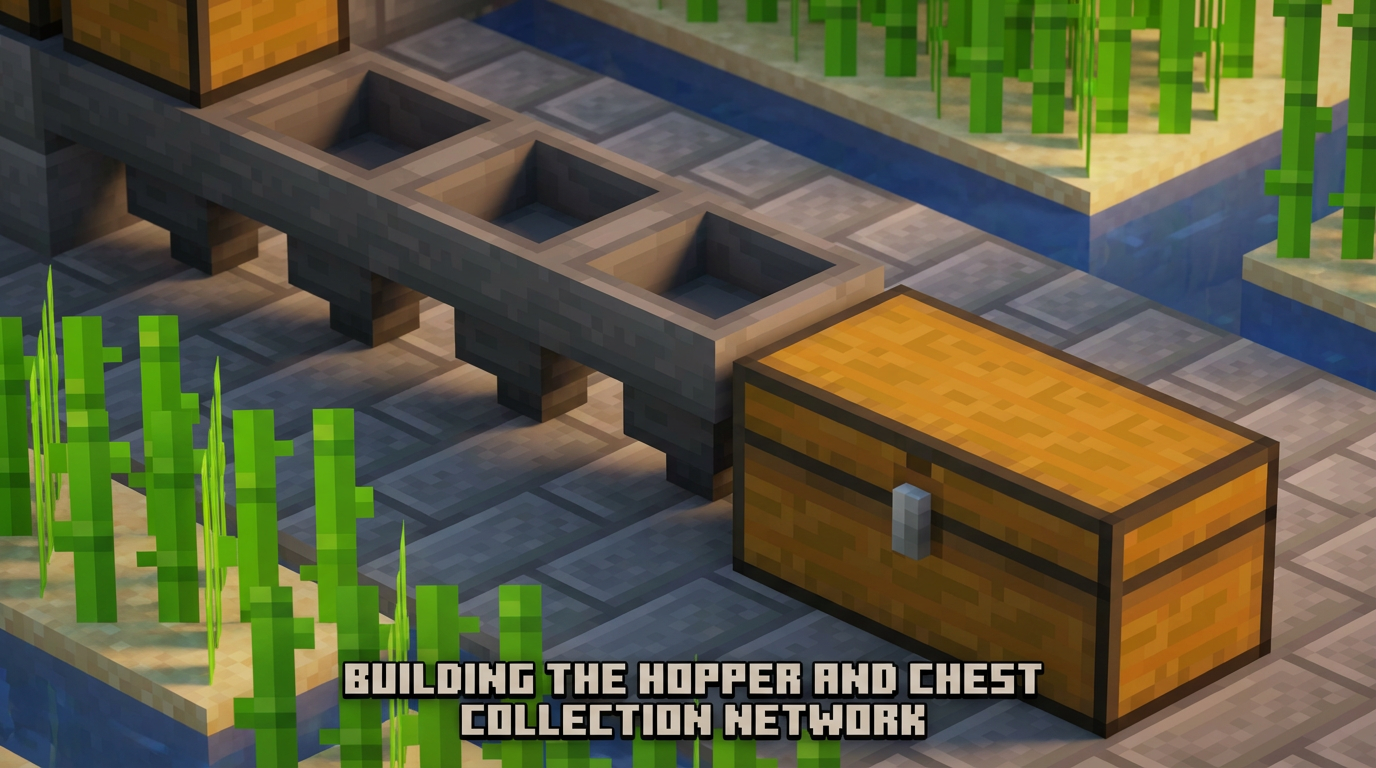
Once your harvesting pistons are in place, you need a reliable way to pick up all that sugarcane before it gets despawned. The most efficient method involves placing a line of hoppers directly underneath the dirt or sand blocks where your plants are growing. If you are building a larger farm, you can save on iron by using a hopper minecart system that travels back and forth on a rail line. This little cart will suck up items through the solid blocks above it, ensuring not a single piece of paper material goes to waste. Make sure your rails are powered by redstone torches so the cart never loses momentum during its route.
After the items are collected from the field, they need a permanent home in your storage system. Connect your hopper line or the minecart’s unloading station to a large chest or a series of double chests for maximum capacity. This setup is a massive improvement for survival players who need a constant supply of books for enchanting or rockets for their Elytra. You can even add a glass front to your collection area so you can watch the sugarcane flow into your bins in real time. Having this automated network means you can spend more time exploring and less time manually clicking on crops.
Enjoy Your New Unlimited Sugarcane Supply
Building your own automatic sugarcane farm is a massive milestone that changes how you play survival Minecraft. Now that you have your pistons and observers set up, you can step away and let the redstone do all the heavy lifting for you. This simple build ensures that every time a stalk reaches three blocks high, it is instantly harvested and sent to your storage chests. You no longer have to waste time manually clicking on plants or checking growth cycles near your water sources. It is the perfect set and forget project for any base.
With a steady flow of sugarcane coming in, you can finally focus on the more exciting parts of your world. You will have all the paper you need to craft stacks of books for your enchanting library or rockets for your Elytra flights. If you enjoy brewing, you will also have plenty of sugar ready for speed potions to help you travel through large builds or caves. Having these resources automated means you can spend your days exploring trial chambers or finding rare loot instead of farming.
This mechanical staple is a great way to learn the basics of automation before moving on to more complex redstone machines. Just as you might build an easy iron farm to skip the mining grind, this setup removes the need for manual harvesting. You can easily expand this design by adding more rows or stacking them vertically to increase your output even further. As you continue your adventure, you will find that having these basic needs covered makes every other project much easier to manage. Your farm will keep working in the background, providing you with endless materials while you build your dream kingdom.
Frequently Asked Questions
1. Do I need to use sand or can I use grass for the farm?
You can use either sand, grass, or dirt since sugarcane grows at the same speed on all of them. Just make sure there is a water block directly next to the block where you plant your seeds.
2. How do I make sure the pistons only fire when the sugarcane is tall?
Place your observers on the third block level so they face the very top of the plant. When the sugarcane grows to that third height, the observer sends a signal through your redstone dust to trigger the pistons below.
3. Will this farm work if I am playing on an older version of Minecraft?
Yes, this classic design works perfectly on version 1.21 and almost every older version of the game. The mechanics for observers and pistons have stayed the same, so your farm will keep producing paper for years.
4. What is the best way to collect the sugarcane after it breaks?
The easiest method is to run a hopper minecart on rails underneath the blocks where your sugarcane grows. The minecart will pick up the items through the floor and drop them into a storage chest for you.
5. How many observers do I actually need to build this?
You can use one observer for every single plant for maximum speed, or just one observer to trigger a whole row of pistons at once. Using one per plant is usually better because it ensures every piece is harvested the moment it grows.
6. Can I expand this farm if I need more paper for rockets?
You can easily make this farm bigger by building more modules side by side or even stacking them on top of each other. This modular design lets you grow your production from a small starter patch into a massive factory as you progress.