
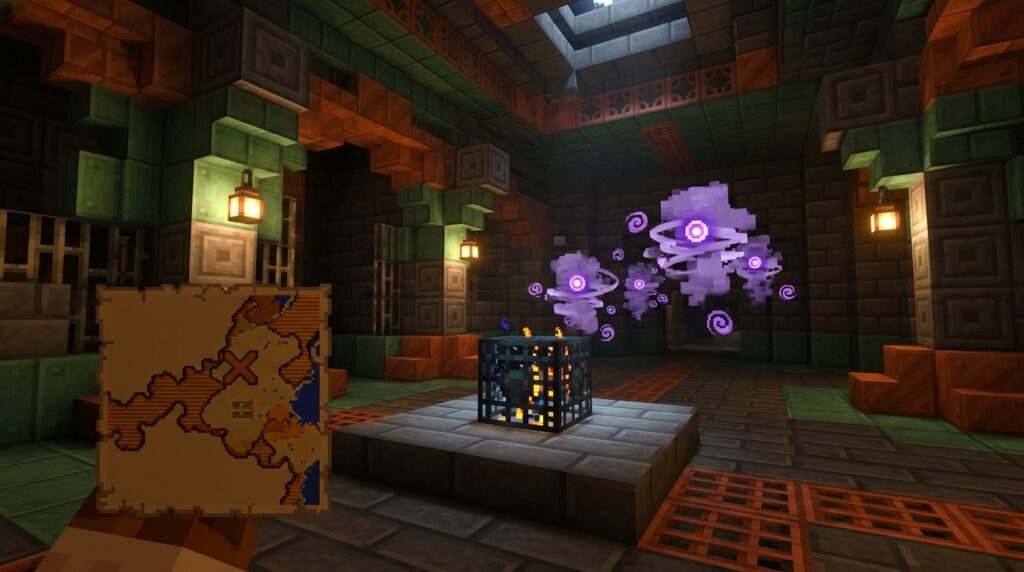
You are ready to test your combat skills in the new 1.21 update, but finding these hidden underground dungeons can feel like searching for a needle in a haystack. Since these structures are buried deep between Y-levels -20 and -40, you need a reliable trial chamber map to pinpoint their exact location. This special explorer map is your golden ticket to finding the copper-filled halls and tuff brick corridors without wasting hours mining in the dark.
To get your hands on one, you simply need to find a Journeyman-level Cartographer villager and trade some emeralds and a compass. Once you have the map, it will lead you straight to the heart of the action where Breeze mobs and trial spawners await. Using this tool ensures you spend less time digging through endless stone and more time collecting rare loot and mastering the new combat challenges.
Key Takeaways
- Obtain a Trial Explorer Map by leveling a Cartographer villager to Journeyman rank (Level 3) and trading 12 emeralds and a compass.
- Locate Trial Chambers by following the brown map icon and digging straight down between Y-levels -20 and -40 once your player marker is perfectly centered.
- Use the central Atrium as a primary landmark and navigation hub to avoid getting lost in the modular, looping corridors of the dungeon.
- Navigate the complex layout effectively by placing torches on only one side of the walls and clearing combat rooms systematically to ensure a safe path back to the exit.
Getting Your Trial Explorer Map From Cartographers
To find your way to these massive underground dungeons, you first need to track down a Cartographer villager and help them level up. You can easily turn an unemployed villager into a Cartographer by placing a Cartography Table near them. Once they have their job, start trading paper and glass panes to help them reach the Journeyman rank (Level 3). This process usually takes a few minutes of trading, but it is the only way to unlock the special trade you need. After they reach the Journeyman level, there is about a 66 percent chance they will offer the Trial Explorer map in exchange for 12 emeralds and a compass.
This map is your most valuable tool for finding Trial Chambers, which are hidden deep within the stone and tuff layers. Unlike traditional treasure maps, the Trial Explorer map points you toward a specific grid location where the structure is guaranteed to generate. These chambers typically spawn between Y: -40 and Y: -20, making them very difficult to find just by mining randomly. By following the map, you can dig straight down to the oxidized copper and tuff brick walls without wasting hours of your time. This method ensures you arrive at the entrance of the maze fully prepared for the combat challenges ahead.
Reading The Map To Find Buried Chambers

Once you have traded with a Journeyman Cartographer and secured your Trial Explorer Map, you will notice a small brown icon representing the structure. Unlike standard treasure maps that show a red X, this map displays a detailed icon that changes size based on your proximity to the chamber. You should follow the direction your player marker is pointing until the icon grows larger and the map fills with color. This means you are standing directly above the sprawling copper and tuff brick dungeon. Because these structures are tucked away between Y-levels -20 and -40, pinpointing the icon’s center is the best way to save time on digging.
Navigation becomes much easier when you understand how the map reflects the massive scale of these underground mazes. The icon acts as your primary guide, but you need to be careful not to overshoot the location while sprinting through caves. Since Trial Chambers generate in a specific grid pattern, the map ensures you are heading toward the only structure in that 512 by 512 block region. Once your player marker is perfectly centered on the brown icon, you are ready to dig straight down into the heart of the challenge. Make sure to bring plenty of torches and pickaxes, as you will likely break through several layers of deepslate before seeing the first oxidized copper blocks.
Finding the exact spot to dig prevents you from wasting your tools on empty stone or accidentally falling into a dangerous lava pool. As you descend toward the Y-40 mark, keep an eye out for the telltale green and orange hues of copper that signal you have arrived. The map is your most powerful tool for bypassing the confusing winding tunnels of the deep dark. By trusting the icon and maintaining a steady path, you can drop right into the main corridor or a trial spawner room. This direct approach lets you jump straight into the combat and looting without getting lost in the surrounding caves.
Navigating The Atrium And Modular Corridor Layouts
Navigating the winding corridors of a Trial Chamber can feel like trying to solve a puzzle while fighting off waves of Breeze mobs. The trick to keeping your bearings is to treat the central Atrium as your primary anchor point or home base. This large, multi-level room is the heart of the structure and connects most of the smaller combat areas together. When you first enter the chamber, spend a moment marking the entrance to the Atrium with torches or colorful wool blocks. If you ever find yourself lost after a hectic battle, simply follow the hallways back until you see the familiar sight of the tall copper pillars and decorative tuff bricks.
The modular corridors that branch off from the Atrium are designed to be confusing, often looping back on themselves or changing elevation unexpectedly. You will notice that these hallways connect to various trial rooms, each containing spawners that provide different combat challenges. To build a mental map of the layout, try to clear one branch at a time before returning to the central hub to deposit your loot. Placing torches only on the right-hand wall as you explore can help you navigate back to safety if you get turned around. This strategy ensures you never wander too far into the deep copper maze without a clear path back to the exit.
Understanding how these rooms fit together helps you predict where the best loot might be hidden. Most Trial Chambers follow a predictable logic where the Atrium acts as the spine and the combat rooms serve as the ribs. You will often find secret rooms tucked under staircases or behind oxidised copper traps in the transition zones between these areas. By staying focused on the Atrium as your landmark, you can systematically explore every corner without missing out on heavy cores or trial keys. Keep your eyes on the floor patterns, as the block palettes often shift slightly when you are moving from a main hallway into a high-stakes combat zone.
Mastering the Maze of Trial Chambers
Navigating the twisting corridors of a Trial Chamber can feel overwhelming without a solid plan for the layout. You should treat every intersection as a landmark, noting the placement of Tuff bricks and copper bulbs to keep your bearings. Since these structures are procedurally generated, no two mazes are exactly the same, but they always follow a logic of interconnected combat rooms and corridors. By keeping your Trial Explorer Map handy and placing torches on one side of the wall, you can ensure a quick exit once the fighting stops.
Conquering the Breeze and surviving the traps is much easier when you understand the verticality of the chamber. Many players get lost because they forget to check for hidden stairs or drops that lead to lower levels where the best loot often hides. Once you have cleared the spawners and collected your Trial Keys, you can focus on finding the vault loot to claim your Heavy Core. Staying organized and mindful of the structural patterns will turn a confusing dungeon crawl into a successful raid every single time.
Frequently Asked Questions
1. How do I get a Trial Explorer map from a villager?
You need to find a Journeyman-level Cartographer to buy this map. Trade paper and glass panes with them until they reach Level 3, then look for the trade that costs 12 emeralds and a compass.
2. What if my Cartographer doesn’t have a job yet?
You can easily create a Cartographer by placing a Cartography Table near an unemployed villager. Once they claim the workstation, you can start trading with them to unlock the Trial Explorer map.
3. At what depth do Trial Chambers usually spawn?
These massive structures are buried deep underground, usually between Y-levels -20 and -40. Because they are surrounded by deepslate and tuff, using a map is much faster than mining randomly at those depths.
4. Is the Trial Explorer map guaranteed to show a location?
Yes, once you buy the map, it will show you a specific grid location where a Trial Chamber is guaranteed to generate. It acts just like a treasure map, leading you directly to the copper halls and combat challenges.
5. What level does a Cartographer need to be to sell the map?
Your Cartographer must reach the Journeyman rank, which is Level 3. At this level, there is a 66 percent chance they will offer the Trial Explorer map as one of their available trades.
6. What kind of enemies will I find once I follow the map?
Once the map leads you into the chamber, you will face Breeze mobs and various enemies from trial spawners. These areas are designed to test your combat skills, so make sure you bring plenty of armor and food.
7. Why should I use a map instead of just digging?
Trial Chambers are hidden behind thick layers of stone and tuff, making them very hard to spot while mining. Using a map saves you hours of work by pointing you exactly where to dig so you can get straight to the loot. If you want to increase the difficulty of these encounters, you can learn how to use the new Ominous Bottles to trigger even tougher trial challenges. Experienced players often use these locations to build an efficient Breeze farm to gather resources for the new Mace weapon. To maximize your rewards, you should also consult a loot table guide before opening your first vault.