
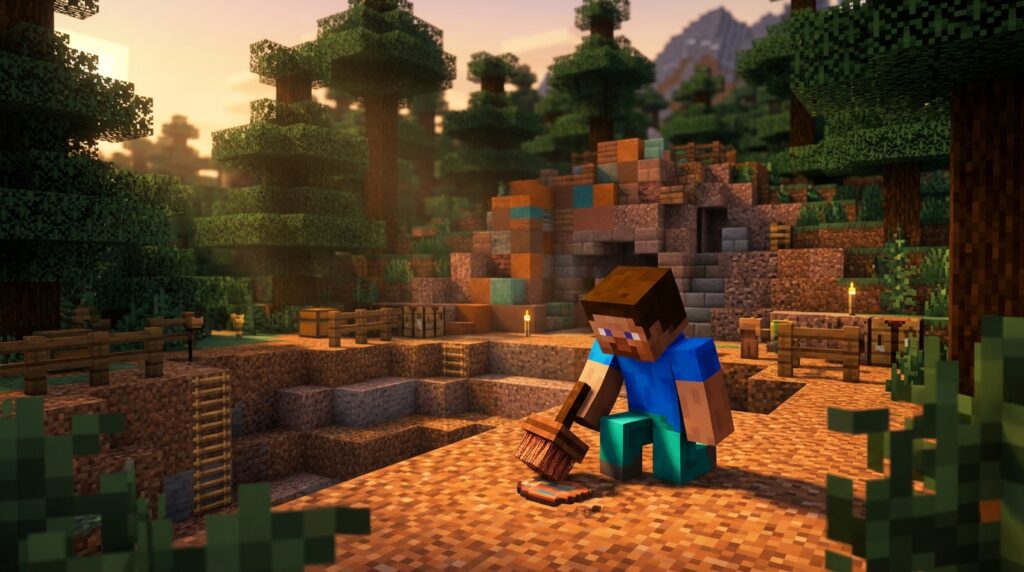
Buried deep beneath the moss and ferns of your favorite forest lies a secret history waiting for you to uncover it. You might spot a stray piece of orange terracotta or an odd patch of gravel poking through the dirt in a Snowy Taiga or Jungle biome. This trail ruins digging guide will help you master the art of the brush so you don’t accidentally break a priceless artifact. These hidden structures are your ticket to finding rare armor trims, colorful pottery sherds, and the ancient Sniffer egg.
Excavating a trail ruin is different from your usual mining trip because most of the structure is hidden entirely underground. You’ll need to swap your pickaxe for a brush and move slowly through layers of suspicious gravel and mud bricks to find your prizes. Every block you carefully dust off could reveal a new decoration for your base or a rare cosmetic for your armor. Taking your time ensures you find every hidden chest and loot pile tucked away in these ancient, buried settlements.
Key Takeaways
- Locate trail ruins in Jungle, Old Growth Taiga, or Snowy Taiga biomes by scanning the forest floor for stray patches of gravel or colorful terracotta blocks poking through the dirt.
- Use a brush crafted from a copper ingot, a stick, and a feather to carefully excavate suspicious gravel and sand, as using a shovel or pickaxe will permanently destroy the rare artifacts hidden inside.
- Excavate structures from the top down to uncover exclusive rewards, including Sniffer eggs, unique pottery sherds, and rare armor trims like the Wayfinder and Raiser templates.
- Prepare for large-scale archaeological digs by bringing multiple brushes, light sources, and storage containers to manage the deep, multi-layered underground layouts of these buried settlements.
Spotting Buried Clusters In Taiga And Jungle Biomes
When you are trekking through the dense foliage of a Jungle or the towering trees of an Old Growth Taiga, keep your eyes glued to the forest floor for unusual colors. Finding a trail ruin starts with spotting just a few stray blocks of terracotta or mud bricks poking out from the dirt and gravel. These hidden structures are almost entirely buried, so you might only see a single orange, blue, or yellow block sitting where it doesn’t belong. Because these biomes are so crowded with ferns and leaves, it helps to clear away some of the undergrowth to reveal these hidden clusters. If you see a random patch of gravel in the middle of a grassy area, there is a very good chance you have found the top of a tower.
Once you identify those first colorful terracotta blocks, you should begin clearing the surrounding dirt to reveal the full shape of the ruin. These sites often look like small, ruined villages or towers made from a mix of stone bricks, coarse dirt, and glazed terracotta. The most important blocks to watch for are suspicious gravel and suspicious sand, as these hold the real treasures like rare armor trims and pottery sherds. Instead of using a shovel to clear everything quickly, you need to switch to your brush tool to carefully extract these items without destroying them. Taking your time to uncover the entire layout will ensure you don’t miss any hidden rooms or the ancient Sniffer eggs buried deep within the site.
Crafting Brushes And Essential Excavation Supplies

Before you can uncover the secrets buried beneath the forest floor, you need to craft the most important tool in an archaeologist’s kit. The brush is a unique item that allows you to gently sweep away layers of dirt and gravel. To make one, you will need to combine a single copper ingot, a stick, and a feather in a vertical line on your crafting table. Since Trail Ruins are massive structures, it is a smart idea to craft several brushes at once so you do not have to pause your excavation. Having these tools ready ensures you can carefully extract fragile items like the Wayfinder or Raiser armor trims without destroying the blocks holding them.
Beyond your brushes, you should pack a variety of traditional tools and light sources to navigate the deep, muddy layers of these ruins. Shovels and pickaxes are necessary for clearing out the common blocks like dirt, coarse dirt, and terracotta that surround the valuable loot. You will also want plenty of torches or lanterns because these ruins often extend far underground where it becomes difficult to see. Since you will be collecting dozens of pottery sherds and rare smithing templates, bringing a few empty chests or a shulker box will help keep your inventory organized. Proper preparation means you can focus on the excitement of finding a Sniffer egg rather than worrying about running out of supplies.
Keep a very close eye out for suspicious gravel blocks as you dig through the temperate forest biomes. These specific blocks look slightly different from regular gravel and are the only places where you will find the best treasures. If you use a shovel on suspicious gravel, the block will break and you will lose the item forever, so always switch back to your brush for the delicate work. It takes a bit of patience to sweep away the dust, but the reward of a rare relic or a colorful piece of pottery is well worth the effort. Once you have your supplies and a steady hand, you are ready to reveal the history hidden inside the old growth birch forests and taigas.
Digging Techniques For Suspicious Gravel And Sand
When you first stumble upon a few pieces of terracotta poking out of the forest floor, you need to resist the urge to start digging wildly with a shovel. Trail ruins are unique because the most valuable items are hidden inside fragile blocks called suspicious gravel and suspicious sand. These blocks look almost identical to their common counterparts, but they have a slightly grittier and more textured appearance. If you break these blocks with a standard tool, the treasure inside will disappear forever. You must keep a brush in your hotbar at all times to carefully sweep away the layers of debris.
The best way to clear the area is to work from the top down, removing standard dirt and stone to expose the structure’s layout. As you uncover the colorful mud bricks and glazed terracotta, look closely for individual gravel blocks that seem out of place. Once you spot a suspicious block, hold down the use button with your brush to begin the delicate cleaning process. You will see the block slowly crumble while an item starts to emerge from the center. This methodical approach ensures you do not accidentally destroy a rare Wayfinder armor trim or a valuable pottery sherd. Learning how to find buried treasure fast in these ruins requires a mix of speed and precision.
Patience is your best tool when navigating the deep layers of a buried ruin. These structures often twist and turn deep underground, meaning you might find suspicious blocks tucked into tight corners or hidden under floorboards. Always carry a few extra brushes since they lose durability quickly during large archaeological digs. By clearing the common blocks first, you create a safe space to work without the risk of falling gravel crushing your loot. This careful technique is the only way to collect every piece of lore and history hidden within the ancient dirt.
Uncovering Rare Sniffer Eggs And Ancient Smithing Templates
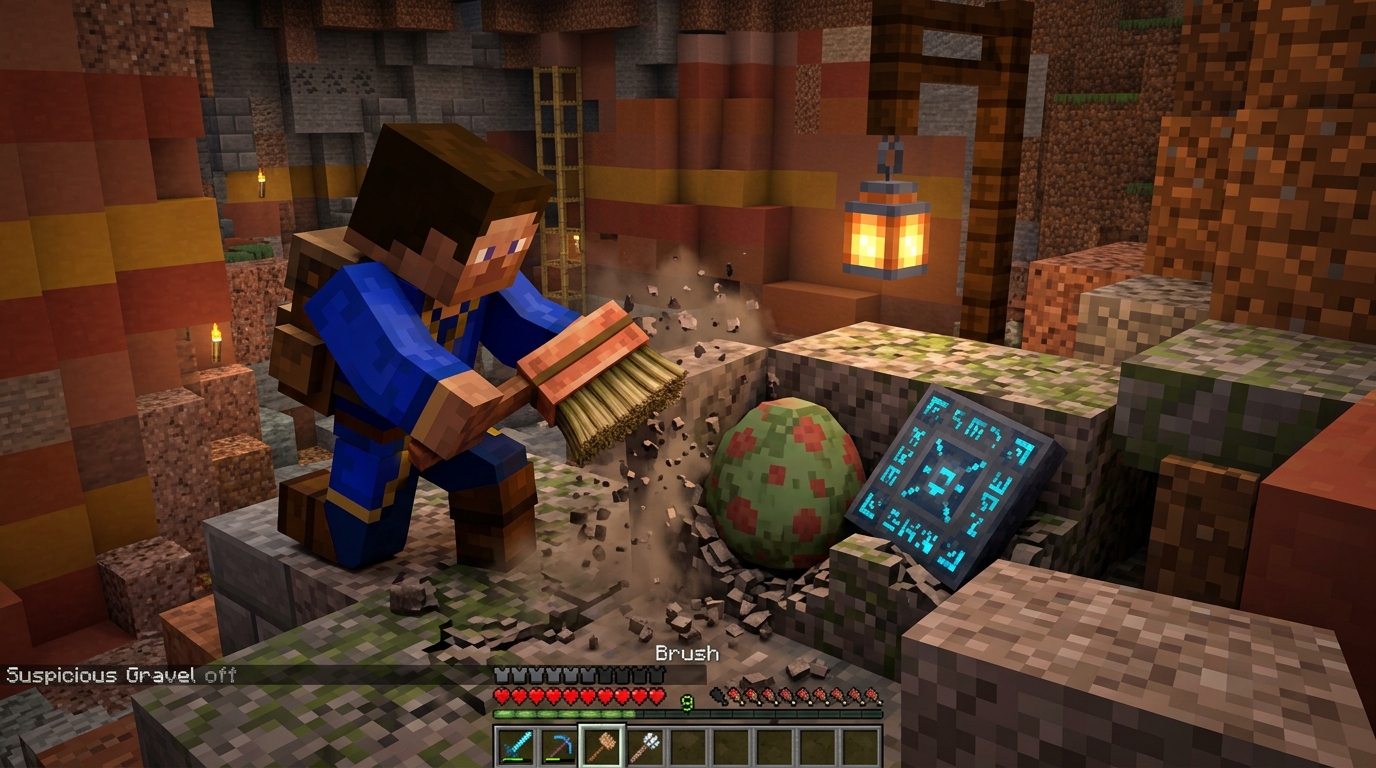
Once you have cleared away the dirt and stone, the true treasures of the trail ruins begin to appear within the suspicious gravel. You will want to keep a close eye out for Sniffer eggs, as these are the only way to bring the ancient, flower-sniffing mobs back to your world. These large, mossy-looking eggs are hidden deep within the structure and require a gentle touch with your brush to uncover. After you find one, place it on a moss block to help it hatch faster so you can start your own prehistoric farm. Finding these sniffer egg locations is a major milestone for any player looking to collect every creature in the game.
Beyond the rare mobs, trail ruins are the best place to find unique ways to customize your armor. You can discover several exclusive armor trims here, including the Wayfinder, Raiser, Shaper, and Host templates. These items allow you to add beautiful patterns to your gear using a smithing table and different minerals like gold or lapis lazuli. Since these ruins are the primary source for these specific designs, fully excavating the site is essential for players who want to stand out. Each template you find adds a bit of history to your character’s look while showing off your archaeological skills. If you want to protect your character while exploring these dangerous depths, you should also check out god armor enchantments to ensure you stay safe from any underground hazards.
The excavation process also rewards you with a variety of pottery sherds that tell the story of the ancient biomes. As you sift through the deep towers and cobblestone paths, you might find the Burn, Danger, or Friend sherds among the buried debris. Collecting four of these allows you to craft a decorated pot that displays custom stories on every side. These decorative blocks are perfect for adding a touch of lore to your base or a museum dedicated to your travels. Every piece of gravel you brush away brings you one step closer to completing your collection of these fragile artifacts.
Start Your Minecraft Archaeology Adventure
You now have all the tools and knowledge needed to master the art of Minecraft archaeology. By carefully brushing away suspicious gravel in these buried structures, you can uncover rare treasures like the Wayfinder or Raiser armor trims. Each trail ruin is a unique puzzle that requires patience and a steady hand to fully excavate. Remember to bring plenty of brushes and torches since these structures are almost entirely underground. Now that you know how to spot those colorful terracotta blocks peeking through the dirt, your journey to collect every ancient relic is officially underway.
Collecting every unique cosmetic item is a great way to show off your adventuring skills to your friends. You can decorate your base with beautiful pots made from the pottery sherds you find or hatch a Sniffer egg to bring an extinct mob back to your world. These items are more than just loot because they tell a story about the history of your Minecraft world. Every piece of glazed terracotta or mud brick you uncover brings you one step closer to completing your collection. If your inventory gets too full of artifacts, you can always use the Minecraft bundle crafting recipe to save space. Grab your gear and head to the nearest taiga or jungle to start digging for your next big discovery.
Frequently Asked Questions
1. Where exactly should I look to find trail ruins?
You can find these buried structures in specific biomes like the Jungle, Old Growth Taiga, and Snowy Taiga. Look for stray blocks of orange or blue terracotta and random patches of gravel poking through the grass and ferns.
2. Which tool do I need to dig up the artifacts?
You must use a brush to carefully uncover items from suspicious gravel blocks. Using a shovel or pickaxe will destroy the block and any treasures hidden inside, so keep your brush ready for the delicate work.
3. What kind of rare items can I find in the ruins?
These sites are the best place to find ancient Sniffer eggs and various pottery sherds for decorating your base. You can also discover rare armor trims like the Wayfinder or Raiser patterns to customize your gear.
4. How do I know if a block contains loot?
Keep an eye out for suspicious gravel, which looks slightly different and more textured than regular gravel. If you see this block, use your brush on it slowly to reveal the hidden item without breaking the block.
5. Is the entire structure visible from the surface?
No, almost the entire trail ruin is buried deep underground and usually looks like a small tower or village. You will often only see a single colorful block at first, so you need to dig away the surrounding dirt to see the full layout.
6. What is the best way to start excavating a ruin?
Start by clearing away the ferns and grass around the first terracotta blocks you find to see how far the structure goes. Work your way down level by level, brushing every suspicious gravel block as you go to make sure you don’t miss a single chest or artifact.