
If you have ever been deep in a cave and found your inventory cluttered with single seeds, stray gravel, and random flowers, you know the struggle of running out of space. The good news is that you no longer have to leave precious loot behind. Learning the bundle crafting recipe is one of the smartest moves you can make early in your survival world because it lets you tuck different items into one single slot.
You only need two basic materials to get started: one piece of string and one piece of leather. These are easy to find by hunting spiders and cows right outside your base, making this one of the most affordable ways to stay organized. Once you have your bundle, you can even use dyes to color-code your items, like red for rare ores or green for farming supplies. It is the perfect tool for keeping your pockets tidy while you explore your favorite biomes.
Key Takeaways
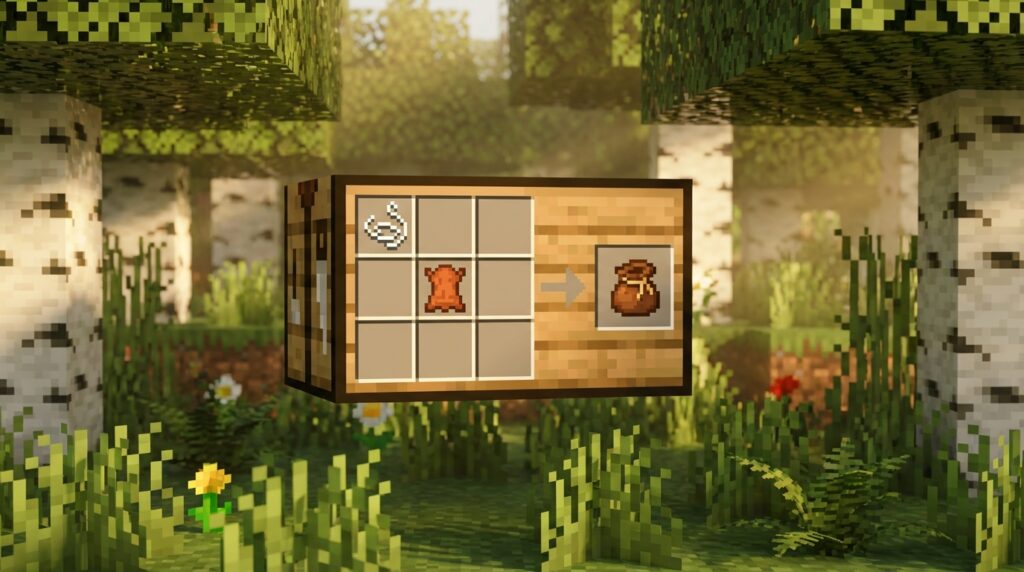
- Craft a bundle by placing one piece of string in the top-middle slot and one piece of leather in the center slot of a crafting table.
- Consolidate up to 64 items into a single inventory slot to manage clutter from stray blocks, seeds, and flowers during early-game exploration.
- Color-code your storage by combining a finished bundle with any of the 16 available dyes to visually categorize different types of loot.
- Manage capacity strategically by noting that items with smaller stack sizes, like ender pearls, or non-stackable tools consume more of the bundle’s 64-unit limit.
Materials For The Bundle Crafting Recipe
To craft your first bundle, you only need to track down two common items that are easy to find early in your survival journey. First, you will need to find a cow, horse, or llama to obtain a single piece of leather. If you prefer a more peaceful approach, you can also find leather while fishing in a nearby river or ocean. This material serves as the sturdy base for your new storage pouch. Once you have your leather ready, you are halfway to solving your inventory clutter problems.
The second ingredient for your bundle is a single piece of string, which is most commonly dropped by spiders. You can head out at night to hunt a spider or explore a nearby cave to break some cobwebs with a sword. If you have a fletcher villager nearby, you might even find string in their chests. Because you only need one piece, you can usually gather this material within the first few minutes of a new world. This makes the bundle one of the most accessible tools for early game organization.
Once you have both items, open your crafting grid and place the string in the top center slot with the leather directly underneath it. This simple vertical recipe creates a standard brown bundle that is ready to hold up to 64 different items. You can carry a mix of seeds, flowers, and torches all in this one single inventory slot to save space. If you want to get fancy, you can even combine your finished bundle with any color of dye in the crafting window. This allows you to color code your items, such as using a green bundle for organic blocks and a red for redstone components.
Crafting Grid Layout For Your Bundle
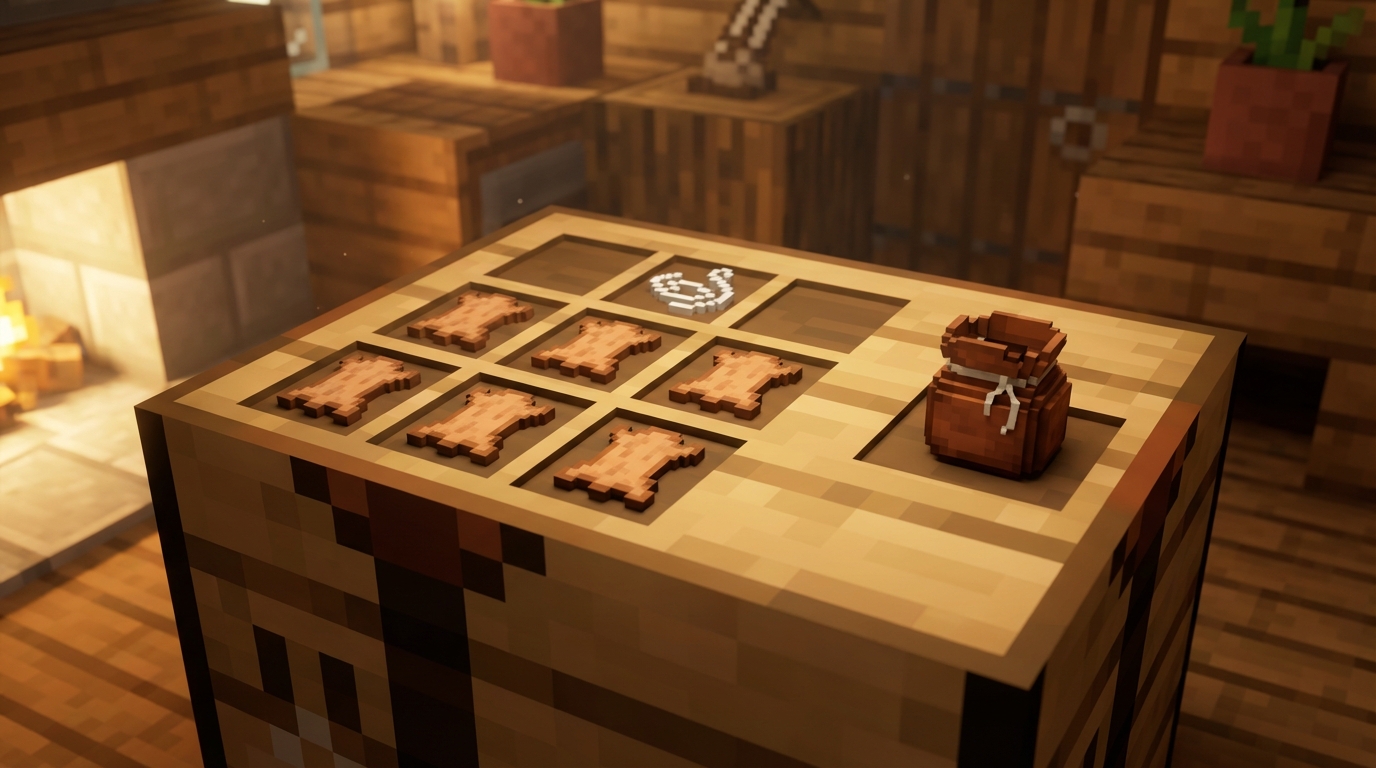
To assemble your new storage tool, you only need a standard crafting table and two basic materials you likely already have in your chests. Start by placing a single piece of string in the very top-middle slot of the three by three grid. Directly underneath that string, place one piece of leather in the exact center square of the layout. This simple vertical arrangement will immediately show a bundle in the output slot for you to collect. Since you do not need a complex pattern or rare minerals, you can craft several of these early in your survival journey.
Once you pull the bundle from the crafting table, you can start cleaning up your messy inventory right away. This handy item is perfect for gathering small amounts of different blocks, such as a few seeds, some flowers, or extra torches that usually take up too many slots. If you want to stay even more organized, try combining your finished bundle with any of the sixteen available dyes in the crafting grid. Using a red or blue dye helps you color-code your loot so you know exactly which bag holds your building materials and which one holds your food. This quick crafting process makes inventory management much faster and more intuitive during long mining trips.
Using Dyes To Customize Your Bundles
Once you have crafted your basic bundle using leather and string, you can take its utility to the next level by adding some color. Minecraft allows you to combine a finished bundle with any of the sixteen available available dyes in your crafting grid. This process is simple because it only requires the bundle and a single piece of dye placed anywhere in the grid. You will instantly get a vibrant storage pouch that stands out in your inventory. Using different colors helps you stay organized during long mining trips or building sessions.
Color-coding is helpful for survival players who want to find their items quickly without hovering over every slot. You might use a green dye for saplings and seeds, while a red bundle could be reserved for redstone components or emergency food. If you are exploring a trial chamber, a blue bundle is perfect for keeping your precious copper and tuff blocks separate from common dirt. This visual system saves you time when your inventory starts to get cluttered with dozens of different item types. It makes your storage look much cleaner than a sea of brown pouches.
Customizing your gear also adds a nice personal touch to your survival world. You can match your bundles to your favorite armor trim colors or even coordinate them with the theme of your current base project. Since dyes are easy to find by picking flowers or smelting cacti, you can change your organization style whenever you want. Having a rainbow of bundles in your chest makes sorting materials much less of a chore. It is a small detail that makes a huge difference in how you manage your resources every day.
Managing Item Capacity Within Your Bundle
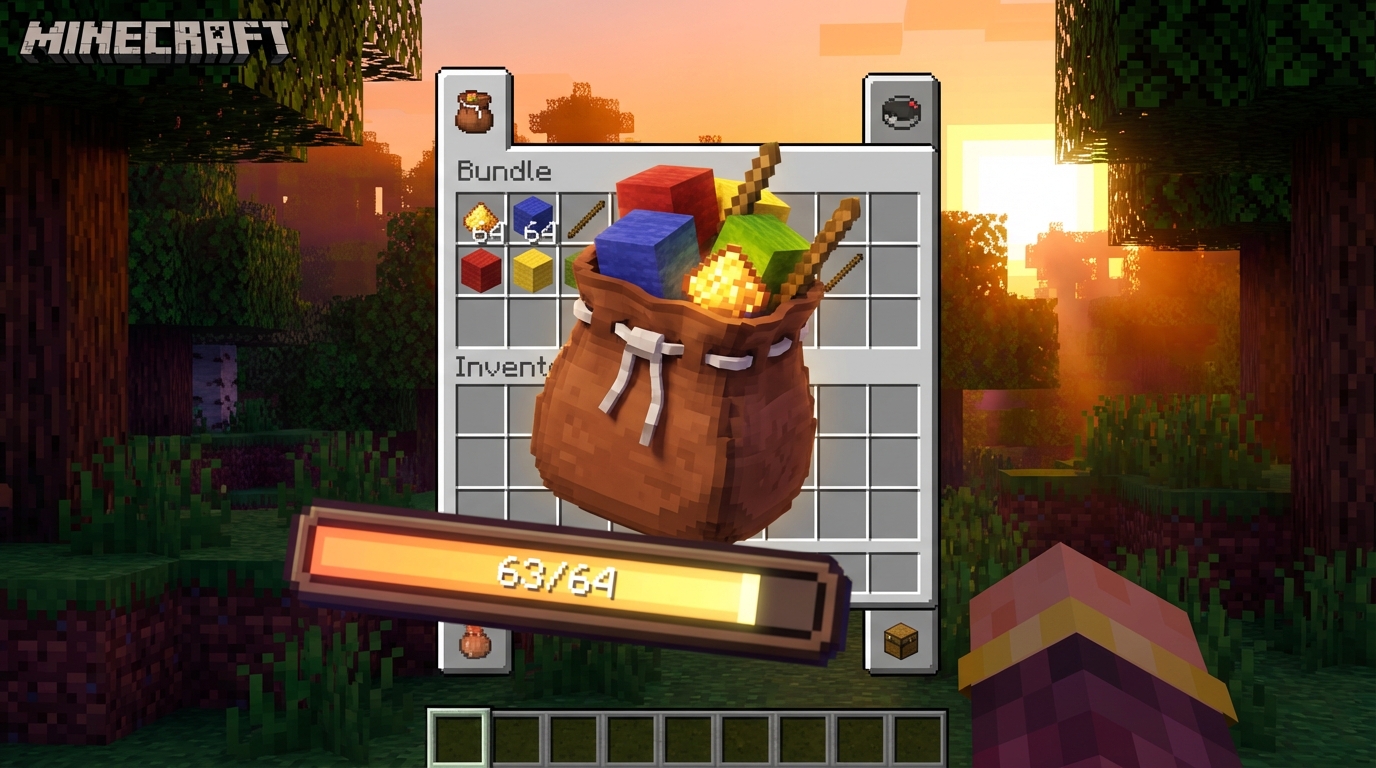
Mastering the bundle crafting recipe is only the first step toward reclaiming your inventory space. Every bundle has a fixed capacity of sixty-four units, but how you fill that space depends entirely on the stack size of the items you pick up. For example, a single block of dirt or a piece of cobblestone counts as one unit toward that total limit. You can mix and match different blocks to reach sixty-four, such as carrying thirty-two oak logs and thirty-two torches in one slot. This makes the bundle perfect for cleaning up those stray blocks that usually clutter your hotbar during a long mining trip.
Items with smaller stack sizes, like ender pearls, or eggs, take up more space proportionally inside your pouch. Since ender pearls only stack to sixteen in a normal inventory slot, each individual pearl counts as four units within your bundle. This means you could carry four ender pearls and still have space for forty blocks of gravel or sand. If you fill the bundle entirely with sixteen-stack items, you will hit the maximum capacity quickly. Understanding this math helps you decide which rare loot drops are worth tucking away and which ones should stay in your main inventory.
You can easily check how full your bundle is by hovering over it in your inventory to see the visual bar and the item list. If you find yourself with a few spare units of space, you can even toss in non-stackable items like a spare iron sword or a water bucket. Keep in mind that any item that does not stack at all will immediately take up all sixty-four units of the bundle’s capacity. This makes the bundle most effective for small items rather than large tools or armor pieces. Experimenting with different combinations will help you stay out in the world longer without having to head back to your base to empty your pockets.
How to Craft and Use Bundles
Mastering the bundle crafting recipe is a great upgrade for your early survival adventures. By simply combining one piece of string and one piece of leather in your crafting grid, you gain the power to reclaim your inventory space. This tool is perfect for those long mining trips where your pockets get filled with random stacks of gravel, diorite, and flowers. Instead of tossing away valuable resources to make room for ores, you can tuck up to sixty-four different items into a single slot. It is one of the most efficient ways to keep your hotbar clean while you explore new biomes.
Don’t forget that you can personalize your organization system by using various dyes to color-code your storage. Placing a standard bundle next to a piece of lapis lazuli or a red tulip in your crafting window allows you to create a colorful library of bags. You might use a green bundle for seeds and saplings while keeping a blue one specifically for rare mob drops. This level of organization makes it much easier to find exactly what you need when you return to your base. Having a clear system ensures you spend more time building and less time sorting through messy chests.
Now that the bundle is officially part of your Minecraft toolkit, you have no reason to let clutter slow you down. Whether you are gathering materials for a massive castle or just exploring a nearby village, this simple two-item recipe is your best friend. It bridges the gap between your first day in the world and the time you eventually craft ender chests or shulker boxes. You can carry treasures found while you navigate the ancient city without filling up your main slots. If you are worried about losing these items during a dangerous trek, you can always use the keep inventory cheat to ensure your hard-earned loot stays with you. You can even learn how to use hidden base glitches to protect your loot once you return home with your full bundles. Keep a few pieces of string and leather in your inventory so you can craft a new one whenever your pockets start to feel heavy. Following essential hardcore survival tips like these will help you manage resources effectively. Your future self will definitely thank you for staying organized during your next big journey.
Frequently Asked Questions
1. What items do I need for the bundle crafting recipe?
You only need one piece of string and one piece of leather to craft a bundle. These materials are very easy to find early in the game by hunting cows and spiders near your starting area.
2. How can I find leather if I don’t want to hunt animals?
If you want a more peaceful way to get leather, you can try fishing in a nearby river or ocean. Sometimes you will reel in leather as a treasure or junk item, which works perfectly for your crafting needs.
3. Where is the best place to find the string required for the recipe?
The fastest way to get string is by defeating a spider at night or inside a cave. You can also use a sword to break cobwebs or check chests inside a fletcher villager’s house.
4. Can I change the color of my bundle?
Yes, you can use dyes to color-code your bundles to keep your inventory even more organized. You might use red dye for a bundle meant for rare ores and green dye for one holding seeds and farming supplies.
5. How does the bundle help with inventory management?
The bundle allows you to store multiple types of items in a single inventory slot. This is perfect for cleaning up stray items like single seeds, gravel, or random flowers that usually clutter your pockets while exploring.
6. Is the bundle expensive to craft for new players?
The bundle is one of the most affordable tools you can make when you start a new world. Since it only requires two basic items, you can usually gather everything you need within your first few minutes of gameplay.