
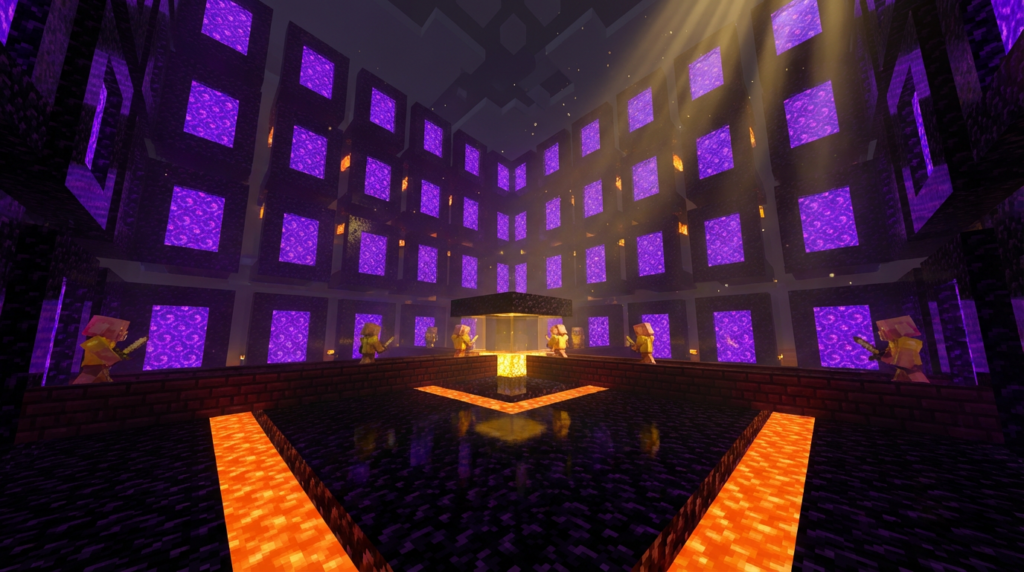
If you are tired of mining for hours just to get a few golden apples or powered rails, a high-efficiency gold farm is your best solution. The right gold farm portal design can turn a stack of obsidian into a non-stop stream of gold nuggets and experience points. Whether you are playing on Bedrock or Java, these builds use the way Zombified Piglins spawn in Nether portals to fill your chests automatically. You can go from having zero gold to being the richest player on your server by simply standing in one spot.
In Bedrock Edition, you can build ticking portals that use dispensers and observers to ignite and extinguish the frame several times per second. Java players can focus on massive 23×23 obsidian frames to maximize natural spawns and drop enemies into a central collection pit. Using these designs means you will never have to worry about mending your tools or running out of golden carrots again. Building these structures correctly ensures your farm runs smoothly without breaking your game or wasting resources.
Key Takeaways
- Select your gold farm design based on your game version: Bedrock Edition requires ‘ticking portals’ that rapidly ignite and extinguish, while Java Edition relies on passive spawning within massive 23×23 obsidian frames.
- Maximize spawning efficiency by building portal frames at the 23×23 limit and stacking multiple portals in a ‘sandwich’ layout to create a high-density mob zone.
- Automate mob collection by placing turtle eggs surrounded by open trapdoors to lure Zombified Piglins into a central drop chute or killing pit.
- Implement a water-flushed sorting system using redstone comparators and hoppers to automatically separate valuable gold nuggets and ingots from rotten flesh.
Choosing Between Bedrock Ticking And Java Spawning
When you are building a gold farm, the first thing you need to consider is whether you are playing on Bedrock or Java Edition. Bedrock players have a unique advantage called ticking portals, which uses observers and dispensers to rapidly light and extinguish a single portal. Every time the portal ignites, there is a chance for a Zombified Piglin to spawn instantly. This method is incredibly fast and allows you to gather massive amounts of gold for bartering or powered rails without needing a giant structure. You just need a bit of flint and steel or lava and a water bucket to get the cycle started.
Java Edition players have to take a different approach because the rapid-ignition trick does not work the same way in their version. Instead, you must rely on passive spawning, which means Zombified Piglins spawn naturally within the obsidian frames over time. To make this efficient, you should build several massive 23 by 23 obsidian portals stacked close together. This creates a huge surface area for the game to attempt spawns, ensuring a steady flow of mobs into your collection pit. While it requires much more obsidian than the Bedrock version, it is the most reliable way to get infinite gold on Java.
Regardless of your version, the goal is to maximize your drops so you never have to mine for gold again. Bedrock designs are usually more compact and rely on Redstone timing, making them great for small bases. Java designs are often much larger and can be seen from far away, but they provide a consistent stream of experience and gold nuggets. Once you choose the design that fits your game version, you can set up an automated bartering system to turn that gold into useful items like ender pearls and fire resistance potions. This automation is a major upgrade for any survival world.
Maximum Efficiency Portal Frames And Layouts
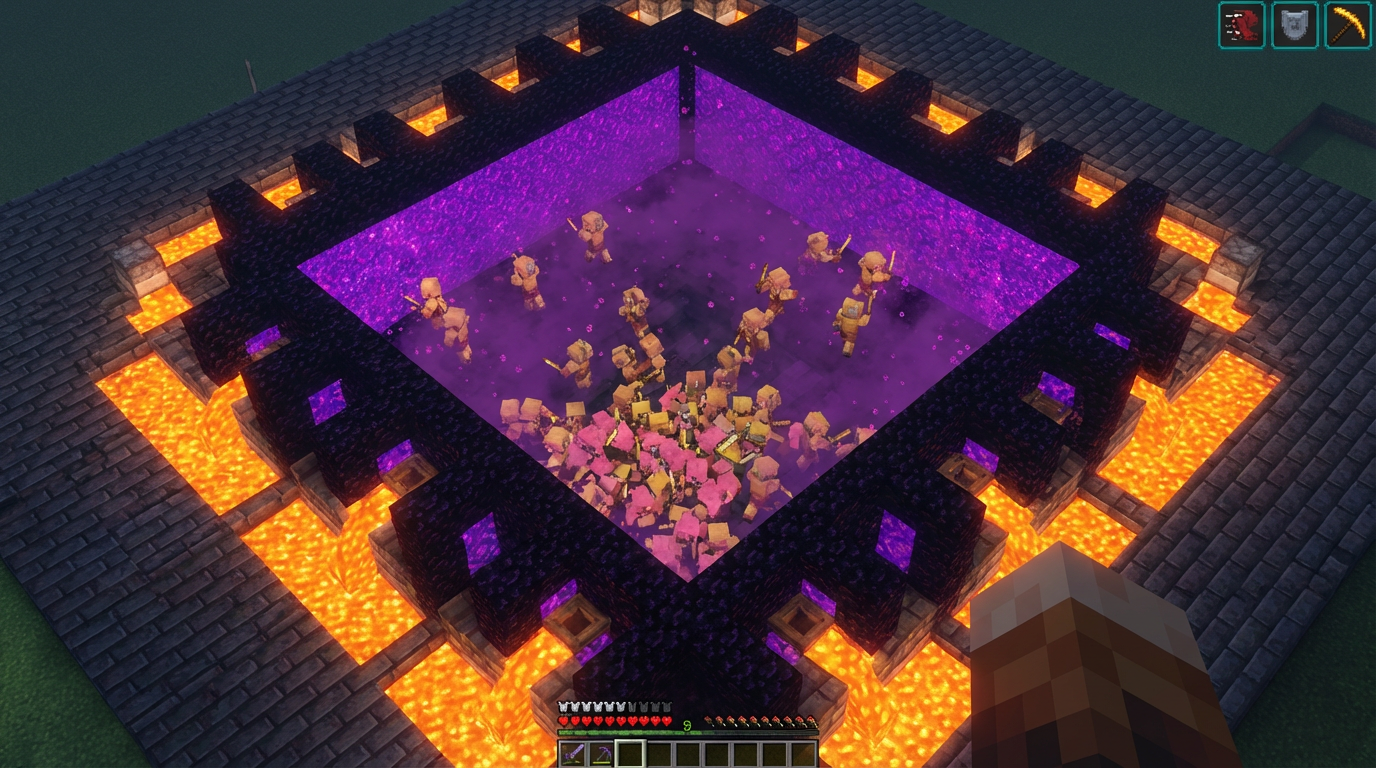
To get the most gold out of your farm, you should always build your portal frames at the maximum size of 23×23 obsidian blocks. This specific size is considered the standard because it provides the largest possible surface area for Zombified Piglins to spawn within a single structure. Since each portal block has a small chance to spawn a mob, bigger frames directly result in more gold nuggets and ingots for your bartering needs. You will need 84 blocks of obsidian for each full 23×23 frame, but the investment is worth it for the massive increase in efficiency. Larger portals also make it much easier to funnel mobs into a central killing pit using simple water streams.
Once you have your 23×23 frames built, the best way to scale up your production is by stacking multiple portals right next to each other. You can line these massive frames up in a row with just a two block gap between them to create a high density spawning zone. This layout allows you to trap hundreds of Zombified Piglins in a very small area, which is perfect for gathering experience points or filling chests with gold fast. Most players prefer a sandwich style layout where several portals face each other, ensuring that every mob that spawns falls instantly into the collection system. This configuration is the most reliable way to better Minecraft farms and get enough gold for endless powered rails and piglin bartering trades.
Automating Piglin Collection Using Turtle Eggs
Zombified Piglins are naturally drawn to turtle eggs, and you can use this behavior to build a perfectly automated collection system. When these mobs see an egg, they will try to walk over and trample it, regardless of the dangers in their path. By placing a turtle egg on a solid block at the center of your drop chute, you create an irresistible lure for every piglin that spawns from your portals. This simple mechanic ensures that your mobs move exactly where you want them without you ever having to swing a sword.
To make this trap work effectively, you need to surround the turtle egg platform with open trapdoors. In Minecraft, mobs view open trapdoors as solid blocks they can walk on, even though they will actually fall straight through the gap. You should place these trapdoors on all sides of the egg to catch piglins coming from any direction of your portal array. Once they step off the edge to reach the egg, they will plummet into your killing chamber or onto a collection of hoppers. Before you build, you might want to master your dimensions to ensure your farm is positioned perfectly in relation to your main base.
This automation is a significant improvement for players who need a constant supply of gold for bartering or building massive powered rail systems. You can sit back and watch as the gold nuggets and ingots pile up in your chests while the piglins do all the work for you. Since the eggs are protected by the gap, they will never actually break, providing you with a permanent lure for your farm. This setup maximizes your efficiency and turns a massive portal build into a hands free gold factory.
Building Water Flushes And Sorting Systems
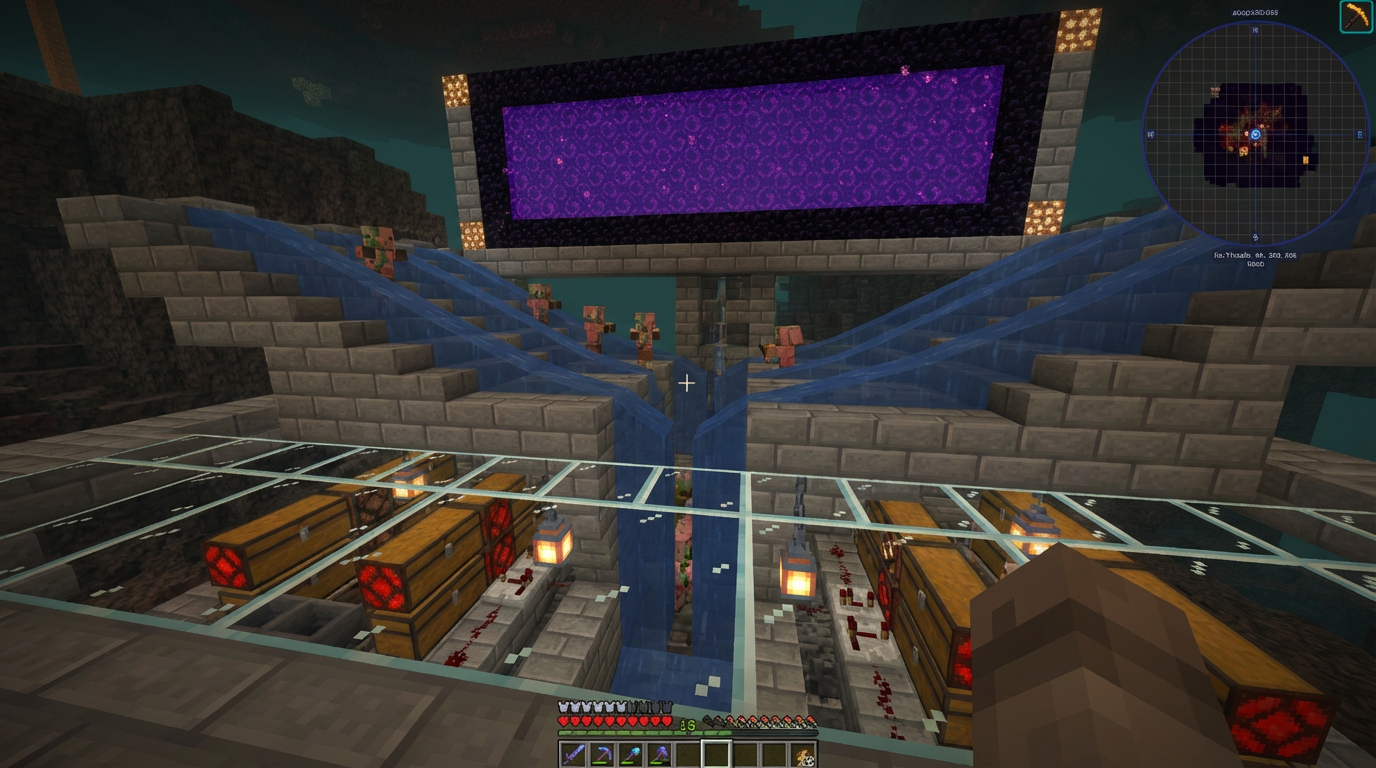
Once your massive portal farm is up and running, you will quickly find yourself buried under mountains of loot. To handle this mess, you should build a simple water canal at the base of your kill chamber to sweep every item toward a central collection point. Use packed ice or blue ice under the water stream to make sure the items slide fast enough to keep up with the high spawn rates. You can place a sign at the end of the water flow to hold the liquid back while allowing the items to drop onto a hopper line. This basic setup ensures that your gold and rotten flesh are always moving toward your chests instead of despawning on the ground.
Setting up an automatic sorting system is the best way to separate your valuable gold nuggets from the piles of rotten flesh. You will need to place a row of hoppers leading into your storage chests with a redstone comparator behind each one. Fill the first hopper with the specific item you want to collect, like a gold nugget, and use filler items in the extra slots to lock the filter. This clever redstone trick ensures that only the matching items pass through into the chest below. By building several of these filters in a row, you can easily organize your gold nuggets, ingots, and swords while sending the unwanted flesh to a lava source pit.
Having an organized storage system is essential if you want to use your gold for bartering with piglins or building long powered rail lines. You can even add a furnace array at the end of your sorter to automatically melt down the gold swords into extra nuggets. This maximizes your efficiency and makes sure no part of the mob drop goes to waste. Once your chests are filling up with pure gold, you will have all the resources you need for massive building projects or infinite trades. Simply check your chests every once in a while to see the results of your automated portal farm.
Enjoy Your New Source of Infinite Gold
Once your obsidian frames are in place and your ignition system is clicking away, you have officially unlocked one of the most powerful resources in Minecraft. This gold farm design changes the way you play by providing a constant stream of nuggets and ingots without any manual mining. You can now walk away from the screen and return to find chests overflowing with the materials needed for your next big project. It is a satisfying feeling to see your storage system fill up with golden loot while you focus on building.
With your infinite supply of gold, you can finally build those massive powered rail systems to connect your distant bases. You no longer have to worry about the high cost of crafting rails or saving up every bit of gold you find underground. Beyond transportation, you can use your surplus to set up a professional bartering station with Piglins in the Nether. This allows you to trade for rare items like ender pearls, fire resistance potions, and crying obsidian in bulk. For more tips on finding rare materials, check out The Ultimate Bastion Loot Guide For Netherite And Gold to supplement your farm’s output.
Your new farm is more than just a source of wealth, as it also serves as a top tier experience point generator. Whether you are mending your netherite tools or enchanting fresh gear, the constant flow of Zombified Piglins ensures you never run out of levels. Just as you might build an easy iron farm to secure your metal supply, this portal design guarantees you will never lack for gold. You can also build infinite fuel systems to keep your furnaces running for smelting those gold swords. Make sure to keep your collection chests organized so that your hoppers do not back up during long sessions. Now that the hard work of building is over, you can enjoy the rewards of a fully automated gold empire.
Frequently Asked Questions
1. What is the main difference between Bedrock and Java gold farms?
Bedrock players use ticking portals that ignite and extinguish rapidly to force spawns. Java players must build massive 23×23 portals because they rely on natural, passive spawning within the obsidian frame.
2. How do I start a ticking portal on Bedrock Edition?
You can start the cycle by using a dispenser with flint and steel or a clever lava and water bucket setup. This triggers observers to cycle the portal on and off several times every second.
3. What is the maximum portal size I should use for a Java gold farm?
You should build your portals at the maximum size of 23×23 blocks. This large surface area gives Zombified Piglins more space to spawn naturally so they can drop into your collection pit.
4. Will a gold farm help me fix my tools?
Yes, these farms provide a non-stop stream of experience points along with gold nuggets. You can stand near the collection area to gather XP and repair any gear that has the Mending enchantment.
5. What materials do I need to build a basic gold farm?
You will need a large amount of obsidian for the frames and basic redstone components like observers and dispensers. You also need collection chests and hoppers to catch the gold nuggets and ingots automatically.
6. Can these farms produce items other than gold nuggets?
These designs are perfect for gathering gold ingots and rotten flesh for trading with villagers. You will also have plenty of resources to craft golden apples, powered rails, and golden carrots for your adventures.