
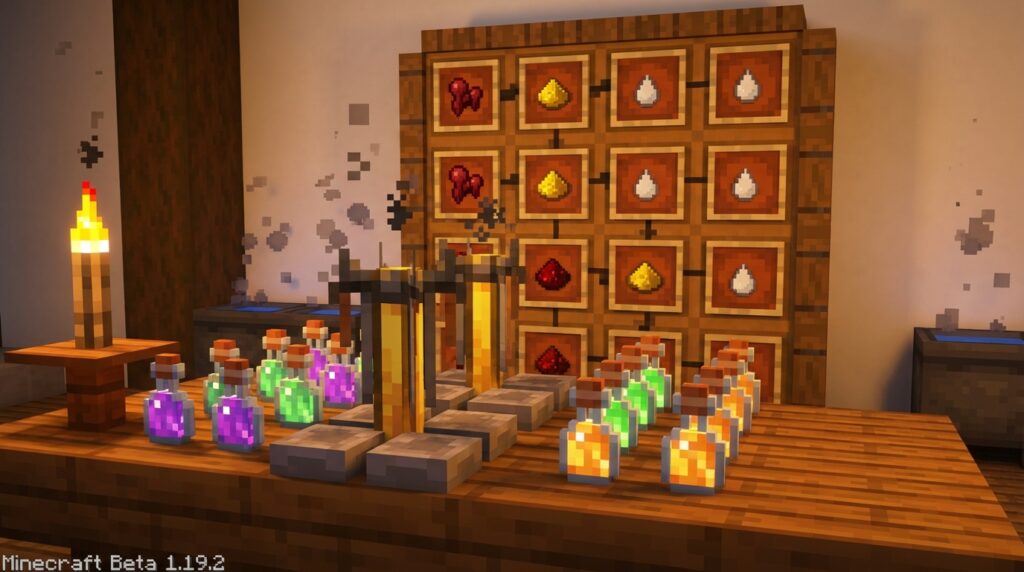
Mastering alchemy in Minecraft can be the difference between surviving a deep dark expedition or losing all your gear to a stray Blaze fireball. Whether you are prepping for a tough boss fight or exploring the new Trial Chambers, having a reliable potion brewing chart is essential for any adventurer. You don’t want to fumble with Nether Wart and Glass Bottles while a Creeper is hissing behind you.
With the latest 1.21 update, you have even more powerful effects at your fingertips to help you survive dangerous structures. All you need is a Brewing Stand, some Blaze Powder for fuel, and the right ingredients to transform a simple Water Bottle into a life-saving tool. From instant healing to fire resistance, knowing these recipes by heart allows you to focus on the action rather than guessing at your brewing stand.
Key Takeaways
- The Awkward Potion is the essential base for nearly all recipes and is created by adding Nether Wart to a Water Bottle.
- Blaze Powder is the mandatory fuel for every brewing cycle and must be gathered from Blazes in the Nether to keep the Brewing Stand operational.
- Redstone and Glowstone dusts allow for customization by either extending an effect’s duration or increasing its potency.
- Gunpowder and Dragon’s Breath transform standard potions into throwable Splash or Lingering varieties for tactical combat and area control.
Essential Ingredients For Your Brewing Stand
To get your brewing stand running, you first need to gather Blaze Powder to act as your fuel source. You can get this by defeating Blazes in the Nether and crafting their rods into powder. This glowing dust is essential because it powers the stand for up to twenty brewing cycles, so keep a steady supply in your inventory. Without it, your Brewing Stand will sit idle even if you have all the other ingredients ready to go. Having a stack of Blaze Powder on hand ensures you can whip up a batch of potions whenever you find yourself in a sticky situation.
The most important step in almost every recipe is creating the Awkward Potion, which serves as your base. You make this by adding Nether Wart to a glass bottle filled with water. This unusual plant only grows on soul sand in Nether Fortresses, making it a priority for any aspiring alchemist to collect. While the Awkward Potion does not provide any status effects on its own, it is the foundation for every major brew, including Healing and Strength. Once you have this base ready, you can start adding the specific ingredients that give your potions their magical powers.
Once your base is prepared, you can begin adding specific items like Glistering Melons or Ghast Tears to define the potion’s effect. For example, adding a Glistering Melon to your Awkward Potion will create a Potion of Healing for an instant health boost. If you want to change how the potion works, you can add Redstone Dust to make the effect last longer or Glowstone Dust to make it stronger. In the latest 1.21 update, you can even experiment with new trial-themed ingredients to expand your tactical options. Keeping a clear chart nearby helps you remember these combinations so you never waste your precious resources.
Master The Potion Brewing Chart Recipes
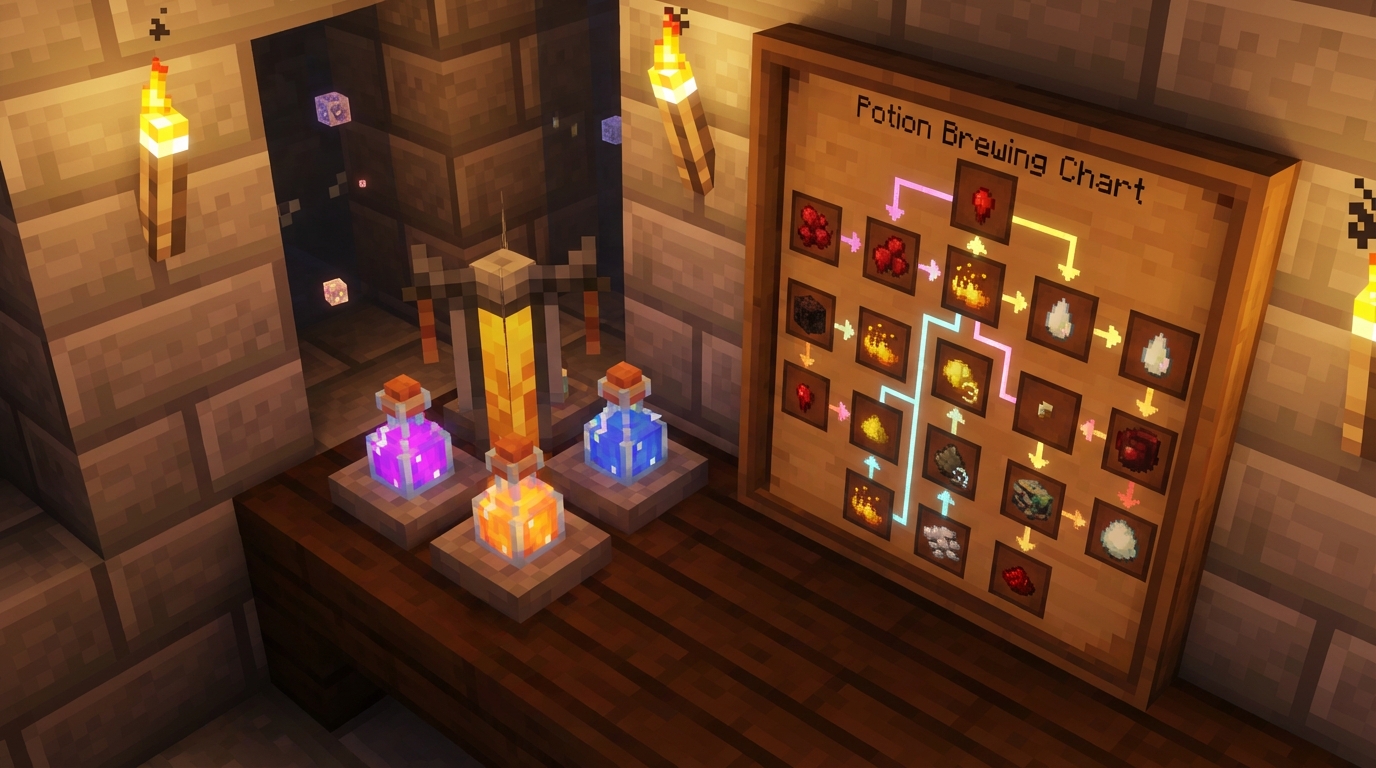
Crafting potions becomes much easier when you have a reliable potion brewing chart to guide your sessions. You should always start by fueling your brewing stand with Blaze Powder and preparing your Awkward Potions using Nether Wart. This chart acts as your ultimate cheat sheet, showing you exactly which ingredients to drop into the stand to get the results you need. Whether you are prepping for a trip to the Nether or a deep dive into a trial chamber, having these recipes at your fingertips saves you from wasting precious resources. It is a helpful tool to keep open on your second monitor or bookmarked for quick reference while you play.
The 1.21 update brings exciting new challenges that require specific status effects to survive and succeed. You can now brew specialized potions like the Oozing or Weaving variants to gain an edge during intense trial spawner encounters. Classic staples remain just as important, such as using Magma Cream for Fire Resistance when exploring lava lakes or Blaze Powder for Strength when facing the Wither. By following the visual breakdown in the chart, you can quickly see how to transform a simple water bottle into a powerful tool for survival. These recipes are consistent across both Java and Bedrock editions, ensuring every player can master the art of brewing.
Once you understand the basic effect ingredients, you can use the chart to learn how to enhance your brews further. Adding Glowstone Dust will increase the potency of your effects, while Redstone Dust extends the duration so your buffs last much longer. If you need to hit multiple targets at once, the guide explains how to turn your drinks into Splash Potions using Gunpowder. You might even want to try Dragon’s Breath to create Lingering Potions for area control during base defense. Mastering these combinations allows you to customize your gameplay experience and prepare for any threat the Minecraft world throws your way.
Modifying Potions With Redstone And Glowstone
Once you have brewed your basic potions, you can use Redstone Dust to significantly increase their duration. This is perfect for effects like Fire Resistance or Invisibility where you need as much time as possible to complete a task. By adding a single piece of Redstone to your brewing stand, a three minute potion usually jumps up to eight minutes of total uptime. This simple upgrade ensures you spend less time fumbling through your inventory and more time exploring dangerous structures like Bastions or Ancient Cities. It is a must have modification for any long distance travel or intensive mining session.
If you prefer raw power over longevity, Glowstone Dust is the ingredient you need to take your potions to level two. Adding this bright yellow powder will make your Strength or Healing potions much more potent, though it does shorten the overall duration of the effect. For example, a Strength II potion provides a massive boost to your melee damage that can help you end boss fights quickly. This is a significant advantage during raids or when you are facing off against a swarm of tough mobs in a Trial Chamber. Just remember that you cannot use both Redstone and Glowstone on the same bottle, so choose the one that fits your current goal.
Keeping a clear potion brewing chart nearby makes these decisions much easier while you are standing at your brewing rack. You can quickly see which ingredients are compatible with your favorite effects without having to memorize every single combination. Having this visual guide allows you to prep for your next big adventure with confidence and speed. Whether you are doubling your Night Vision time or boosting your Regeneration for a tough fight, these modifiers turn standard brews into elite gear. Mastering these two simple dusts will give you a massive advantage in any Minecraft world.
Creating Splash And Lingering Potion Varieties
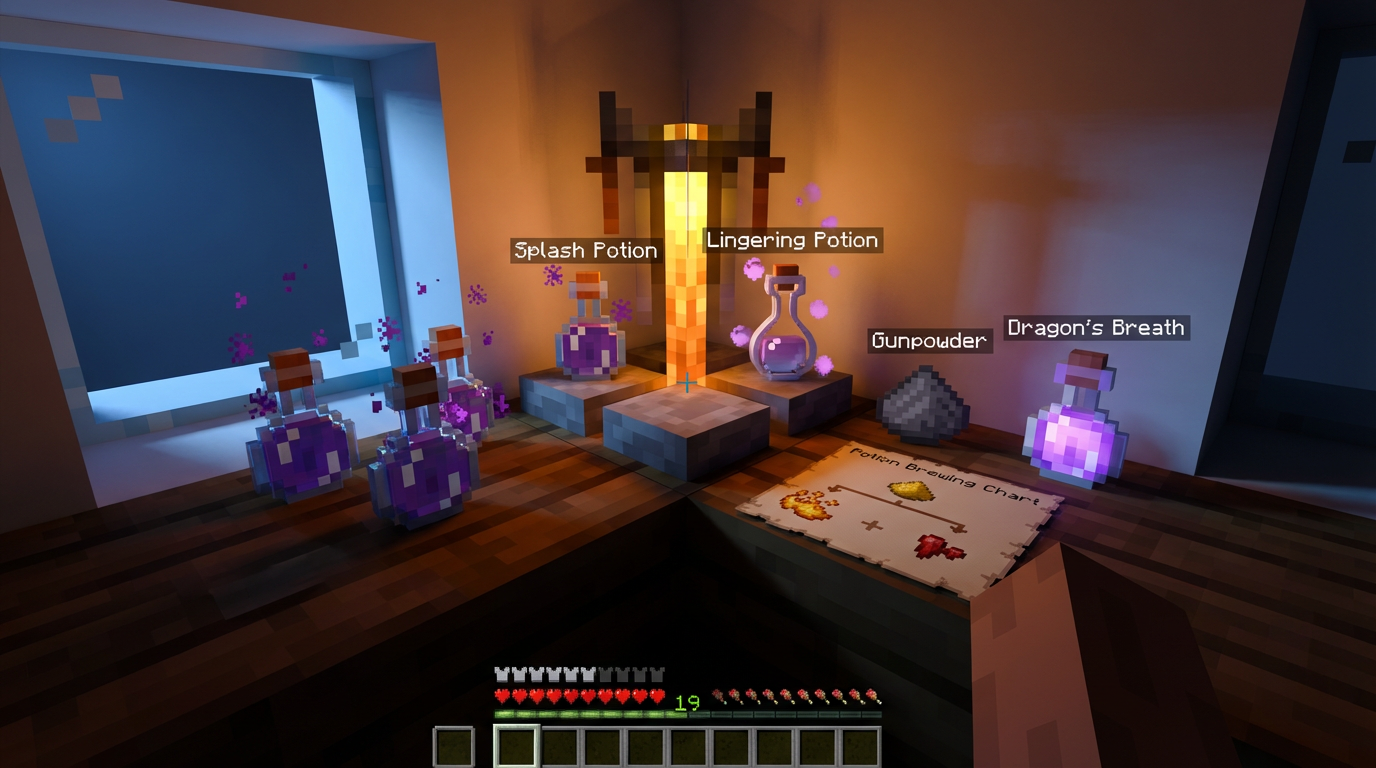
Once you have mastered your basic bottled effects, you can transform them into powerful tools by adding Gunpowder to your Brewing Stand. Adding Gunpowder to any standard potion creates a Splash Potion, which is an item you can throw at mobs or friends to apply effects instantly. This is especially useful for healing your pets during a fight or weakening a group of hostile skeletons from a distance. You do not have to worry about drinking time when you use a splash variety, making it the perfect choice for fast-paced combat. Keep this brewing chart handy so you always know which ingredients to grab when you need to craft these throwable weapons.
To take your alchemy even further, you can combine a Splash Potion with Dragon’s Breath to create a Lingering Potion. When you throw a Lingering Potion, it creates a swirling cloud of magic on the ground that stays active for several seconds. Any player or creature that walks through this cloud will receive the status effect, making it a great way to control a specific area during a raid. You can also use these lingering clouds to craft Tipped Arrows, which allow you to fire status effects from your bow. Mastering these advanced recipes ensures that you are prepared for any challenge the overworld or the Nether throws your way.
Grab your glass bottles and use this brewing chart to become a powerful alchemist in your Minecraft world. Whether you are brewing up a batch of Speed II for exploration or Strength for a boss fight, having a visual guide makes the process much faster. You will never have to guess which ingredient comes next or how to upgrade your favorite effects. Keep practicing your recipes and experimenting with different combinations to see what works best for your playstyle. With these tips and your handy reference guide, you are ready to conquer every trial and dungeon in the game.
Master Alchemy with Your Potion Guide
A potion brewing chart is your ultimate survival tool for mastering Minecraft alchemy. Instead of guessing which ingredient goes into your Brewing Stand, you can use this visual guide to instantly find the recipe you need. Whether you are prepping for a deep dive into an Ancient City or gearing up for a Trial Chamber, having a quick reference saves you from wasting precious Blaze Powder. You can easily track the transformation from a simple Water Bottle to a powerful splash potion with just a glance. It simplifies the 1.21 brewing process so you can focus on the action rather than memorizing every single recipe.
Keeping this cheat sheet bookmarked will help you become a much more efficient player during your survival adventures. You will know exactly when to grab a Glistering Melon for instant health or when to hunt for a Magma Cream to gain fire resistance. The chart covers everything from basic buffs to the best duplication glitch 1.21 methods, ensuring you are never caught off guard by a mob. Since the brewing system stays consistent across both Java and Bedrock editions, this guide remains a reliable companion for any version you play. You can now spend less time looking at a crafting menu and more time exploring your world with the perfect status effects active.
Frequently Asked Questions
1. What is the very first step to start brewing potions?
You need to build a Brewing Stand and collect Blaze Powder to use as fuel. Once you have fuel, add Nether Wart to a Water Bottle to create an Awkward Potion, which is the base for almost every recipe.
2. Where can I find Nether Wart to make my base potions?
Nether Wart only grows on soul sand inside Nether Fortresses. You should grab as much as possible while exploring the Nether so you can grow your own back at your base.
3. How do I get Blaze Powder to power my Brewing Stand?
Travel to the Nether and defeat Blazes to collect Blaze Rods. You can craft these rods into Blaze Powder, and one piece of powder will power your stand for twenty brewing cycles. If you want to automate your resource gathering, you can learn how to build infinite fuel systems in Minecraft 1.21 to keep your furnaces and stands running.
4. Which potion should I use for exploring the Nether?
Fire Resistance potions are your best friend in the Nether because they stop you from taking damage from lava and Blaze fireballs. You make these by adding Magma Cream to an Awkward Potion.
5. How do I heal quickly during a boss fight?
Brew a Potion of Healing by adding a Glistering Melon Slice to an Awkward Potion for an instant health boost. You can also add Glowstone Dust to make it a Level 2 potion for even more health.
6. Can I use potions to help me in the new 1.21 Trial Chambers?
Yes, the 1.21 update introduces powerful new effects that help you manage the challenges found in Trial Chambers. Combined with the best PvP enchantments, these buffs make fighting through these dangerous rooms much easier. If you are looking to start a new world quickly, you might even use speedrun village seeds to gather resources and gear up before you begin your brewing journey. You can even learn how to build an efficient trial chamber breeze farm to gather the necessary materials for the newest potion types. Don’t forget to check everything you can win from trial key rewards to see what other loot you can find. You can also learn how to build a simple creeper farm to ensure you have plenty of gunpowder for your splash potions.