
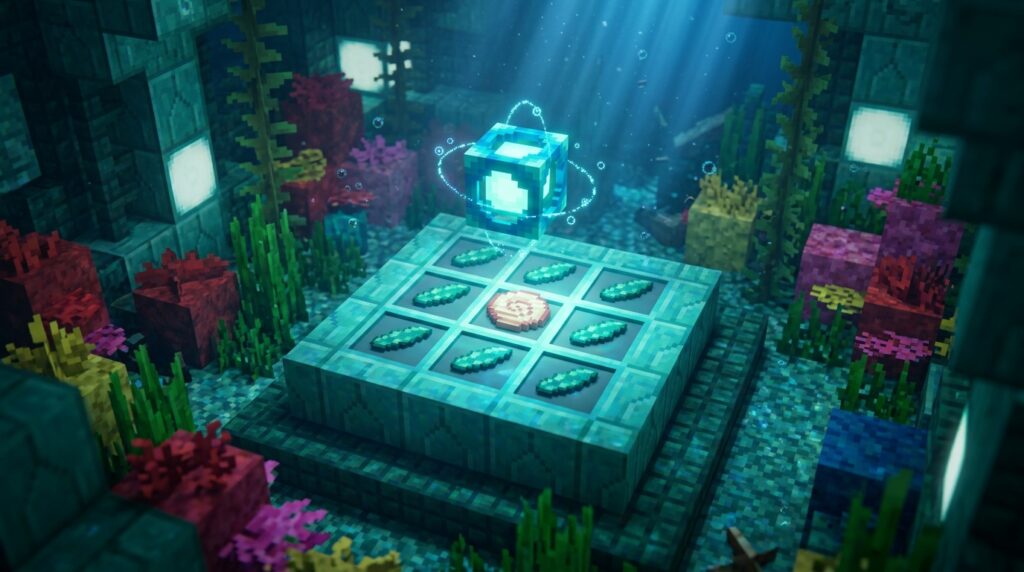
The Minecraft conduit recipe is simple. Place one Heart of the Sea in the center of a crafting grid and surround it with eight Nautilus Shells. That’s all it takes to craft the item, and you can do it at any crafting table once both ingredients are in your inventory.
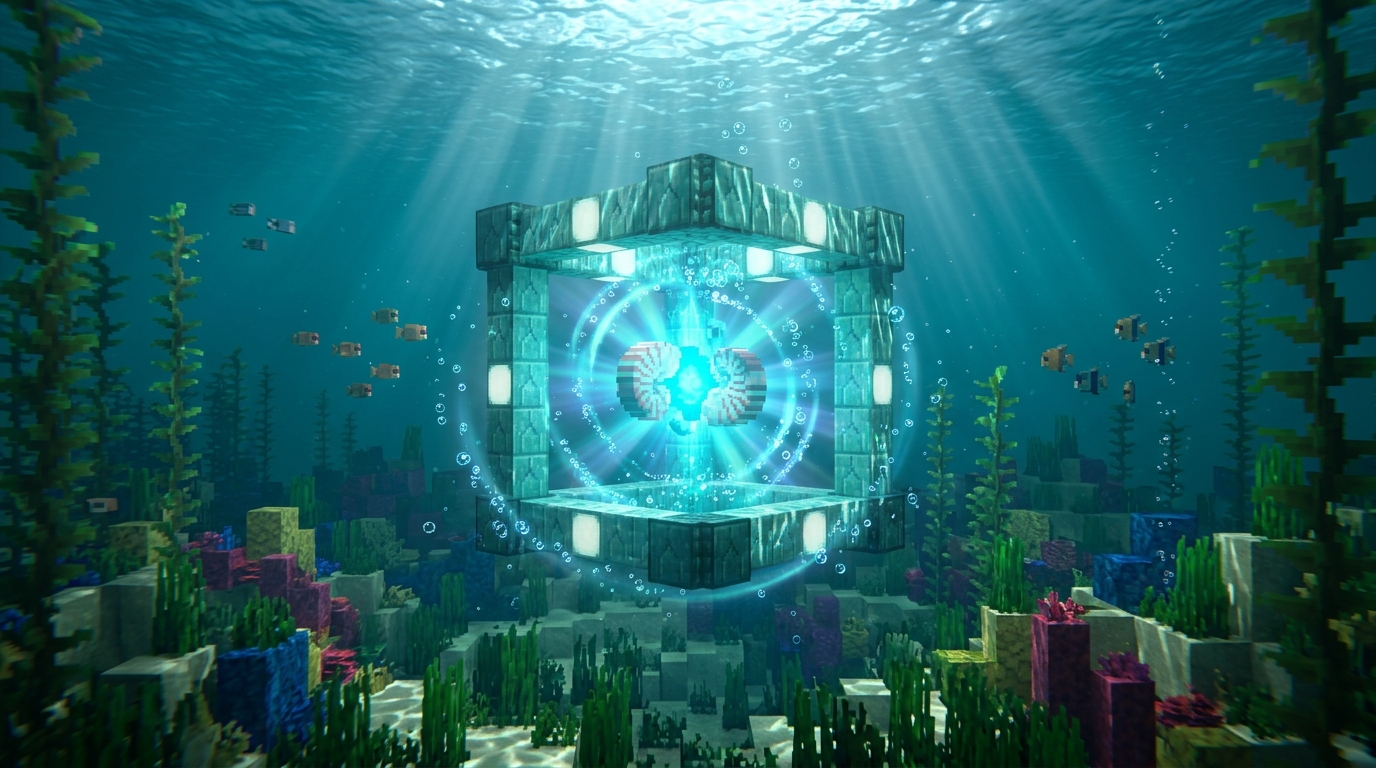
To activate your conduit, place it in the middle of a 3x3x3 volume of water, then build an activation frame from prismarine, dark prismarine, prismarine bricks, or sea lanterns. The frame needs at least 16 qualifying blocks and can hold up to 42. Bigger frames stretch the Conduit Power range from 32 to 96 blocks, so you get underwater breathing, night vision, and faster mining across a much wider area.
Key Takeaways
- To craft a conduit, place one Heart of the Sea in the center square of a 3×3 crafting table grid and fill the other eight squares with Nautilus Shells.
- Your conduit only activates when it sits in the center of a 3x3x3 block of water and is surrounded by a frame of at least 16 prismarine, dark prismarine, prismarine brick, or sea lantern blocks.
- Your conduit’s frame can hold up to 42 blocks, and a bigger frame stretches Conduit Power’s range from 32 blocks up to 96 blocks.
- A conduit with Conduit Power lets you breathe underwater, see in dark water, and mine blocks 16.7% faster, which saves you time when you dig for buried treasure.
- If your conduit won’t activate, check that every frame block is prismarine, dark prismarine, prismarine bricks, or sea lanterns, because stairs, slabs, and walls don’t count.
What Materials Does a Conduit Recipe Need?
Your conduit needs one Heart of the Sea and eight Nautilus Shells. Put the Heart of the Sea in the middle square of the 3×3 crafting grid, then fill the other eight squares with Nautilus Shells. Both ingredients are the only items in the recipe, so you won’t need anything else from your inventory.
- 1 Heart of the Sea, placed in the center square
- 8 Nautilus Shells, filling every outer square
The order of the shells doesn’t matter, because every outer square takes the same item. What matters is that the Heart of the Sea sits in the middle and the shells surround it on all sides.
The recipe is also described in the official patch notes. The Bedrock Edition 1.5.0 notes say conduits can be constructed underwater and give players Conduit Power, and they list the same two ingredients. Mojang first added the conduit in Java Edition snapshot 18w15a in 2018, so the recipe has been part of the game for years.
Before you head into the water, make sure you have eight shells ready. Gathering them takes some time, so it’s smart to collect them all before you start crafting.
Where Can You Find Heart of the Sea and Nautilus Shells?
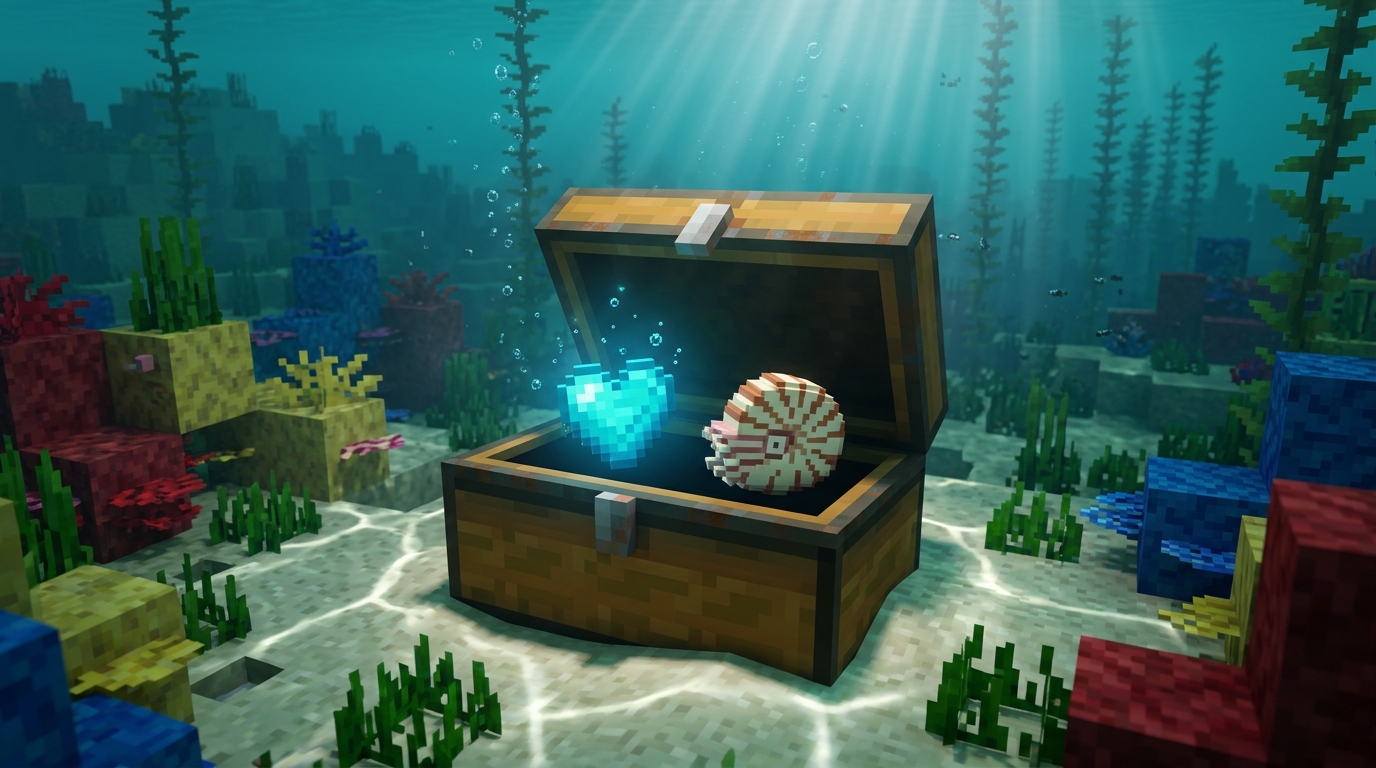
You can find the Heart of the Sea in buried treasure chests, and Nautilus Shells come from wandering traders, drowned, or fishing. The Heart of the Sea is the harder ingredient to track down, so plan your trip around it.
Buried treasure chests sit under sand on beaches and in shallow ocean floors. Before you leave, pick an ocean area you know has buried treasure nearby, and bring a shovel so you can dig up the sand around each spot. Make a note of where you find it so you can return if you need to.
Nautilus Shells are easier to collect along the way. Drowned spawn in ocean water, especially at night, and they can drop shells when you defeat them. Fishing in the ocean can also turn up shells, so keep a fishing rod with you while you explore. If you run into a wandering trader, check its trades, since these traders roam the overworld and may offer shells.
Gather all eight shells first, and keep them in your inventory. Once you finally dig up a Heart of the Sea, you can craft the conduit right away at a crafting table, without going back out to hunt for missing pieces.
How Do You Craft a Conduit Step by Step?
To craft a conduit, place one Heart of the Sea in the center of a 3×3 crafting grid, surround it with eight Nautilus Shells, and then take the result from the output slot. Keep your ingredients handy, because the whole process takes only a few clicks.
- Open a crafting table. Your 2×2 inventory grid is too small for this recipe, since it needs all nine squares of the crafting table.
- Place the Heart of the Sea in the center square, the one with an empty square on every side.
- Fill all eight surrounding squares with Nautilus Shells, putting one shell in each outer square.
- Take the finished conduit out of the output slot on the right side of the table.
Once all nine squares are filled, the conduit appears in the output slot as a single item. Click it to move it into your inventory, where it sits with your other items until you’re ready to place it in the water.
How Do You Build the Activation Frame Underwater?
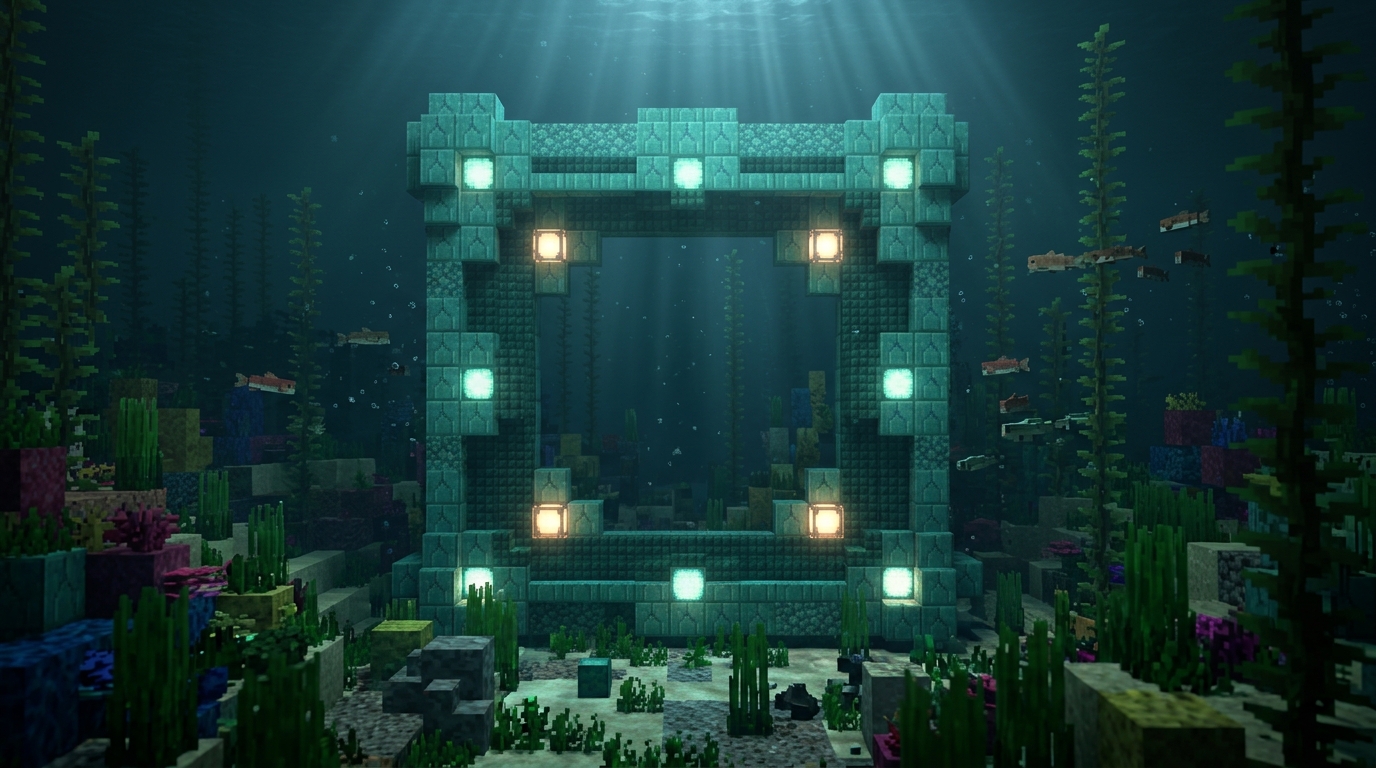
To build the activation frame, place your conduit in the middle of a 3x3x3 block of water, then surround it with three intersecting 5×5 open squares. The frame can use prismarine, dark prismarine, prismarine bricks, or sea lanterns, and you need at least 16 of these blocks, with 42 as the most you can use.
Start by finding a spot with room for a cube of water three blocks wide in every direction. Put the conduit in the exact center of that cube so it has water on all six sides. Keep that water space clear, because the conduit needs it to work.
Next, build the first 5×5 square as a flat ring on one side of the water. Add the second square at a right angle to the first, then the third square at a right angle to both. Each square’s center should line up with the conduit, so all three rings cross over it like the lines of a globe. The middle of each square should stay open water.
A single square has 16 blocks around its edge, so one ring alone already gets you close to the minimum. Where the squares cross, they share blocks, which keeps the total down. Count as you go, and check that you have enough blocks for the full frame before you start.
Sea lanterns are a good choice when you’re working in dark water, since they give off light and make it easier to see your progress. Prismarine and its variants are also common in ocean monuments, so you may be able to collect extra blocks while you explore.
What Can a Conduit Power Effect Do for You?
Conduit Power gives you three useful perks. It restores oxygen so you can breathe underwater, it gives you night vision in dark water, and it speeds up your mining. It works for any player who is in water or rain within its range, which is a sphere that spans 32 to 96 blocks depending on the size of your activation frame.
Picture a trip to a sunken ship on a deep ocean floor. Without the effect, your air bar drains quickly and the seafloor is pitch black. With a conduit working nearby, you can stay down longer and still see the chests, coral, and drowned hiding in the gloom.
The three effects work together in a few specific ways:
- Oxygen: your air bar stops draining while you swim inside the range, so you can explore longer.
- Night vision: dark ocean floors and cave openings stay bright enough to read.
- Mining speed: blocks break 16.7% faster, which saves time when you’re digging for treasure.
Mining is where the speed boost pays off most. If you’re digging out sand around a buried treasure spot or chipping through prismarine in a ruin, a faster pickaxe swing means you spend less time standing in one place. Each dig gets done sooner, so you can move on to the next spot.
The range matters too. A small frame covers a single reef or a short stretch of coastline, while the largest frame covers a much bigger area of ocean. Rain counts as well, so if a storm rolls over a beach near your conduit, you still get the effect while you walk along the shore.
Is It Worth Using a Full 42-Block Frame?
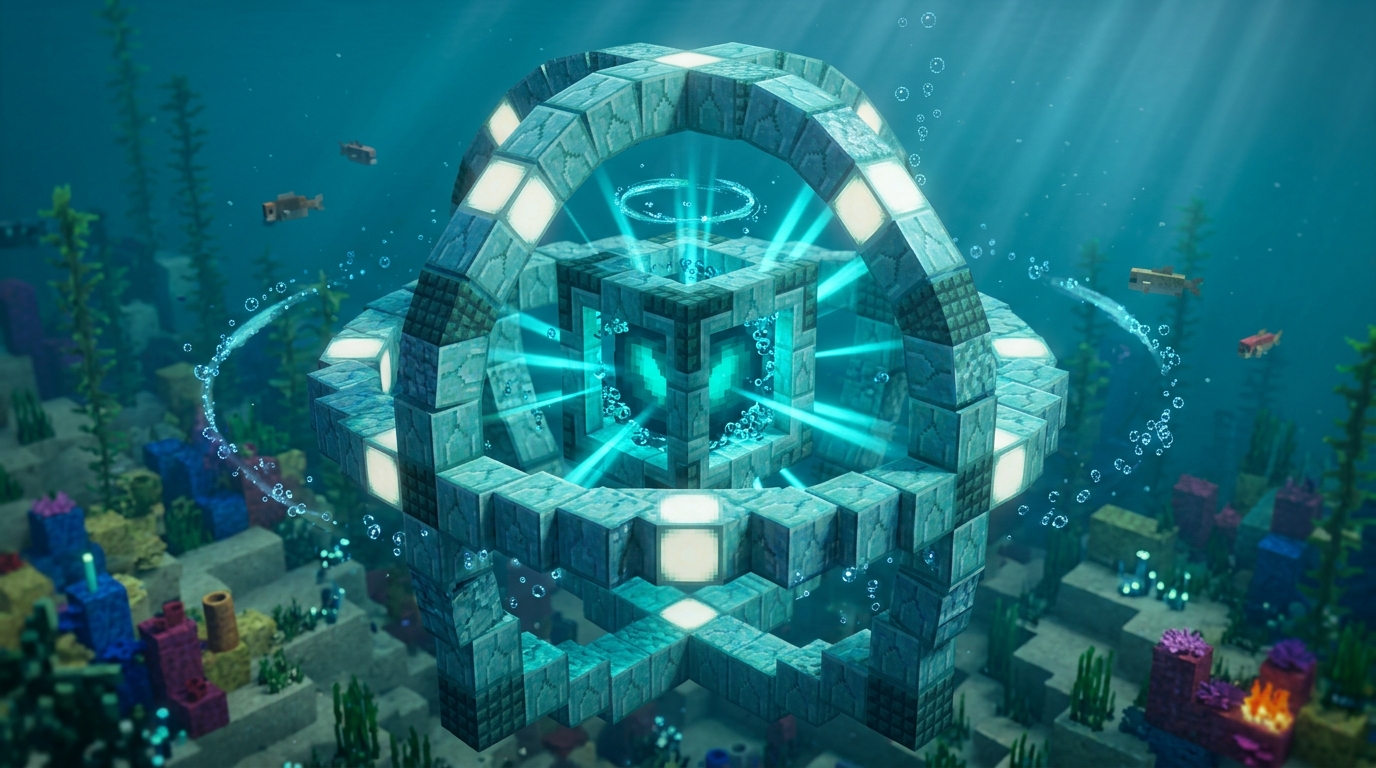
A full 42-block frame is worth it if you want your conduit to defend an area, but a smaller frame is enough for most underwater trips. A complete frame lets the conduit damage hostile mobs within 8 blocks every 2 seconds, as long as those mobs are standing in water or rain. That makes it useful for a seafloor base, where drowned can wander in while you mine.
The trade-off is cost. Every extra block in the frame is another prismarine, dark prismarine, prismarine brick, or sea lantern you have to gather or craft. A full frame uses more than two and a half times as many blocks as the 16-block minimum. If you’re already collecting prismarine in an ocean monument, that extra cost may be small.
Smaller frames are enough for underwater breathing alone. A minimal frame still gives you air, night vision, and faster mining, and it covers a reef or a sunken ship you’re exploring. The larger frames reach up to 96 blocks, but you only need that range if you’re working across a wide stretch of ocean.
So pick the smallest frame that covers the area you plan to work in. Go bigger only when you want the damage effect or a wider reach.
Why Is My Conduit Not Working?
Your conduit most likely won’t activate because the water, the block count, the frame shape, or the block types don’t match the rules. Run through this checklist before you rebuild anything.
- The conduit sits in water, centered in a 3x3x3 water space
- The frame uses at least 16 qualifying blocks
- Three intersecting 5×5 open squares make up the frame
- Only prismarine, dark prismarine, prismarine bricks, or sea lanterns are used
Start with the water. Swim around the conduit and make sure water fills all six sides of it, along with the full three-block space in every direction. A single air pocket or a dry block at the edge of that cube is enough to stop activation.
Next, count the blocks. Go around the frame and tally every block, since one missing piece can drop you below the 16-block minimum even when the frame looks large. Then check the shape. Each of the three squares should be a complete 5×5 ring, and the rings must cross at right angles. A gap in any ring means the frame isn’t closed.
Finally, check the materials. Stairs, slabs, and walls that look like prismarine don’t count, so one stair in your frame can quietly break the whole build. Replace any odd block with a qualifying one, and your conduit should activate.
Building Your First Underwater Conduit
Now you know what goes into the recipe, so your next step is to gather your materials. Collect eight Nautilus Shells and one Heart of the Sea, then find a clear stretch of ocean with enough open water for a 5×5 frame on every side. Avoid spots crowded with kelp or coral pillars, since they get in the way of your rings.
Start with the smallest frame that works. Once the conduit is running, you can add blocks to widen its reach, so you don’t have to commit to the biggest build on day one.
Your first underwater conduit is closer than you think, and the ocean is waiting.
Building Your First Underwater Conduit
Your next step is to craft the conduit and test it on a small frame. Head to an ocean area you already know, bring your eight Nautilus Shells and one Heart of the Sea, and craft the conduit at a crafting table on the shore. Then swim out to the water and place it in the center of your three-block cube.
Start building the frame with the blocks you have on hand. Aim for the 16-block minimum first, and skip the extra blocks until the conduit is running. Keep the three 5×5 rings crossing at right angles, and check each ring for gaps before you move on.
Once the frame is closed, swim inside the water cube and watch your air bar. If it stops draining while you stay underwater, your conduit is active. Then try digging up a bit of sand near a buried treasure spot to see how much faster your mining feels.
Mark the spot on a map or take a screenshot of the coordinates, so you can find your conduit again. If it doesn’t activate, go back through the checklist in the section above, which covers water, block count, frame shape, and block types.